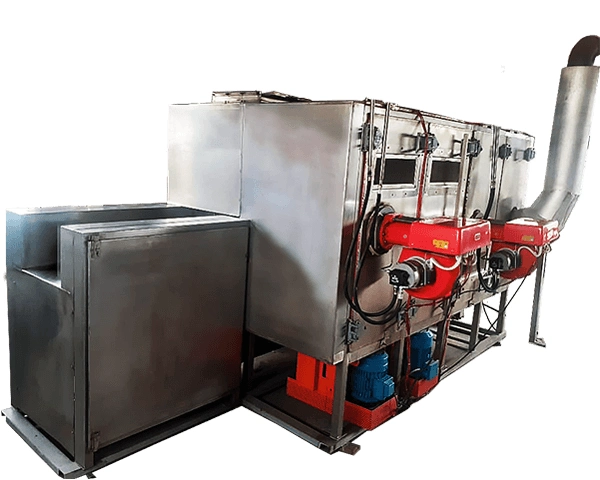
Tea drying, called firing in the factory, stops fermentation in black tea and brings the leaf to a stable moisture that holds aroma and liquor colour. CTC granules and orthodox whole leaf behave very differently in a dryer. Estates and factories dry tea to lock in quality at the right moment and to prepare made tea for grading and sale.
To dry tea, GEM recommends the Vibratory Fluid Bed Dryer and Multi-Pass Conveyor Dryer. Typical moisture is 55–65% in the feed and 3–4% after drying. Industrial Roaster and Industrial Cooler are used when the feed or site calls for it. Every project starts with a pilot trial on your own sample.
A vibratory fluid bed suits CTC tea, drying granules quickly and evenly. A multi-pass conveyor dryer handles orthodox and green leaf more gently. A roaster is used for roasted teas, and cooling prevents stewing before sorting.
| Typical feed moisture | 55–65% |
| Typical target moisture | 3–4% |
| Recommended dryer | Vibratory Fluid Bed Dryer, Multi-Pass Conveyor Dryer |
| Alternatives | Industrial Roaster, Industrial Cooler |
| Application area | Food Products & Snacks |
| Industries | Food & Beverage, Agriculture & Grain Processing |
Precise firing protects the price a tea earns at auction and from buyers, since liquor and aroma are graded on the dried leaf. Efficient drying also lowers fuel use per kilogram of made tea.
Plants searching for a tea dryer or comparing a CTC tea drying machine usually need three answers: which dryer fits, what it costs to run, and how fast it pays back. For Tea, we start from your throughput, current moisture (typically 55–65%) and the target (3–4%), trial a sample on the Vibratory Fluid Bed Dryer, and return a sized recommendation with a budget quotation for your food and agriculture operation.
We trial your material in our pilot facility before any equipment decision, then size the dryer from real data.
Describe it in the form, or message an engineer directly.