


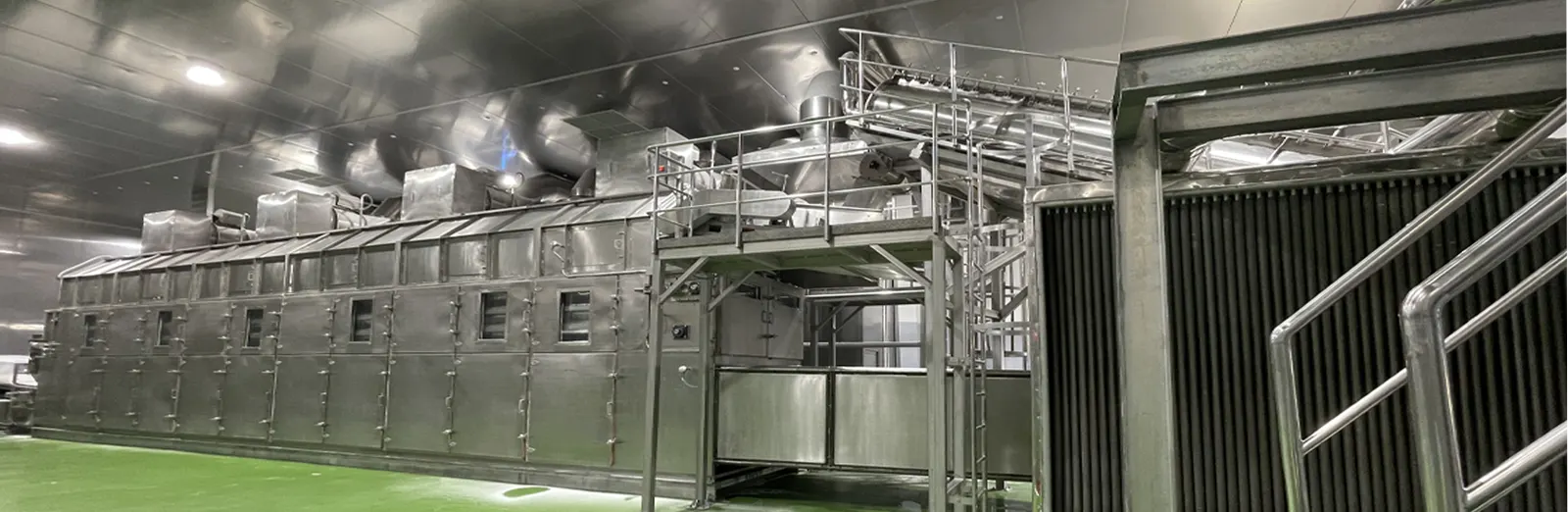
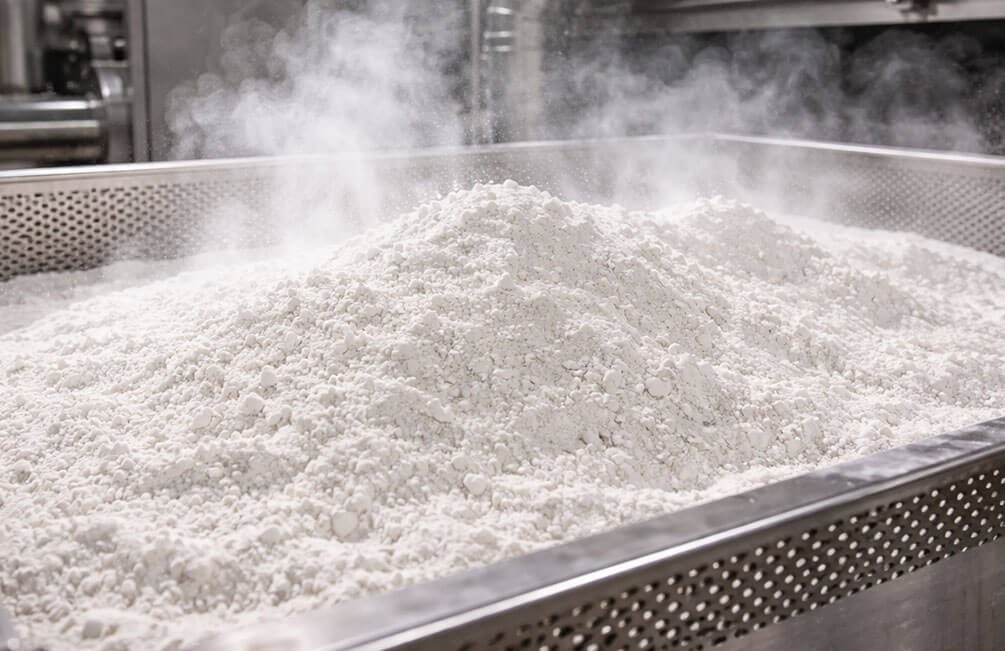
Pharma & Fine Actives Drying
Pharma and fine actives covers active pharmaceutical ingredients, intermediates, wet granules, excipients, probiotics, starter cultures, and enzymes. These products are high in value, often heat sensitive and frequently wet with solvents. Drying fixes residual moisture and solvent content, particle properties, potency or viability, so it must be controlled, repeatable and suitable for validation in regulated production.
GEM dries 7 materials in Pharma and Fine Actives, most often on the Freeze Dryer / Lyophilizer and Rotary Vacuum Dryer. The table below compares typical moisture and the recommended dryer for each one.
Pharma & Fine Actives: moisture and dryer by material
| Material | Feed moisture | Target | Recommended dryer |
|---|---|---|---|
| API (Active Pharmaceutical Ingredients) | 10–40% | to product spec, often below 0.5% LOD | Rotary Vacuum Dryer |
| Pharmaceutical Intermediates | 15–45% | to product spec, often below 1% LOD | Paddle Dryer / Rotary Vacuum Dryer |
| Wet Granules | 10–25% | 1–3% | Combination Fluid Bed Dryer |
| Excipients | Pilot trial | To spec | Flash Dryer / Combination Fluid Bed Dryer |
| Dairy Starter Cultures | 80–90% | 2–4% | Freeze Dryer / Lyophilizer |
| Probiotics | 80–90% | 2–4% | Freeze Dryer / Lyophilizer |
| Enzymes | Pilot trial | To spec | Combination Fluid Bed Dryer / Freeze Dryer / Lyophilizer |
Dryer selection for pharma & fine actives
Solvent-wet APIs and intermediates are dried in rotary vacuum dryers or paddle dryers, which heat indirectly in a closed vessel and recover solvent in condensers. Wet granules from tablet production go to combination fluid bed dryers, which also suit enzymes and some excipients; flash dryers handle tolerant excipient powders. Freeze dryers are used for dairy starter cultures, probiotics and enzymes, where sublimation at low temperature preserves viability and activity.
| Feed moisture | 10–45% water or solvent for APIs, intermediates and granules; 80–90% for culture and probiotic concentrates |
| Target moisture | Typically 1–4%, or to specified residual solvent and water limits |
| Drying approach | Vacuum or indirect contact drying for solvent-wet solids; fluid bed for granules; freeze drying for cultures and enzymes |
| Heat sources | Hot water, steam or thermal oil in jackets and agitators; refrigeration for freeze drying |


What makes these materials hard to dry
- Many APIs and enzymes degrade above modest temperatures, so drying must happen under vacuum, at low temperature or frozen.
- Residual solvents must meet tight regulatory limits, requiring closed drying with condensers and solvent recovery.
- Cleanability, containment and documentation are essential to prevent cross-contamination and to support validation and audits.
- Probiotics, cultures and enzymes lose viability or activity with heat and moisture, so drying conditions directly decide product value.
Why it pays back
In pharma, a failed drying step can mean a lost batch of high-value material. Controlled, repeatable drying protects potency and yield, keeps residual solvents within limits, supports batch release, and recovers solvents that would otherwise be lost or treated as waste.
Pharma & Fine Actives: questions buyers ask
Rotary vacuum dryer or paddle dryer for APIs?
When is freeze drying necessary?
Can the dryer be designed for cleaning and validation?
Send us a sample. See it dried.
We trial your material in our pilot facility before any equipment decision, then size the dryer from real data.
- Tell us the material, moisture and throughput.
- An engineer confirms the trial plan and sample shipping.
- You get drying data and a sized recommendation with a budget quotation.
Material not listed? Talk to our technical expert.
Describe it in the form, or message an engineer directly.
