


Animal, Aqua & Pet Feed Drying
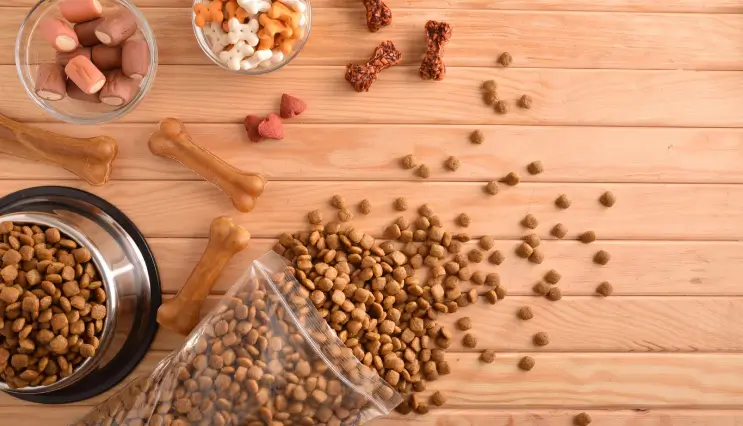
This family covers extruded and pelleted feeds for fish, shrimp, poultry, cattle and pets, together with protein ingredients such as fish meal, meat and bone meal and insect meal. Extruded pellets leave the extruder at roughly 18–30% moisture and must be dried evenly to 6–12% to stay safe in the bag. Correct drying protects pellet durability, water stability and nutrient value, and prevents mould in storage.
GEM dries 12 materials in Animal, Aqua and Pet Feed, most often on the Band Dryer (Beltotherm) and Multi-Pass Conveyor Dryer. They are grouped into 3 sub-groups below, each with a moisture comparison table.
Animal, Aqua & Pet Feed by group
More animal, aqua & pet feed materials
| Material | Feed moisture | Target | Recommended dryer |
|---|---|---|---|
| Pet Food (Kibble) | 22–30% | 8–10% | Band Dryer / Multi-Pass Conveyor Dryer |
| Pet Treats | Pilot trial | To spec | Band Dryer |
Dryer selection for animal, aqua & pet feed
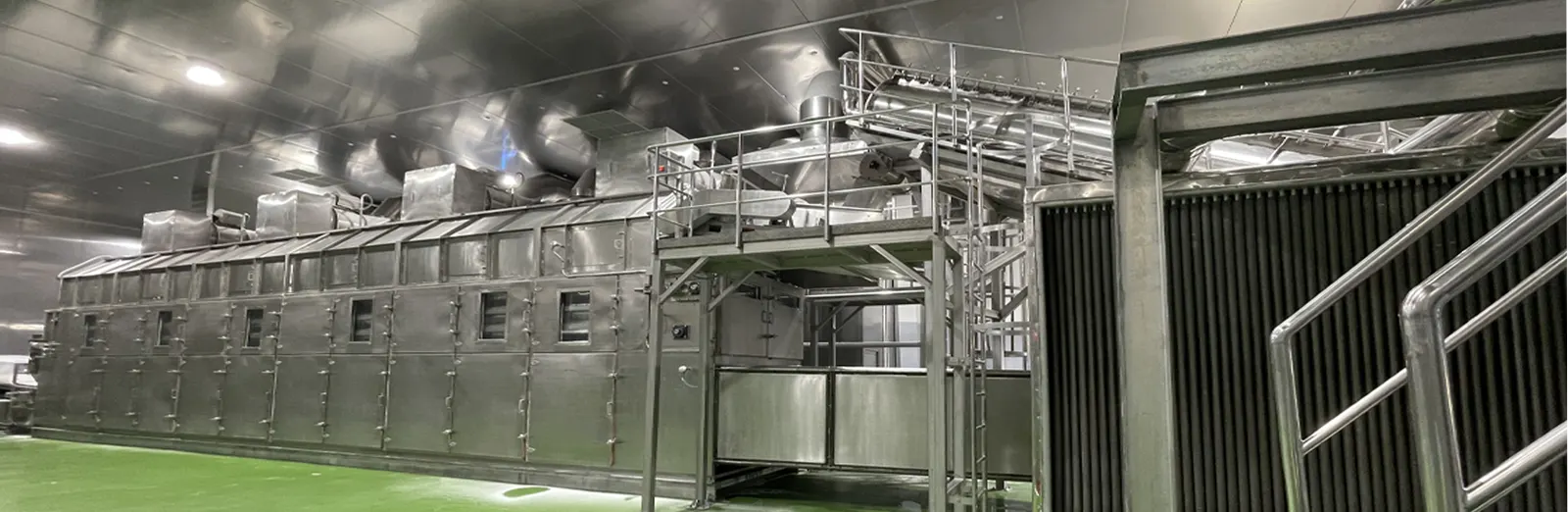
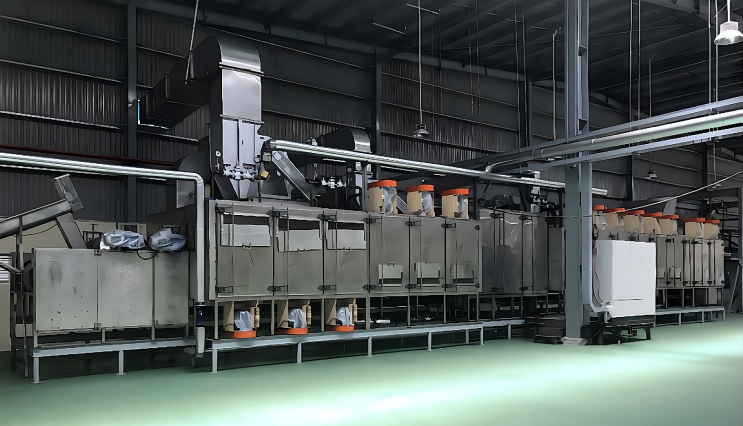
Extruded aqua and pet feeds go to band dryers or multi-pass conveyor dryers, which hold pellets in an even bed with zoned air for uniform moisture; the multi-pass layout saves floor space. Pelleted poultry and cattle feed often needs only a cooler, with a band dryer added where moisture is higher. Fine hatchery micro-pellets suit vibratory fluid bed dryers. Wet protein ingredients such as fish meal, rendered meal and insect larvae go to indirect paddle or rotary tube bundle dryers.
| Feed moisture | 15–30% for extruded and pelleted feed; 45–70% for fish meal, rendered meal and insect larvae |
| Target moisture | 6–12% for finished feeds; 5–10% for protein meals |
| Drying approach | Zoned through-air belt drying for pellets; indirect contact drying for fatty protein meals |
| Heat sources | Steam coils, thermal oil, gas burners or hot water |
| Downstream step | Cooling to near ambient before coating, bagging or bulk storage |


What makes these materials hard to dry
- Every pellet must reach the same moisture; wet pockets cause mould in storage while overdried pellets waste dry matter and crack.
- Aqua feeds need water stability and controlled density, so drying and cooling must not crack pellets or upset float or sink behaviour.
- Fish meal, rendered meal and insect larvae contain fat and protein that oxidise or degrade under high direct heat.
- Fines, recipe changes and frequent product switches demand easy cleaning and minimal carry-over between batches.
Why it pays back
In feed, moisture is margin. Drying evenly to the declared target avoids giving away dry matter, prevents mould claims and returns, and protects pellet quality customers can see. For rendering and insect plants, drying turns perishable wet material into a stable, saleable protein meal.
Animal, Aqua & Pet Feed: questions buyers ask
Band dryer or multi-pass conveyor dryer for extruded feed?
Why is moisture uniformity so important in fish feed?
Can the same plant dry fish meal and insect meal?
Send us a sample. See it dried.
We trial your material in our pilot facility before any equipment decision, then size the dryer from real data.
- Tell us the material, moisture and throughput.
- An engineer confirms the trial plan and sample shipping.
- You get drying data and a sized recommendation with a budget quotation.
Material not listed? Talk to our technical expert.
Describe it in the form, or message an engineer directly.
