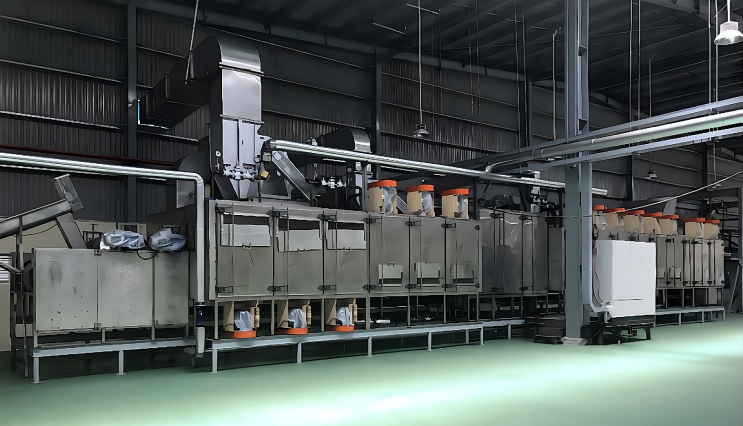
Pet food kibble drying sets the crunch, shelf life and food safety of dry dog and cat food after extrusion. Kibble shapes vary from small cat stars to large dog chunks, and each must reach a uniform moisture before fat and palatant coating without scorching colour or losing the texture owners notice.
To dry pet food (kibble), GEM recommends the Band Dryer (Beltotherm) and Multi-Pass Conveyor Dryer. Typical moisture is 22–30% in the feed and 8–10% after drying. Industrial Cooler is used when the feed or site calls for it. Every project starts with a pilot trial on your own sample.
Band and multi-pass conveyor dryers give the zoned, controllable residence kibble needs for even moisture and a documented heat treatment. The choice usually depends on floor space and changeover frequency; a cooler follows before coating.
| Typical feed moisture | 22–30% |
| Typical target moisture | 8–10% |
| Recommended dryer | Band Dryer (Beltotherm), Multi-Pass Conveyor Dryer |
| Alternatives | Industrial Cooler |
| Application area | Animal, Aqua & Pet Feed |
| Industries | Animal Feed, Breweries & Distilleries, Food & Beverage |
Consistent kibble moisture prevents mould recalls and keeps texture uniform across batches, which owners notice. It also allows tighter targeting of moisture, avoiding the cost of over-drying product that is sold by weight.
Plants searching for a pet food dryer or comparing a kibble dryer usually need three answers: which dryer fits, what it costs to run, and how fast it pays back. For Pet Food (Kibble), we start from your throughput, current moisture (typically 22–30%) and the target (8–10%), trial a sample on the Band Dryer, and return a sized recommendation with a budget quotation for your animal feed and food operation.
We trial your material in our pilot facility before any equipment decision, then size the dryer from real data.
Describe it in the form, or message an engineer directly.