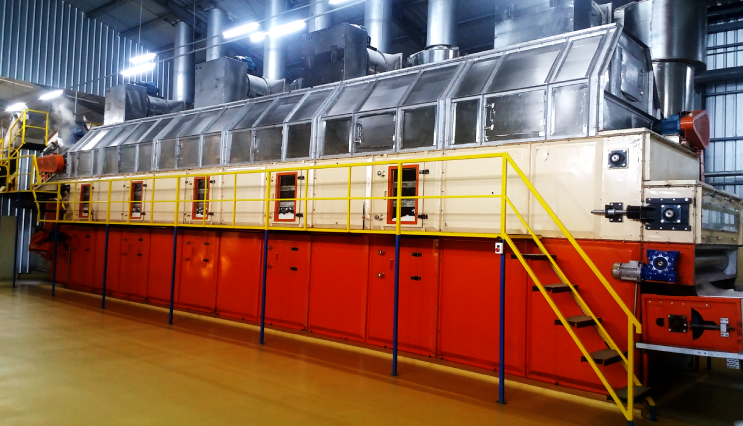
Biomass pellet cooling hardens hot, soft pellets leaving the press so they keep shape through screening, bagging and storage. Pellets exit the die hot and slightly moist, and lignin sets only as they cool, so cooling directly affects durability and the share of fines.
To dry biomass pellet cooling, GEM recommends the Industrial Cooler. Mesh Belt Dryer is used when the feed or site calls for it. Every project starts with a pilot trial on your own sample.
A counterflow cooler brings pellets close to ambient temperature with gentle air contact, giving durable, dry pellets. A mesh belt with an ambient-air section is used for fragile or torrefied pellets, or where cooling follows belt drying.
| Recommended dryer | Industrial Cooler |
| Alternatives | Mesh Belt Dryer |
| Application area | Biomass & Solid Fuel |
| Industries | Biomass, Bioenergy & Recycling |
Good cooling raises pellet durability, reduces fines and returns, and prevents moisture migration and heating in silos. It helps producers meet buyers' durability and fines specifications.
Plants searching for a biomass pellet cooler or comparing a pellet cooling machine usually need three answers: which dryer fits, what it costs to run, and how fast it pays back. For Biomass Pellet Cooling, we start from your throughput, current moisture and the target, trial a sample on the Industrial Cooler, and return a sized recommendation with a budget quotation for your biomass operation.
Compare all 6 materials in Wood, Sawdust & Pellet Lines or browse the wider Biomass & Solid Fuel family.
We trial your material in our pilot facility before any equipment decision, then size the dryer from real data.
Describe it in the form, or message an engineer directly.