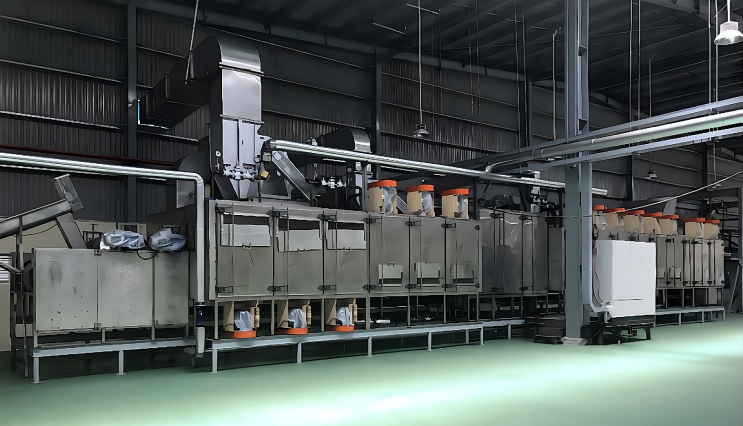
Bean drying for rajma, kidney beans and other dry beans needs a gentler approach than cereal grain, because the large seed and thin coat crack or wrinkle if moisture leaves too quickly. Field beans at 18–22% are dried to 13–15% for storage and canning, while food processors also dry cooked beans into quick-cook products.
To dry beans, GEM recommends the Grain Dryer. Typical moisture is 18–22% in the feed and 13–15% after drying. Vibratory Fluid Bed Dryer and Band Dryer are used when the feed or site calls for it. Every project starts with a pilot trial on your own sample.
A grain dryer at modest air temperature and humidity-controlled drying removes moisture slowly enough to avoid checking. A band dryer is chosen for cooked, quick-cook beans that must keep their shape, and a fluid bed for pre-drying blanched beans.
| Typical feed moisture | 18–22% |
| Typical target moisture | 13–15% |
| Recommended dryer | Grain Dryer |
| Alternatives | Vibratory Fluid Bed Dryer, Band Dryer |
| Application area | Grains, Pulses & Seeds |
| Industries | Agriculture & Grain Processing, Food & Beverage |
Uncracked beans command canning and export prices, while quick-cook dehydrated beans give processors a higher-value product with long shelf life, lower freight weight and steady demand from food service.
Plants searching for a bean dryer or comparing a kidney bean drying machine usually need three answers: which dryer fits, what it costs to run, and how fast it pays back. For Beans, we start from your throughput, current moisture (typically 18–22%) and the target (13–15%), trial a sample on the Grain Dryer, and return a sized recommendation with a budget quotation for your agriculture and food operation.
We trial your material in our pilot facility before any equipment decision, then size the dryer from real data.
Describe it in the form, or message an engineer directly.