Poultry litter and manure drying addresses a disposal problem on large farms: layer manure arrives at around 70–75% moisture and broiler litter at 25–40%, both carrying ammonia, odour and pathogens. Drying to 10–15% makes the material stable, cuts its weight and lets it be pelleted and sold as organic fertilizer or used as fuel.
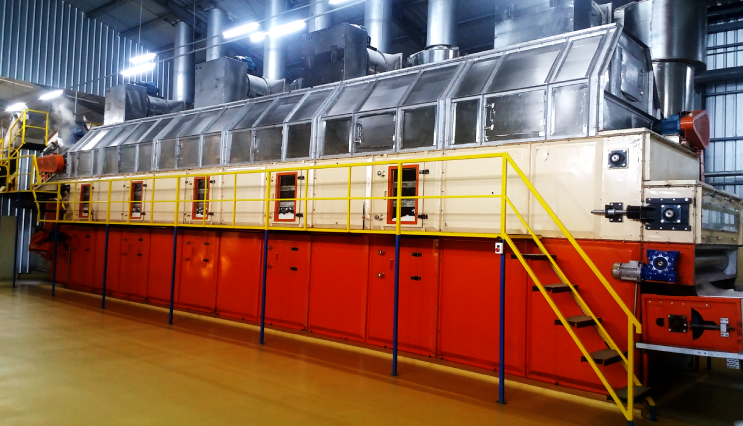
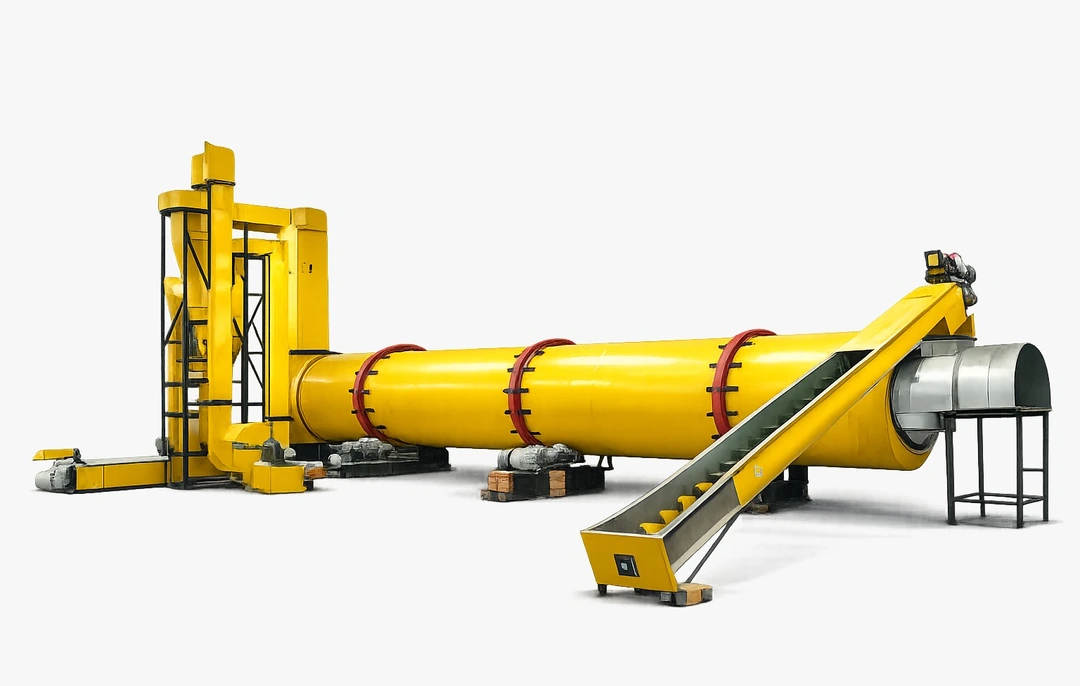
To dry poultry litter & manure pellets, GEM recommends the Mesh Belt Dryer (Meshotherm) and Rotary Dryer. Typical moisture is 30–75% in the feed and 10–15% after drying. Hybrid Belt + Fluid Bed Dryer and Industrial Cooler are used when the feed or site calls for it. Every project starts with a pilot trial on your own sample.
A mesh belt dryer suits pelleted or extruded manure and allows lower temperatures with good odour capture. A rotary dryer handles loose litter and high throughputs, and an Aerodryve unit is chosen for very wet layer manure needing high evaporation.
| Typical feed moisture | 30–75% |
| Typical target moisture | 10–15% |
| Recommended dryer | Mesh Belt Dryer (Meshotherm), Rotary Dryer |
| Alternatives | Hybrid Belt + Fluid Bed Dryer, Industrial Cooler |
| Application area | Fertilizers & Agrochemicals |
| Industries | Fertilizers & Agrochemicals, Agriculture & Grain Processing, Biomass, Bioenergy & Recycling |
Drying turns a disposal cost into a saleable product, reduces fly and odour complaints and helps farms meet environmental rules. Pellets sell to farms, nurseries and fertilizer blenders.
Plants searching for a poultry manure dryer or comparing a chicken litter drying machine usually need three answers: which dryer fits, what it costs to run, and how fast it pays back. For Poultry Litter & Manure Pellets, we start from your throughput, current moisture (typically 30–75%) and the target (10–15%), trial a sample on the Mesh Belt Dryer, and return a sized recommendation with a budget quotation for your fertilizers and agriculture operation.
We trial your material in our pilot facility before any equipment decision, then size the dryer from real data.
Describe it in the form, or message an engineer directly.