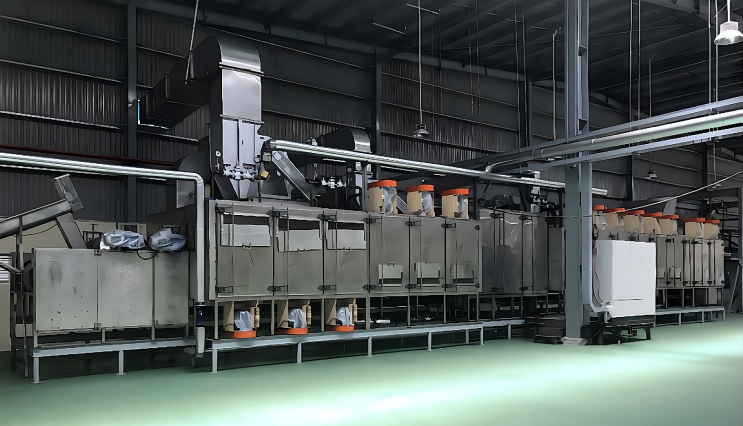
Fish feed drying follows extrusion, where pellets leave the die expanded, soft and carrying a lot of water. Whether the product must float for tilapia and carp or sink for catfish, buoyancy and pellet hardness depend on how that water is removed, and the dryer is where pellet density is finally fixed.
To dry fish feed, GEM recommends the Band Dryer (Beltotherm) and Multi-Pass Conveyor Dryer. Typical moisture is 20–28% in the feed and 8–10% after drying. Vibratory Fluid Bed Dryer and Industrial Cooler are used when the feed or site calls for it. Every project starts with a pilot trial on your own sample.
Band and multi-pass conveyor dryers give the long, controlled residence that expanded pellets need for even core moisture. A vibratory fluid bed is used for small fry crumbles, and a cooler is always added before oil coating or bagging.
| Typical feed moisture | 20–28% |
| Typical target moisture | 8–10% |
| Recommended dryer | Band Dryer (Beltotherm), Multi-Pass Conveyor Dryer |
| Alternatives | Vibratory Fluid Bed Dryer, Industrial Cooler |
| Application area | Animal, Aqua & Pet Feed |
| Industries | Animal Feed, Breweries & Distilleries |
Moisture uniformity decides shelf life in hot climates and protects the buoyancy farms pay for. Tighter control lets mills run closer to the moisture limit, selling more product weight without risking mouldy returns.
Plants searching for a fish feed dryer or comparing a floating fish feed drying machine usually need three answers: which dryer fits, what it costs to run, and how fast it pays back. For Fish Feed, we start from your throughput, current moisture (typically 20–28%) and the target (8–10%), trial a sample on the Band Dryer, and return a sized recommendation with a budget quotation for your animal feed operation.
Compare all 4 materials in Aqua Feed or browse the wider Animal, Aqua & Pet Feed family.
We trial your material in our pilot facility before any equipment decision, then size the dryer from real data.
Describe it in the form, or message an engineer directly.