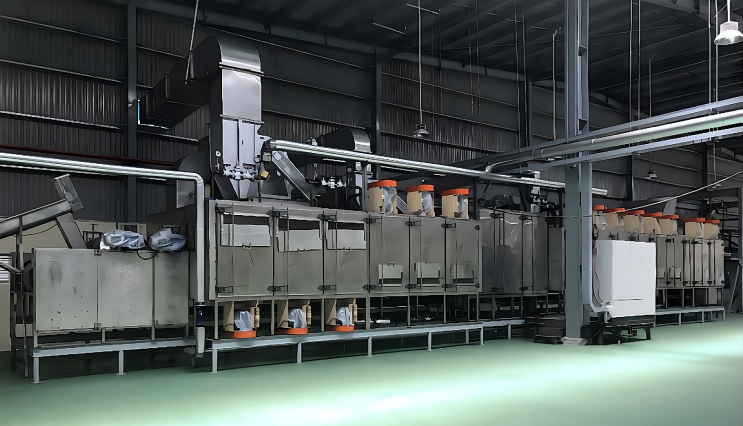
Shrimp feed drying has to lock in water stability, because shrimp graze slowly and a pellet must hold together in pond water for hours. Small sinking pellets of 1.2 to 2.5 mm are dried after conditioning or extrusion, and uneven moisture shows up quickly as crumbling, fines and wasted protein in the pond.
To dry shrimp feed, GEM recommends the Band Dryer (Beltotherm) and Multi-Pass Conveyor Dryer. Typical moisture is 18–25% in the feed and 9–11% after drying. Vibratory Fluid Bed Dryer and Industrial Cooler are used when the feed or site calls for it. Every project starts with a pilot trial on your own sample.
A band dryer holds small pellets in a still bed under zoned, moderate air, so binders set without cracking. A multi-pass dryer suits plants with limited floor area; a vibratory fluid bed is chosen for very small crumble sizes.
| Typical feed moisture | 18–25% |
| Typical target moisture | 9–11% |
| Recommended dryer | Band Dryer (Beltotherm), Multi-Pass Conveyor Dryer |
| Alternatives | Vibratory Fluid Bed Dryer, Industrial Cooler |
| Application area | Animal, Aqua & Pet Feed |
| Industries | Animal Feed, Breweries & Distilleries |
Uniform final moisture keeps pellets stable in water, reduces mould claims in humid coastal warehouses and limits the fines that farms treat as giveaway. Consistent drying also protects costly marine protein from overheating losses.
Plants searching for a shrimp feed dryer or comparing a shrimp feed drying machine usually need three answers: which dryer fits, what it costs to run, and how fast it pays back. For Shrimp Feed, we start from your throughput, current moisture (typically 18–25%) and the target (9–11%), trial a sample on the Band Dryer, and return a sized recommendation with a budget quotation for your animal feed operation.
Compare all 4 materials in Aqua Feed or browse the wider Animal, Aqua & Pet Feed family.
We trial your material in our pilot facility before any equipment decision, then size the dryer from real data.
Describe it in the form, or message an engineer directly.