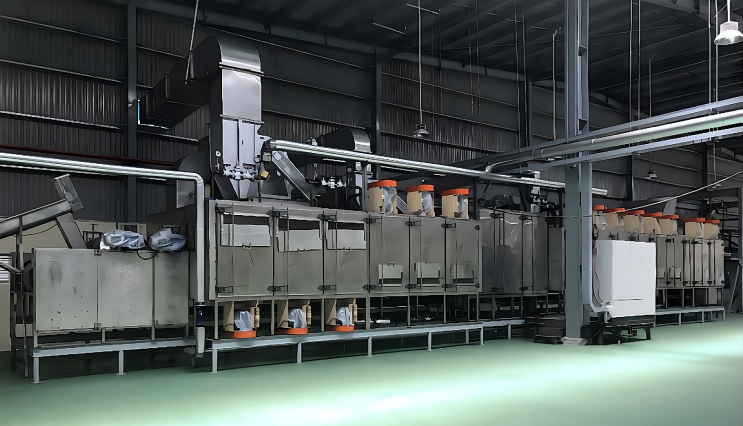
Hatchery micro-pellet drying deals with particles from about 0.3 to 1.2 mm, sized for larvae and post-larvae that need precise nutrition. These tiny feeds carry expensive ingredients such as krill, egg and vitamins, so every gram lost as dust or damaged by heat has a real cost.
To dry hatchery Micro-Pellets, GEM recommends the Vibratory Fluid Bed Dryer. Typical moisture is 18–25% in the feed and 7–10% after drying. Band Dryer, Multi-Pass Conveyor Dryer and Industrial Cooler are used when the feed or site calls for it. Every project starts with a pilot trial on your own sample.
A vibratory fluid bed moves fine particles gently in a controlled air stream at moderate temperature, with fines captured in a cyclone. A band dryer with fine solid or perforated belts is chosen for slightly larger crumbles or longer residence.
| Typical feed moisture | 18–25% |
| Typical target moisture | 7–10% |
| Recommended dryer | Vibratory Fluid Bed Dryer |
| Alternatives | Band Dryer, Multi-Pass Conveyor Dryer, Industrial Cooler |
| Application area | Animal, Aqua & Pet Feed |
| Industries | Animal Feed, Breweries & Distilleries |
Higher saleable yield from each batch matters more here than in bulk feed, because ingredient cost per kilogram is far above grower feed. Gentle drying also preserves the nutrient levels hatcheries test for.
Plants searching for a micro pellet dryer or comparing a hatchery feed drying machine usually need three answers: which dryer fits, what it costs to run, and how fast it pays back. For Hatchery Micro-Pellets, we start from your throughput, current moisture (typically 18–25%) and the target (7–10%), trial a sample on the Vibratory Fluid Bed Dryer, and return a sized recommendation with a budget quotation for your animal feed operation.
Compare all 4 materials in Aqua Feed or browse the wider Animal, Aqua & Pet Feed family.
We trial your material in our pilot facility before any equipment decision, then size the dryer from real data.
Describe it in the form, or message an engineer directly.