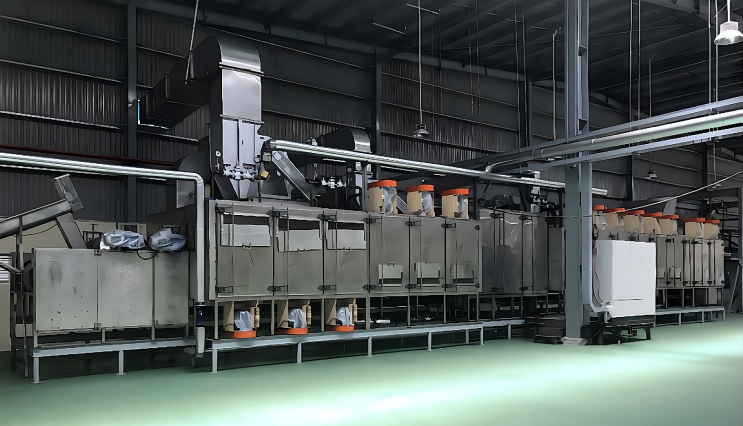
Insect meal drying for black soldier fly larvae starts with soft-bodied larvae holding roughly two-thirds water and a fat content that can exceed 30% on a dry basis. Producers dry larvae to make protein meal and larvae oil for aqua, poultry and pet feed, and the drying step largely sets colour, fat stability and digestibility.
To dry insect meal (BSF larvae), GEM recommends the Paddle Dryer and Rotary Tube Bundle Dryer. Typical moisture is 60–70% in the feed and 5–8% after drying. Band Dryer and Industrial Cooler are used when the feed or site calls for it. Every project starts with a pilot trial on your own sample.
Indirect paddle and steam-tube dryers heat larvae through enclosed surfaces, which handles the fatty mass and keeps air contact low. A band dryer is chosen for whole dried larvae sold as treats, where appearance matters and fat content is acceptable at moderate temperature.
| Typical feed moisture | 60–70% |
| Typical target moisture | 5–8% |
| Recommended dryer | Paddle Dryer, Rotary Tube Bundle Dryer |
| Alternatives | Band Dryer, Industrial Cooler |
| Application area | Animal, Aqua & Pet Feed |
| Industries | Animal Feed, Breweries & Distilleries, Biomass, Bioenergy & Recycling |
Drying makes larvae storable and pressable, opening protein and oil revenue that can replace imported fish meal. Controlled colour and digestibility help insect producers win feed contracts with demanding buyers.
Plants searching for a bsf larvae dryer or comparing a insect meal drying machine usually need three answers: which dryer fits, what it costs to run, and how fast it pays back. For Insect Meal (BSF Larvae), we start from your throughput, current moisture (typically 60–70%) and the target (5–8%), trial a sample on the Paddle Dryer, and return a sized recommendation with a budget quotation for your animal feed and biomass operation.
Compare all 3 materials in Feed Proteins & Meals or browse the wider Animal, Aqua & Pet Feed family.
We trial your material in our pilot facility before any equipment decision, then size the dryer from real data.
Describe it in the form, or message an engineer directly.