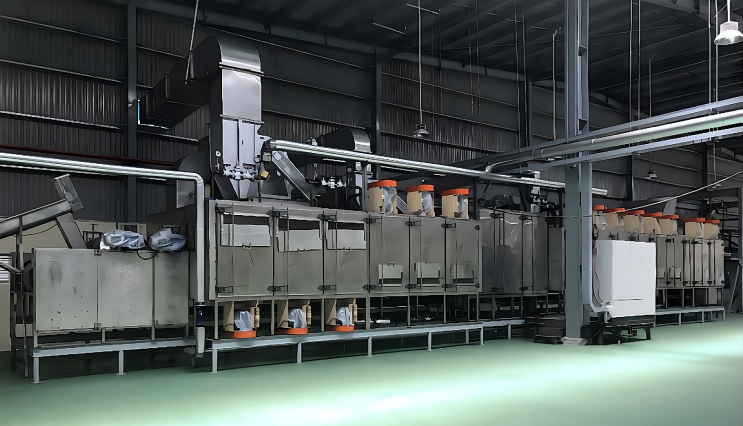
Moringa leaf drying is the main step in producing moringa leaf powder, sold as a protein, vitamin and mineral supplement. The small leaflets are thin and dry quickly, but buyers check green colour, nutrient content and microbial counts closely. Separating leaflets from stalks before or after drying shapes the dryer choice.
To dry moringa leaves, GEM recommends the Single-Pass Conveyor Dryer. Typical moisture is 75–80% in the feed and 5–8% after drying. Band Dryer and Multi-Pass Conveyor Dryer are used when the feed or site calls for it. Every project starts with a pilot trial on your own sample.
A single-pass conveyor dryer holds stripped leaflets on one belt with gentle air and no drops, giving even green colour and limiting fines. A band dryer suits high-volume plantations; multi-pass units suit leaves dried on stalks before stripping.
| Typical feed moisture | 75–80% |
| Typical target moisture | 5–8% |
| Recommended dryer | Single-Pass Conveyor Dryer |
| Alternatives | Band Dryer, Multi-Pass Conveyor Dryer |
| Application area | Herbal, Botanical & Nutraceutical |
| Industries | Nutraceuticals & Herbal, Food & Beverage |
Moringa powder sells for many times the value of fresh leaves. Bright colour, low microbial counts and stable nutrients open supplement and export markets that sun-dried powder cannot reach.
Plants searching for a moringa leaf dryer or comparing a moringa powder plant usually need three answers: which dryer fits, what it costs to run, and how fast it pays back. For Moringa Leaves, we start from your throughput, current moisture (typically 75–80%) and the target (5–8%), trial a sample on the Single-Pass Conveyor Dryer, and return a sized recommendation with a budget quotation for your nutraceuticals and food operation.
We trial your material in our pilot facility before any equipment decision, then size the dryer from real data.
Describe it in the form, or message an engineer directly.