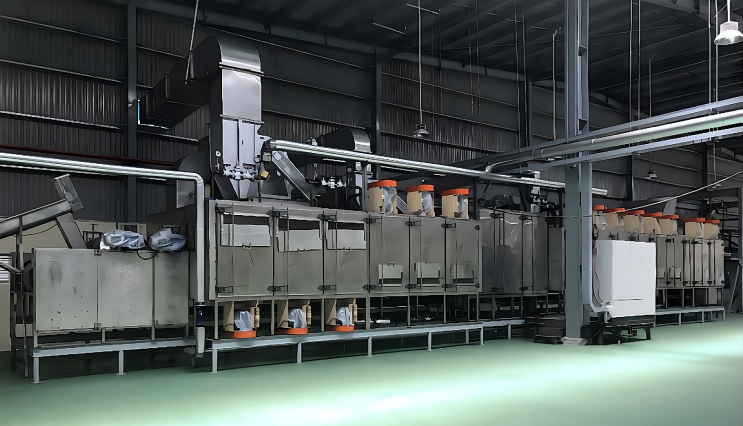
Medicinal herb drying preserves aerial parts, leaves and stems such as tulsi, brahmi, kalmegh and giloy for Ayurvedic, herbal and pharmaceutical manufacture. Buyers test for marker compounds, microbial limits and foreign matter, not just moisture. Low-temperature, clean drying preserves actives and keeps contamination below pharmacopoeia limits.
To dry medicinal herbs, GEM recommends the Single-Pass Conveyor Dryer and Band Dryer (Beltotherm). Typical moisture is 70–85% in the feed and 8–10% after drying. Multi-Pass Conveyor Dryer and Freeze Dryer / Lyophilizer are used when the feed or site calls for it. Every project starts with a pilot trial on your own sample.
A single-pass conveyor or Beltotherm band dryer gives low, uniform air temperatures with recorded zone control, protecting actives and meeting GMP documentation. Multi-pass dryers suit chopped herbs; freeze drying is reserved for very heat-sensitive or high-value species.
| Typical feed moisture | 70–85% |
| Typical target moisture | 8–10% |
| Recommended dryer | Single-Pass Conveyor Dryer, Band Dryer (Beltotherm) |
| Alternatives | Multi-Pass Conveyor Dryer, Freeze Dryer / Lyophilizer |
| Application area | Herbal, Botanical & Nutraceutical |
| Industries | Nutraceuticals & Herbal, Pharmaceuticals & Biotech |
Controlled drying raises assay values and microbial compliance, supporting sales to regulated pharmaceutical and nutraceutical buyers rather than lower-priced traditional markets. It also replaces weather-dependent shade drying with predictable daily output.
Plants searching for a medicinal herb dryer or comparing a herb drying machine usually need three answers: which dryer fits, what it costs to run, and how fast it pays back. For Medicinal Herbs, we start from your throughput, current moisture (typically 70–85%) and the target (8–10%), trial a sample on the Single-Pass Conveyor Dryer, and return a sized recommendation with a budget quotation for your nutraceuticals and pharmaceuticals operation.
We trial your material in our pilot facility before any equipment decision, then size the dryer from real data.
Describe it in the form, or message an engineer directly.