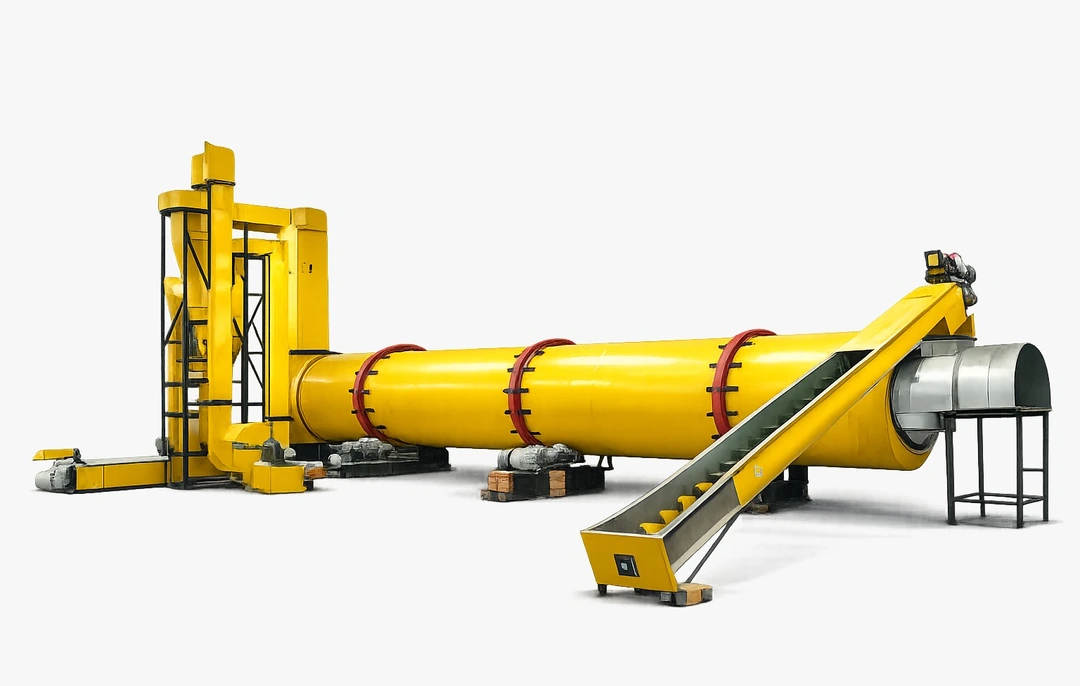
DDGS drying combines the wet cake from grain distillery centrifuges with concentrated thin stillage syrup and dries the mixture into distillers dried grains with solubles. The result is a traded protein feed for cattle, poultry and fish. Grain-based ethanol plants dry it because wet distillers grains spoil within days and travel poorly.
To dry DDGS, GEM recommends the Rotary Tube Bundle Dryer and Rotary Dryer. Typical moisture is 55–65% in the feed and 10–12% after drying. Direct / Indirect Rotary Dryer is used when the feed or site calls for it. Every project starts with a pilot trial on your own sample.
Steam-tube rotary dryers suit DDGS because they use distillery steam, keep product away from flame and limit colour damage. Direct rotary dryers handle high tonnages where fuel is cheap; a direct/indirect rotary gives flexibility where steam supply varies.
| Typical feed moisture | 55–65% |
| Typical target moisture | 10–12% |
| Recommended dryer | Rotary Tube Bundle Dryer, Rotary Dryer |
| Alternatives | Direct / Indirect Rotary Dryer |
| Application area | Pomace, Pulp & By-products |
| Industries | Animal Feed, Breweries & Distilleries |
Drying converts a perishable co-product into a storable feed commodity sold across regions, often a meaningful share of distillery revenue. Plants without drying depend on nearby livestock buyers and face disposal risk when demand drops.
Plants searching for a DDGS dryer or comparing a distillers grains drying plant usually need three answers: which dryer fits, what it costs to run, and how fast it pays back. For DDGS, we start from your throughput, current moisture (typically 55–65%) and the target (10–12%), trial a sample on the Rotary Tube Bundle Dryer, and return a sized recommendation with a budget quotation for your animal feed operation.
Compare all 8 materials in Brewery, Distillery & Beverage By-products or browse the wider Pomace, Pulp & By-products family.
We trial your material in our pilot facility before any equipment decision, then size the dryer from real data.
Describe it in the form, or message an engineer directly.