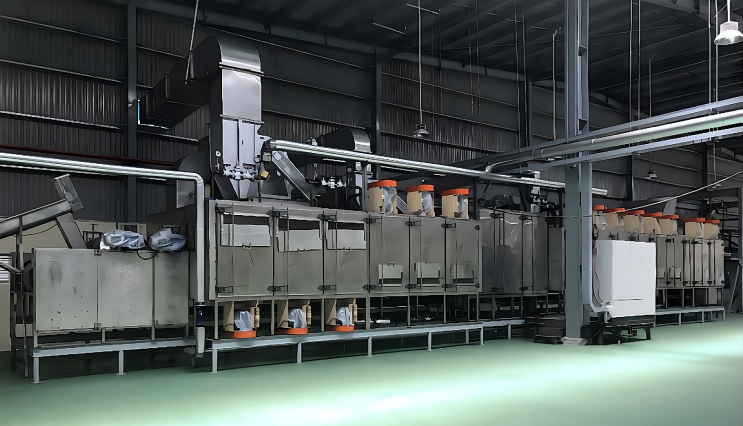
Cranberry pomace drying preserves the skins and seeds left after juice pressing, a by-product rich in proanthocyanidins, fibre and seed oil. Unlike apple or citrus residues, its value lies mainly in nutraceutical and food ingredients, so colour and polyphenol retention set the dryer design. Processors dry it to sell ingredient-grade powder instead of landfilling.
To dry cranberry pomace, GEM recommends the Band Dryer (Beltotherm). Typical moisture is 50–65% in the feed and 5–8% after drying. Multi-Pass Conveyor Dryer and Freeze Dryer / Lyophilizer are used when the feed or site calls for it. Every project starts with a pilot trial on your own sample.
A Beltotherm band dryer keeps the pomace in a thin, undisturbed layer with zoned temperatures to protect colour. A multi-pass conveyor suits smaller lines that need long residence; freeze drying is reserved for premium extract-grade fractions.
| Typical feed moisture | 50–65% |
| Typical target moisture | 5–8% |
| Recommended dryer | Band Dryer (Beltotherm) |
| Alternatives | Multi-Pass Conveyor Dryer, Freeze Dryer / Lyophilizer |
| Application area | Pomace, Pulp & By-products |
| Industries | Food & Beverage, Nutraceuticals & Herbal |
Food-grade dried cranberry pomace sells as an ingredient rather than waste, while drying removes most of the hauling weight. A stable, low-moisture product can be stored and sold to extract and fibre buyers year-round.
Plants searching for a cranberry pomace dryer or comparing a cranberry pomace drying usually need three answers: which dryer fits, what it costs to run, and how fast it pays back. For Cranberry Pomace, we start from your throughput, current moisture (typically 50–65%) and the target (5–8%), trial a sample on the Band Dryer, and return a sized recommendation with a budget quotation for your food and nutraceuticals operation.
Compare all 11 materials in Fruit & Vegetable Pomace and Food Waste or browse the wider Pomace, Pulp & By-products family.
We trial your material in our pilot facility before any equipment decision, then size the dryer from real data.
Describe it in the form, or message an engineer directly.