


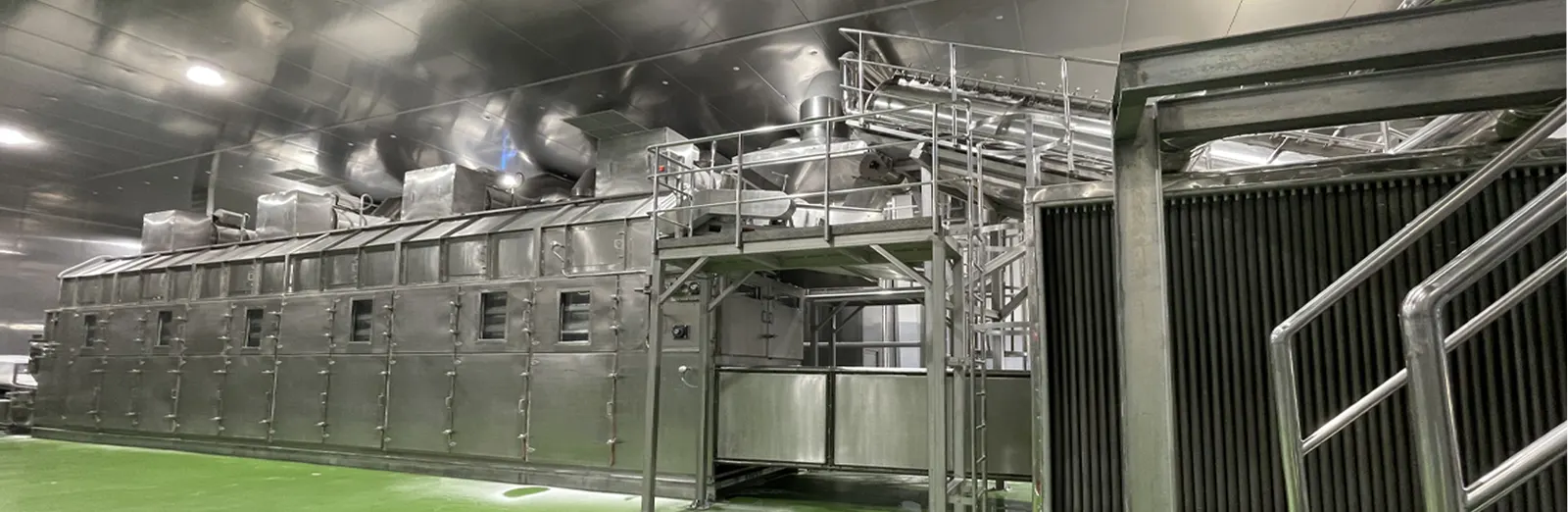
How to Choose the Right Industrial Dryer? Types, Benefits, Working Process, and Selection Guide
Certain industries cannot afford moisture-related challenges to affect their production processes. Industries such as food processing, chemical manufacturing, pharmaceuticals, industrial waste management, and biomass processing depend on effective moisture removal to maintain product quality, improve storage life, and increase operational efficiency. An industrial dryer plays an important role in removing moisture from different materials through controlled heat, airflow, and drying conditions. The right drying solution helps industries achieve consistent results, reduce material losses, and improve overall productivity.
However, choosing the right industrial dryer is not always simple. Different materials require different drying conditions, and selecting unsuitable equipment can result in inconsistent performance, higher energy consumption, and reduced production efficiency.
To make the right decision, industries need to understand the different types of industrial dryers, how they work, key selection factors, and how a reliable industrial dryer manufacturer can support their requirements.
How Do Industries Choose the Right Industrial Dryer?
Industries choose the right industrial dryer by evaluating material properties, moisture content, production capacity, required drying temperature, energy efficiency, and final product quality requirements.
The ideal industrial drying system should match the specific application while providing consistent moisture removal, reliable performance, and long-term operational benefits.
What Factors Should You Consider When Choosing an Industrial Dryer?
Selecting an industrial dryer requires careful evaluation beyond just production capacity. Before investing in industrial drying equipment, businesses should consider their material characteristics, moisture levels, processing requirements, and efficiency goals.
Understand Your Material and Drying Requirements
Every material reacts differently during the drying process. The characteristics of the material determine the type of drying technology required.
For example, food products often require controlled drying conditions to preserve color, texture, taste, and nutritional value. Pharmaceutical materials may require precise temperature control, while sludge and waste materials may need efficient moisture reduction for easier handling and disposal.
Understanding the behavior of your material helps determine the most suitable industrial drying system for your application.
Consider Production Capacity and Energy Efficiency
Industrial operations require dryers that can handle the required production volume without compromising performance.An inefficient drying system can increase energy consumption and operating costs. A properly designed industrial dryer provides better control over drying parameters and supports consistent production output.
Choosing equipment that matches your production requirements helps improve efficiency and deliver long-term value.
What Are the Different Types of Industrial Dryers?
An experienced industrial dryer manufacturer can provide different drying solutions depending on material type, production requirements, temperature needs, and moisture removal goals.
Rotary Dryers for High-Volume Processing
Rotary dryers are designed for continuous drying operations where large quantities of materials need to be processed.
These systems use a rotating drum and controlled heat transfer to remove moisture efficiently. Rotary dryers are commonly used in applications where consistent performance and high-volume processing are required.
Fluid Bed Dryers for Uniform Drying
Fluid bed dryers use heated air to suspend and dry small particles, granules, and powders.
The process improves contact between the drying air and the material, allowing uniform moisture removal. These systems are suitable for industries where consistent drying quality is important.
Tray Dryers for Controlled Batch Processing
Tray dryers provide controlled temperature management and careful material handling.
They are suitable for applications where maintaining product quality and precise drying conditions are essential.
Conveyor Drying Systems for Continuous Production
Conveyor dryers support continuous drying operations with controlled airflow and temperature management.
They are commonly used where industries require consistent production output and efficient material movement.
Comparison of Different Industrial Drying Technologies
| Dryer Type | Suitable Applications | Main Advantages |
| Rotary Dryer | Biomass, chemicals, sludge, bulk materials | Suitable for large-scale continuous drying operations |
| Fluid Bed Dryer | Food, pharmaceuticals, chemicals | Provides uniform drying with controlled airflow |
| Tray Dryer | Food, specialty chemicals, pharmaceuticals | Offers precise temperature control for sensitive materials |
| Conveyor Dryer | Large-scale industrial production | Supports continuous drying with consistent output |
How Does an Industrial Dryer Work?
Although industrial dryers differ in design and application, the basic working principle remains similar.
The drying process involves exposing wet materials to controlled heat, which allows moisture to evaporate. The system manages important parameters such as:
- Temperature control
- Airflow management
- Drying time
- Material movement
- Moisture removal rate
A properly designed industrial drying system ensures that moisture is removed effectively while maintaining the quality of the final product.
How Do Different Industries Use Industrial Drying Systems?
Different industries have different drying challenges. The right industrial drying equipment depends on material properties, moisture content, production requirements, and quality expectations.
Food Industry
Food processing requires controlled drying conditions to maintain product quality, shelf life, color, and texture.
Industrial dryers used in food applications are designed to provide consistent moisture removal while protecting product characteristics.
Chemical Industry
Chemical manufacturing often requires precise drying conditions because different chemical materials respond differently to heat.
A suitable industrial dryer helps maintain process efficiency while achieving the required moisture level.
Pharmaceutical Industry
Pharmaceutical applications require highly controlled drying environments to protect sensitive materials.
Drying systems used in this sector focus on accuracy, consistency, and reliable performance.
Sludge and Waste Management Industry
Sludge drying helps reduce moisture content, improving handling, transportation, and disposal efficiency.
Industrial drying systems provide effective moisture reduction solutions for waste management applications.
Biomass Industry
Biomass materials often require drying before further processing or energy generation.
Efficient drying solutions help improve material quality and support better processing outcomes.
How to Identify a Reliable Industrial Dryer Manufacturer?
Choosing the right manufacturer is just as important as selecting the right drying technology. A reliable industrial dryer manufacturer focuses on engineering expertise, testing, customization, and long-term support.
| Factors | Reliable Manufacturer | Poor Manufacturer |
| Custom Design | ✓ Designs based on specific process requirements | ✕ Standard solutions without customization |
| Pilot Testing Facility | ✓ Tests materials before final design | ✕ Limited testing approach |
| Engineering Support | ✓ Provides technical guidance throughout the project | Limited support |
| Energy Optimization | ✓ Focuses on efficient drying performance | Basic approach |
| After-Sales Service | ✓ Provides ongoing support | Minimal support |
What Are the Benefits of Choosing the Right Industrial Drying Equipment?
Selecting the right industrial drying equipment provides several operational advantages, including:
- Improved production consistency
- Better moisture control
- Reduced material losses
- Improved product quality
- Better energy management
- Increased operational efficiency
For industries looking to improve productivity and sustainability, investing in the right drying solution can provide long-term benefits.
Key Performance Factors of Industrial Drying Systems
The performance of an industrial dryer depends on several factors, including material properties, system design, operating conditions, and production requirements.
Important factors include:
| Performance Factor | Importance |
|---|---|
| Moisture Reduction | Determines drying effectiveness based on material requirements |
| Operating Temperature | Helps maintain product quality during drying |
| Processing Capacity | Ensures the system meets production demands |
| Energy Efficiency | Helps optimize operating costs |
| Throughput Performance | Supports consistent production output |
Note: Actual performance values depend on the material type, initial moisture content, process conditions, and customized dryer design.
Why Choose Gem Drytech Systems LLP for Industrial Drying Solutions?
Choosing the right industrial dryer manufacturer requires experience, testing capability, and a strong understanding of industrial applications.
Gem Drytech Systems LLP combines engineering expertise with customized drying solutions to support different industries.
25+ Years of Engineering Experience
With over 25 years of engineering experience, Gem Drytech Systems LLP understands the challenges industries face when managing moisture-sensitive materials.
Dried & Tested – Proven, Not Assumed
Every drying application has unique requirements. Gem Drytech focuses on testing and evaluation to develop solutions based on actual process needs.
Pilot R&D Testing Facility
The pilot R&D testing facility helps analyze material behavior and identify suitable drying parameters before implementing the final solution.
Custom-Designed Drying Systems
Gem Drytech develops customized industrial drying systems based on specific production requirements rather than providing standard solutions.
Global Installations
With global installations, Gem Drytech supports industries with reliable drying solutions designed for different applications.
Industries Served
Gem Drytech Systems LLP provides industrial drying solutions for:
Final Thoughts
Selecting the right industrial dryer is an important decision that impacts product quality, operational efficiency, and long-term performance.
Industries should consider material characteristics, production requirements, energy efficiency, and manufacturer expertise before investing in a drying solution.
Gem Drytech Systems LLP provides customized industrial drying systems designed for different applications, helping industries improve efficiency and achieve reliable moisture removal.
Looking for an experienced industrial dryer manufacturer? Contact Gem Drytech Systems LLP to discuss your drying requirements.
Frequently Asked Questions About Industrial Dryers
What is an industrial dryer?
An industrial dryer is equipment designed to remove moisture from materials using controlled heat and airflow. These systems are used across industries such as food, chemicals, pharmaceuticals, biomass, and waste management.
How do I choose the right industrial dryer?
The right industrial dryer depends on material characteristics, moisture content, production capacity, drying requirements, energy efficiency goals, and final product quality expectations.
Why is pilot testing important before selecting a drying system?
Pilot testing helps manufacturers understand how a specific material reacts during the drying process. It allows engineers to determine suitable drying conditions and design a more effective solution.
Which industries use industrial drying equipment?
Industrial drying equipment is widely used in food processing, chemical manufacturing, pharmaceuticals, sludge treatment, biomass processing, and other moisture-sensitive industries.
