


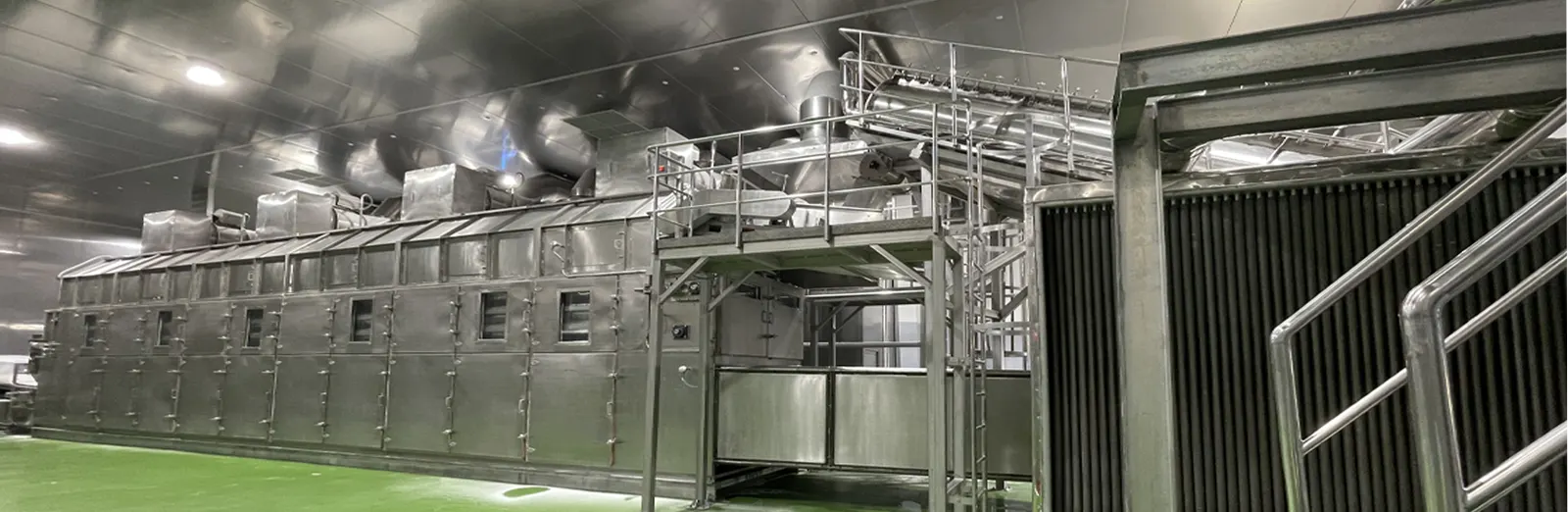
How to Reduce Energy Consumption in a Continuous Band Dryer
Posted On: November 21, 2026
When a dryer’s fuel bill rises, increasing production may seem like the obvious way to spread the cost. But if the product bed is uneven, airflow is restricted, or the material is being overdried, those extra operating hours can make the problem more expensive.
Reducing band dryer energy consumption begins with understanding where energy goes and how much useful drying it delivers. Plant teams need to connect utility readings with feed moisture, water evaporation and saleable output.
Whether you process vegetables, food ingredients or industrial by-products, the following steps can help you identify improvements worth testing.
1. Measure Energy Against Water Evaporation
A monthly electricity bill gives limited insight into dryer performance. A wetter feed requires more evaporation, so two production days can have different energy demands even at the same feed rate.
Record wet feed, inlet moisture, outlet moisture, fuel or steam consumption and electrical use over the same period.
Track the two indicators separately.
- Thermal energy per kilogram of water evaporated, expressed in units such as MJ/kg.
- Electrical energy per kilogram of water evaporated, expressed in kWh/kg.
Also track energy cost per tonne of saleable product. Use consistent measurement boundaries, including the same fans, conveyors and heating equipment in each comparison.
2. Remove Excess Water Before Thermal Drying
Check whether upstream preparation is sending avoidable water into the dryer.
Washed vegetable slices may carry surface water. Other materials may benefit from screening, pressing or centrifuging, where the product and process permit these operations.
Consider an illustrative feed of 1,000 kg/h at 80% moisture, dried to 10% moisture, both on a wet basis. Assuming dry solids are conserved, the dryer removes approximately 778 kg/h of water.
If upstream dewatering reduces that same material to 75% moisture while retaining its 200 kg/h of dry solids, the dryer receives 800 kg/h and removes approximately 578 kg/h of water.
The evaporation load falls by 200 kg/h. Assess the dewatering equipment’s energy, maintenance and product losses when calculating the overall benefit.
3. Keep Feeding and Bed Depth Consistent
Uneven loading makes uniform drying difficult. A thick section can remain wet while a thin section dries early, encouraging operators to extend residence time for the whole bed.
Inspect the feeder, spreader and leveller. Check loading across the conveyor width and watch for surges, gaps or clumps.
Maintain a repeatable bed depth suited to the material’s permeability. Increasing depth can restrict air passage, so confirm discharge moisture before accepting a higher feed rate.
For broader operating context, read our article on the advantages of continuous belt dryers in the food industry.
4. Control Final Moisture and Avoid Overdrying
Drying below the agreed moisture specification consumes additional energy and reduces product weight.
Establish an operating target that consistently meets customer requirements. Take samples across the discharge width and at regular intervals, using a repeatable moisture test.
Where an online moisture instrument is installed, check its readings against the laboratory method for each relevant product.
Adjust conveyor speed, feed rate and temperature together. Give each adjustment enough time to reach the discharge before judging its effect.
Include colour, texture or other quality requirements when evaluating changes. A lower energy reading has commercial value when the finished product remains acceptable.
5. Match Zone Temperatures to the Material
A continuous band dryer can use separate drying zones to manage conditions as material moves through the chamber.
GEM Drytech’s Beltotherm® band dryer uses multiple zones and controlled conveyor movement, with the configuration selected around the drying duty.
Develop the temperature profile using representative material. Check product temperature, outlet moisture and quality alongside the air setpoints.
A lower air temperature may extend residence time and increase fan operating hours. A higher temperature may increase heat losses or damage the product. Compare total energy per kilogram evaporated after the process stabilises.
Save validated settings as product recipes so operators can repeat successful conditions.
6. Balance Air Recirculation and Exhaust
Recirculation can retain useful heat within the drying circuit. Exhaust removes the moisture released by the product.
Too much exhaust can discharge usable heat. Insufficient exhaust can allow humidity to build up and slow drying.
Review airflow, exhaust temperature and humidity together with discharge moisture. Use these measurements to assess damper settings and recirculation levels.
Keep adjustments within the equipment’s design limits and the material’s handling requirements. A change that works for one ingredient may produce different results with another.
7. Maintain the Airflow Path and Heating System
Blocked screens, coated heating surfaces and product deposits can affect airflow and heat transfer.
Build inspections around actual operating conditions. Check belts or trays, air passages, coils, filters, fans and seals. Record pressure differences where instruments are available and investigate changes from the clean operating baseline.
For steam-heated equipment, inspect condensate drainage and steam traps as part of the plant’s maintenance programme.
Where variable-speed fans are fitted, assess speed adjustments against airflow and product performance. Confirm the setting with the equipment supplier before adopting it as a standard recipe.
Clean equipment also makes operating comparisons more reliable.
8. Reduce Heat Loss and Idle Running
Inspect insulation, access doors, seals and exposed hot ductwork. Damaged insulation or air leakage can increase the heat required to maintain operating conditions.
Coordinate preparation, drying and packing so the dryer receives a dependable feed. Repeated interruptions can lead to unnecessary warm-up and idle periods.
Record energy used during startup and stoppages separately from stable production.
Follow the manufacturer’s standby and shutdown procedures, including required cooling or purge sequences. Use stoppage records to address recurring upstream delays.
9. Assess Waste Heat Against Your Actual Duty
Recovered heat may reduce purchased fuel when its temperature, flow and operating schedule match the dryer’s needs.
Assess the usable heat after accounting for heat exchanger performance, duct losses, fouling and additional fan or pump demand. Include backup heating when the source is intermittent.
GEM Drytech’s industrial drying with waste heat assessment and integration guide explains the information needed before estimating recoverable heat and savings.
Frequently Asked Questions
1. What uses energy in a band dryer?
Thermal energy heats the material and evaporates moisture. Electricity runs equipment such as circulation fans, exhaust fans and conveyor drives. The balance depends on the heating arrangement, material and operating duty.
2. Does increasing belt speed save energy?
It can reduce residence time, but the product must still reach its required moisture and quality. Compare specific energy consumption and saleable output after each adjustment.
3. How much energy can my plant save?
Establish a measured baseline first. Savings depend on the starting condition, feed variability and available improvements. Verify results over comparable production runs.
4. Can a pilot trial support energy optimisation?
A trial can compare drying behaviour, moisture and quality under controlled conditions. Use its findings alongside scale-up calculations and plant measurements when estimating production energy demand.
Improve Your Drying Process with Gem Drytech Systems LLP
Share your material, feed rate, moisture targets, available utilities, and current operating data with Gem Drytech Systems LLP. These details help identify where process adjustments or equipment improvements deserve attention.
Contact us to discuss your requirements and request a pilot drying trial with representative material.
