


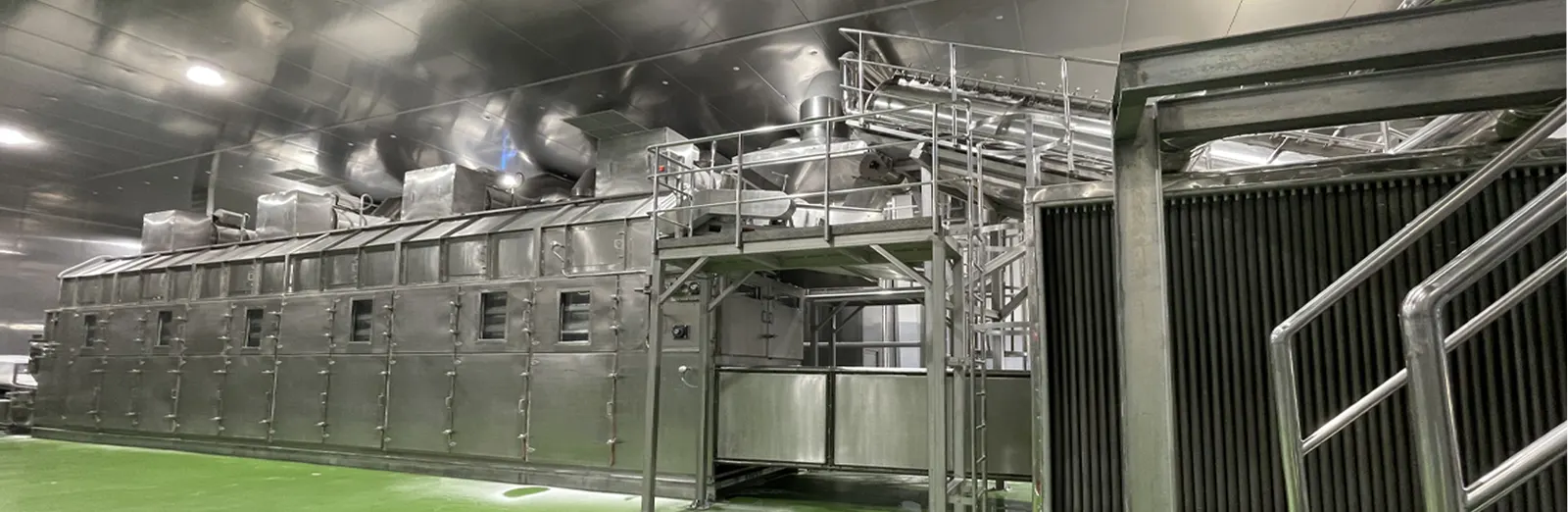
Paddle Dryer vs Belt Dryer: Which Industrial Drying System Is Better for Your Application?
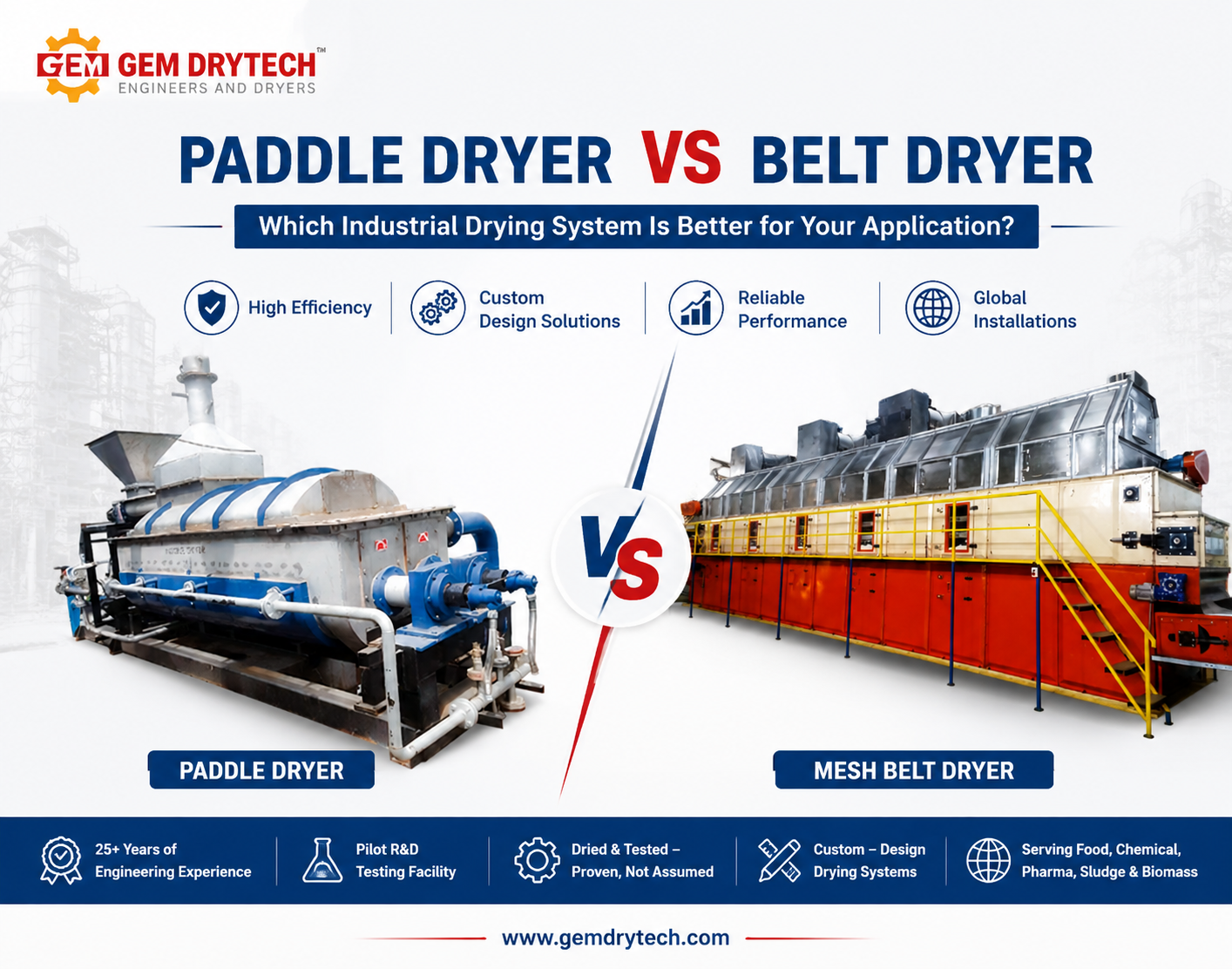
Paddle dryer vs belt dryer comparison depends on several important factors, including material characteristics, moisture content, production capacity, energy requirements, and the final product quality required. A paddle dryer is generally suitable for sticky, high-moisture materials that require intensive mixing, while a belt dryer is ideal for continuous drying of free-flowing and heat-sensitive products.
Choosing the right industrial drying system can directly impact production efficiency, energy consumption, and product quality. Understanding the paddle dryer vs belt dryer difference helps industries select the right technology based on their specific application requirements. When evaluating different drying technologies, working with an experienced industrial dryer manufacturer can help ensure the selected system meets production goals, material characteristics, and efficiency requirements.
If you’re on the factory floor and find batches coming out scorched or wet around the edges, it can quickly become frustrating. After investing in equipment and hiring operators, you want production to run as promised. The drying stage often decides product quality. Therefore, you need to pay additional attention to the process. To ensure products turn out well, you can choose between a paddle dryer and a belt dryer. By analysing the paddle dryer vs belt dryer comparison, you can make a decision. Experts can guide you in the right direction if you seek their assistance.
Paddle Dryer vs Belt Dryer: Quick Comparison
| Factor | Paddle Dryer | Belt Dryer |
| Working method | Uses an agitated contact drying method within a jacketed through | Material bed used for conveying materials with hot air upward or downward |
| Heat transfer | Indirect heat through the paddles and walls | Direct heat similar to forced convection. |
| Energy efficiency | Quite high energy efficiency as the air does not get heated at all | High efficiency thanks to the heat recovery and recirculation |
| Capacity | Moderate for every unit | Moderate to high for every unit |
| Space requirement | Compact size | Longer or taller depending on the type chosen |
| Suitable materials | Slurries, wet cakes, pastes and sludges | Flakes, granules, and fibrous products |
| Maintenance | Requires low maintenance | Little maintenance required for cleaning and belt tracking |
Paddle Dryer vs Belt Dryer: What They Are and How They Work
What Is a Paddle Dryer?
A paddle dryer is an industrial indirect drying system designed to remove moisture from challenging materials such as pastes, slurries, powders, and wet cakes. It uses rotating paddles inside a cylindrical chamber to continuously mix the material and ensure uniform heat distribution.
The unique paddle design allows industries to process sticky and high-moisture materials that may be difficult to handle with conventional drying systems.
How Does a Paddle Dryer Work?
A paddle dryer works through indirect heat transfer. Thermal oil, steam, or another heating medium passes through hollow paddles and the surrounding jacket.
As the wet material comes into contact with the heated paddle surfaces, moisture begins to evaporate. The rotating paddles continuously mix the material, improving heat transfer and preventing material buildup.
The drying process includes:
- Feeding wet material into the drying chamber
- Transferring heat through heated paddles
- Mixing material continuously for uniform drying
- Removing evaporated moisture
- Discharging the dried product
This design helps maintain consistent drying performance while reducing material sticking and improving operational efficiency.
Advantages of Paddle Dryer
Paddle dryers provide several advantages for industrial applications:
- Efficient indirect heat transfer
- Suitable for high-moisture and sticky materials
- Compact equipment design
- Low exhaust volume
- Better thermal efficiency
- Suitable for vacuum drying applications
- Improved product quality control
Vacuum paddle dryers can also process heat-sensitive materials at lower temperatures while maintaining product characteristics.
Paddle Dryer Applications
Paddle dryers are commonly used for:
- Crystalline solids
- Wet cakes
- Sludge materials
- Agro waste
- Chemical products
- Pharmaceutical materials
- Waste treatment applications
GEM Drytech Systems LLP designs customized paddle dryer solutions based on material properties, moisture requirements, and production capacity.
What Is a Belt Dryer?
A belt dryer is a continuous industrial drying system where materials are evenly distributed on a moving conveyor belt and dried using controlled hot air circulation.
Mesh belt dryers use perforated conveyor surfaces that allow airflow through the material layer. This technology provides uniform drying and is widely used in industries requiring continuous production and gentle material handling.
How Does a Belt Dryer Work?
A mesh belt dryer uses convection drying technology. Hot air passes through or over the material bed depending on the dryer design.
The drying process includes:
- Material placement on the moving belt
- Controlled airflow and temperature management
- Moisture evaporation from the product surface
- Internal moisture diffusion
- Movement through different drying zones
Multiple temperature zones allow industries to control airflow, drying time, and product quality.
Multi-pass belt dryer configurations can use multiple belts together, helping increase production capacity without significantly expanding floor space.
Advantages of Belt Dryer
Belt dryers offer several benefits, including:
- Continuous drying operation
- High production capacity
- Gentle material handling
- Adjustable temperature zones
- Controlled airflow
- Better product quality preservation
- Heat recovery opportunities
- Improved energy efficiency
Stainless steel construction and CIP-ready designs make belt dryers suitable for food and pharmaceutical applications where hygiene is important.
Belt Dryer Applications
Belt dryers are commonly used for:
- Leafy vegetables
- Herbal extracts
- Onion and garlic flakes
- Spices
- Paddy husk
- Biomass materials
- Food processing applications
GEM Drytech Systems LLP provides customized belt dryer solutions designed according to specific industry requirements.
Paddle Dryer or Belt Dryer: Which One Is Better for Different Applications?
The right choice between a paddle dryer and a belt dryer depends on the material characteristics and production requirements.
Chemical Industry
Paddle dryers are suitable for chemical applications involving solvent-wet products, filter cakes, and materials requiring controlled drying. Their enclosed design can support low-emission drying processes.
Belt dryers are suitable for free-flowing crystalline chemicals where continuous drying and controlled airflow are required.
Food Processing Industry
Belt dryers are often preferred for food processing applications because they provide gentle handling, controlled drying conditions, and better retention of product quality.
They are commonly used for:
- Vegetables
- Snacks
- Cereals
- Herbal products
Paddle dryers are better suited for food by-products, pastes, and materials requiring intensive mixing.
Pharmaceutical Industry
Paddle dryers with vacuum operation can help protect heat-sensitive pharmaceutical materials by providing enclosed and controlled drying conditions.
Belt dryers are suitable for granules and herbal extracts where hygienic continuous drying is required.
How GEM Drytech Helps Industries Choose the Right Drying Solution
Choosing the right drying system requires engineering expertise, testing capabilities, and a detailed understanding of material behavior. A reliable industrial dryer manufacturer can help industries evaluate their requirements and develop a customized drying solution. GEM Drytech Systems LLP provides customized industrial drying solutions designed according to specific application requirements.
25+ Years of Engineering Experience
With more than 25 years of engineering experience, GEM Drytech specializes in designing and manufacturing industrial drying systems for multiple industries.
Dried & Tested – Proven, Not Assumed
Every material behaves differently during drying. GEM Drytech focuses on practical testing and performance validation to develop reliable drying solutions based on actual results.
Pilot R&D Testing Facility
GEM Drytech provides pilot-scale testing facilities to analyze drying performance, optimize operating parameters, and recommend the right technology.
Custom-Designed Drying Systems
Every industry has different requirements related to moisture content, production capacity, and material properties. GEM Drytech develops customized drying systems based on specific needs.
Global Installations
With global installations and industry expertise, GEM Drytech supports customers with reliable drying technologies and engineering solutions.
Industries Served
GEM Drytech provides industrial drying solutions for:
- Food processing industries
- Chemical industries
- Pharmaceutical industries
- Sludge and waste management
- Biomass processing industries
Proven Drying Performance Through Real Industrial Applications
Selecting industrial drying equipment requires confidence in real-world performance. GEM Drytech has developed customized drying solutions for different industrial applications, including food processing and paper sludge drying.
Industrial case studies demonstrate important performance parameters such as:
- Initial moisture content
- Final moisture content achieved
- Drying capacity
- Processing efficiency
- Application results
Explore GEM Drytech’s industrial drying case studies to understand successful installations and practical drying results:
Case Studies:
https://gemdrytech.com/case-studies/
Frequently Asked Questions
What is the main difference between a paddle dryer and a belt dryer?
The main difference is the drying method. A paddle dryer uses indirect heat transfer through heated paddles, while a belt dryer uses controlled hot air circulation over materials placed on a moving belt.
Which dryer provides better energy efficiency: paddle dryer or belt dryer?
Paddle dryers provide excellent energy efficiency because heat transfers directly into the material. Belt dryers also achieve high efficiency through optimized airflow, heat recovery, and air recirculation systems.
Can a belt dryer handle sludge?
Yes, belt dryers can handle sludge drying applications. However, paddle dryers are often preferred for sticky and high-moisture sludge because they provide continuous mixing and efficient heat transfer.
Which industries use paddle dryers and belt dryers?
Both drying systems are used across industries such as food processing, chemicals, pharmaceuticals, sludge treatment, waste management, and biomass processing.
How do I choose between a paddle dryer and a belt dryer?
The selection depends on material properties, moisture content, production capacity, energy requirements, and final product quality. Pilot testing can help determine the most suitable drying technology.
Are paddle dryers suitable for sticky materials?
Yes. Paddle dryers are particularly suitable for sticky materials because the continuous mixing action prevents buildup and improves moisture removal.
Are belt dryers suitable for continuous production?
Yes. Belt dryers are designed for continuous operation and are commonly used where consistent production output and gentle material handling are required.
Choose the Right Drying Technology with GEM Drytech
Selecting between a paddle dryer and a belt dryer requires careful evaluation of your material, production goals, and operational requirements.
GEM Drytech Systems LLP combines 25+ years of engineering experience, pilot R&D testing capabilities, customized dryer design expertise, and global installation experience to deliver reliable industrial drying solutions.
Whether you require drying solutions for food, chemicals, pharmaceuticals, sludge, or biomass applications, GEM Drytech can help you identify the right drying technology for your process.
Contact GEM Drytech Systems LLP today to discuss your drying requirements and develop a customized industrial drying solution.
