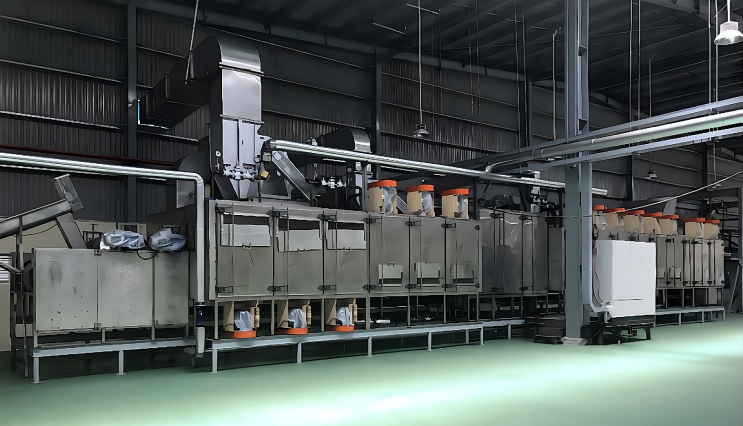
Ginger drying turns fresh rhizome into slices, splits or powder that keep their pungency and aroma for spice and supplement markets. Fresh ginger carries 80–90% water and a fibrous structure, so it shrinks heavily as it dries. Low-temperature, uniform drying preserves gingerols and essential oil content that buyers test.
To dry ginger, GEM recommends the Band Dryer (Beltotherm). Typical moisture is 80–90% in the feed and 8–10% after drying. Multi-Pass Conveyor Dryer and Single-Pass Conveyor Dryer are used when the feed or site calls for it. Every project starts with a pilot trial on your own sample.
A Beltotherm band dryer gives controlled, low-temperature air through an even layer of slices, holding oil and pungency while drying faster than sun yards. A multi-pass dryer saves floor space on larger lines; single-pass suits small batches of premium slices.
| Typical feed moisture | 80–90% |
| Typical target moisture | 8–10% |
| Recommended dryer | Band Dryer (Beltotherm) |
| Alternatives | Multi-Pass Conveyor Dryer, Single-Pass Conveyor Dryer |
| Application area | Food Dehydration |
| Industries | Food & Beverage, Nutraceuticals & Herbal |
Mechanically dried ginger meets export microbial limits, stores for a year and avoids weather losses. Higher oil and gingerol retention supports premium prices from spice, beverage and nutraceutical buyers.
Plants searching for a ginger dryer or comparing a ginger drying machine usually need three answers: which dryer fits, what it costs to run, and how fast it pays back. For Ginger, we start from your throughput, current moisture (typically 80–90%) and the target (8–10%), trial a sample on the Band Dryer, and return a sized recommendation with a budget quotation for your food and nutraceuticals operation.
Compare all 3 materials in Spices & Rhizomes or browse the wider Food Dehydration family.
We trial your material in our pilot facility before any equipment decision, then size the dryer from real data.
Describe it in the form, or message an engineer directly.