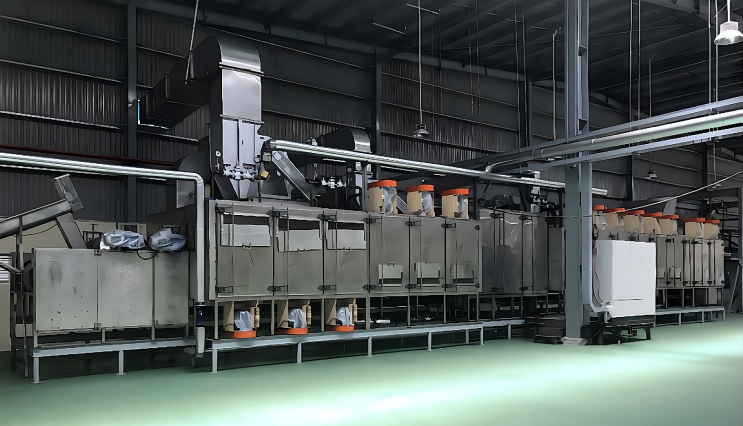
Garlic flakes drying takes peeled, sliced cloves from 60–65% water to about 6%. Garlic starts drier and denser than onion, so slices need more time to bring moisture from the core. Retaining allicin potential and cream colour determines whether the product goes to seasoning blends or health supplements.
To dry garlic flakes, GEM recommends the Multi-Pass Conveyor Dryer and Band Dryer (Beltotherm). Typical moisture is 60–65% in the feed and 5–7% after drying. Single-Pass Conveyor Dryer is used when the feed or site calls for it. Every project starts with a pilot trial on your own sample.
Multi-pass conveyor dryers suit garlic because each drop between belts turns slices and exposes the moist side, giving the long residence dense slices need. A Beltotherm band dryer is used for higher throughput; a single-pass unit for small lots.
| Typical feed moisture | 60–65% |
| Typical target moisture | 5–7% |
| Recommended dryer | Multi-Pass Conveyor Dryer, Band Dryer (Beltotherm) |
| Alternatives | Single-Pass Conveyor Dryer |
| Application area | Food Dehydration |
| Industries | Food & Beverage |
Dried garlic stores for a year or more and fetches higher prices than fresh bulbs outside harvest. Controlled low-temperature drying protects allicin content, which nutraceutical buyers test and pay for.
Plants searching for a garlic flakes dryer or comparing a garlic dehydration machine usually need three answers: which dryer fits, what it costs to run, and how fast it pays back. For Garlic Flakes, we start from your throughput, current moisture (typically 60–65%) and the target (5–7%), trial a sample on the Multi-Pass Conveyor Dryer, and return a sized recommendation with a budget quotation for your food operation.
Compare all 12 materials in Vegetable & Fruit Dehydration or browse the wider Food Dehydration family.
We trial your material in our pilot facility before any equipment decision, then size the dryer from real data.
Describe it in the form, or message an engineer directly.