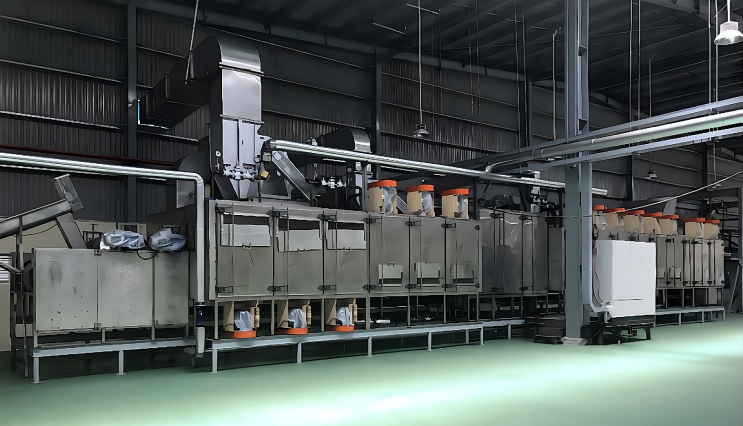
Onion flakes drying removes over four-fifths of the weight of sliced white onion to give kibbled, minced and powdered grades. Onion's high sugar and sulphur content makes it brown easily and lose pungency, so dehydrators work with staged temperatures. The white varieties grown for dehydration are judged on colour, pungency and microbial count.
To dry onion flakes, GEM recommends the Band Dryer (Beltotherm) and Multi-Pass Conveyor Dryer. Typical moisture is 80–88% in the feed and 4–6% after drying. Single-Pass Conveyor Dryer is used when the feed or site calls for it. Every project starts with a pilot trial on your own sample.
Onion is normally dried in several belt stages: hot air at the wet end, then progressively cooler zones. Single-belt Beltotherm or multi-pass conveyor dryers achieve this; multi-pass dryers also turn and loosen the bed between passes. A single-pass unit suits small lines.
| Typical feed moisture | 80–88% |
| Typical target moisture | 4–6% |
| Recommended dryer | Band Dryer (Beltotherm), Multi-Pass Conveyor Dryer |
| Alternatives | Single-Pass Conveyor Dryer |
| Application area | Food Dehydration |
| Industries | Food & Beverage |
Dehydrated onion stores for over a year and ships at a fraction of fresh weight, letting processors buy at harvest and sell year-round. Colour and pungency grades decide export price, making controlled multi-stage drying commercially decisive.
Plants searching for a onion flakes dryer or comparing a dehydrated onion plant usually need three answers: which dryer fits, what it costs to run, and how fast it pays back. For Onion Flakes, we start from your throughput, current moisture (typically 80–88%) and the target (4–6%), trial a sample on the Band Dryer, and return a sized recommendation with a budget quotation for your food operation.
Compare all 12 materials in Vegetable & Fruit Dehydration or browse the wider Food Dehydration family.
We trial your material in our pilot facility before any equipment decision, then size the dryer from real data.
Describe it in the form, or message an engineer directly.