


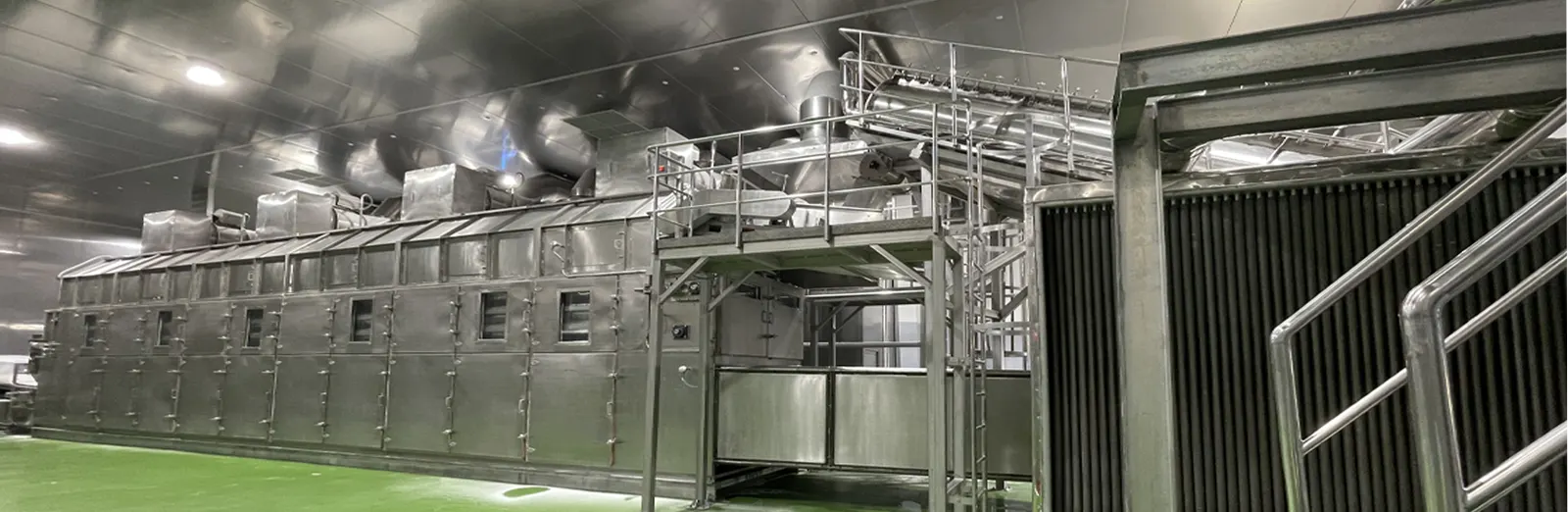
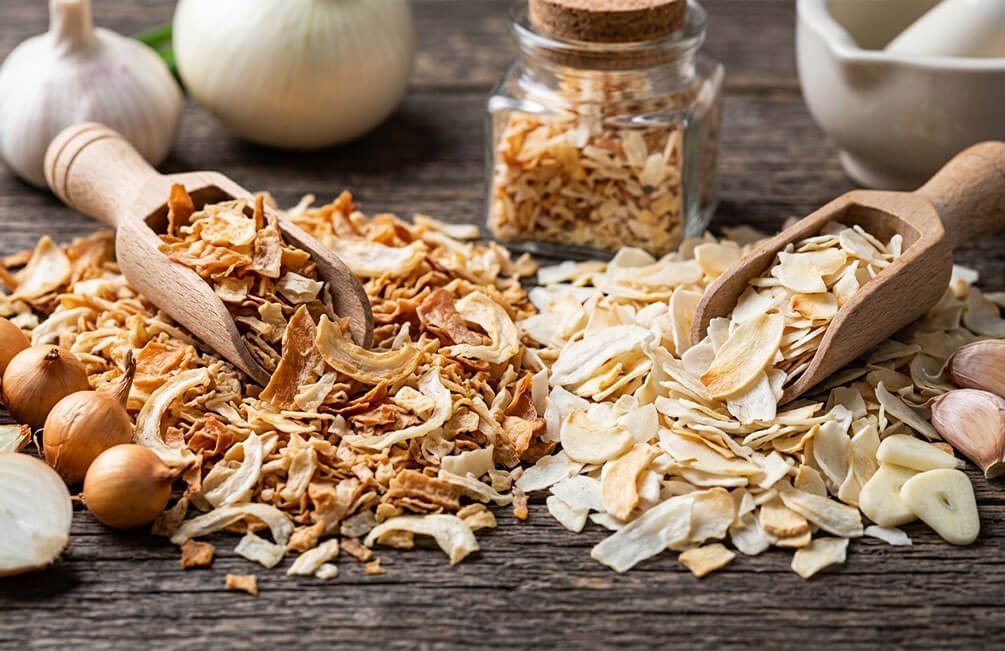
Industrial Vegetable and Fruit Dehydrators
This hub is for dehydration plants producing ingredients for soups, seasonings, snacks, cereals and export: onion and garlic flakes, mixed vegetables, leafy greens, fruit slices, mushrooms, radish, chicory root, beetroot, cassava chips and seaweed. They are grouped because the dryer must remove large amounts of water while protecting colour, aroma and rehydration. Feed moisture runs from 60–65% for garlic up to 93–95% for radish. Targets range from 4–6% for onion to 15–20% for soft fruit, with crisp fruit taken to 3–5%.
For vegetable & fruit dehydration, GEM most often specifies the Band Dryer (Beltotherm) and Multi-Pass Conveyor Dryer. Moisture targets differ by material, so the table below lists typical feed and target moisture for each of the 12 materials in this group, and every project is confirmed on your own sample in a pilot trial.
Vegetable & Fruit Dehydration: moisture and dryer by material
| Material | Feed moisture | Target | Recommended dryer |
|---|---|---|---|
| Onion Flakes | 80–88% | 4–6% | Band Dryer / Multi-Pass Conveyor Dryer |
| Garlic Flakes | 60–65% | 5–7% | Multi-Pass Conveyor Dryer / Band Dryer |
| Mixed Vegetables (Carrot, Cabbage, Capsicum, Beans) | 85–95% | 4–8% | Multi-Pass Conveyor Dryer / Band Dryer |
| Leafy Vegetables | 85–92% | 5–8% | Single-Pass Conveyor Dryer |
| Fruit Slices | 75–88% | 15–20% soft; 3–5% crisp | Band Dryer / Single-Pass Conveyor Dryer |
| Mushroom | 88–92% | 6–8% | Band Dryer |
| Radish | 93–95% | 5–8% | Multi-Pass Conveyor Dryer / Band Dryer |
| Chicory Root | 75–80% | 10–12% | Band Dryer |
| Beetroot | 85–90% | 4–7% | Multi-Pass Conveyor Dryer / Band Dryer |
| Cassava Chips | 60–70% | 12–14% | Mesh Belt Dryer |
| Seaweed & Carrageenan | 80–90% | 10–12% | Band Dryer |
| Green Peas | 74–80% | 5–7% | Band Dryer / Multi-Pass Conveyor Dryer |
Typical values. Your material is confirmed in a pilot trial before sizing.
Which dryer for which material
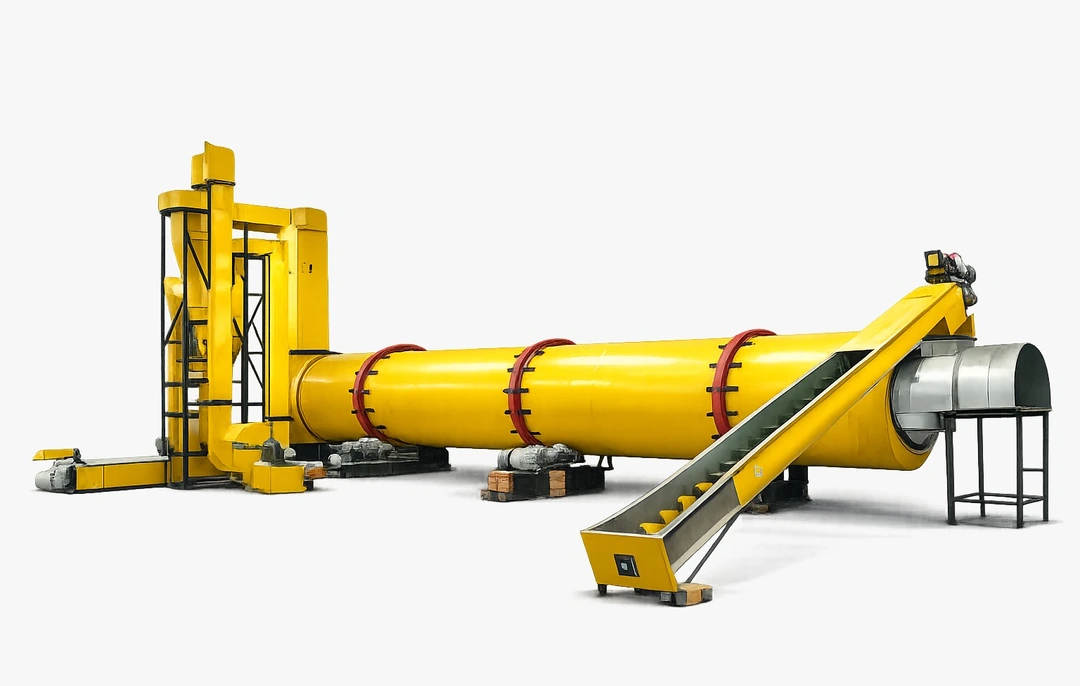
For most vegetables, a Band Dryer (Beltotherm) or Multi-Pass Conveyor Dryer is the core choice. Single-tier band lines give precise zone control for colour-critical onion, mushroom, chicory root and seaweed, while multi-pass units suit dense garlic, radish and beetroot that benefit from turning between tiers in a compact footprint. Light leafy vegetables go on a Single-Pass Conveyor Dryer with gentler air to stop leaves lifting. Fruit slices run on band or single-pass lines, with a Freeze Dryer / Lyophilizer as the premium alternate. Cassava chips, needing less precision, suit a Mesh Belt Dryer (Meshotherm).
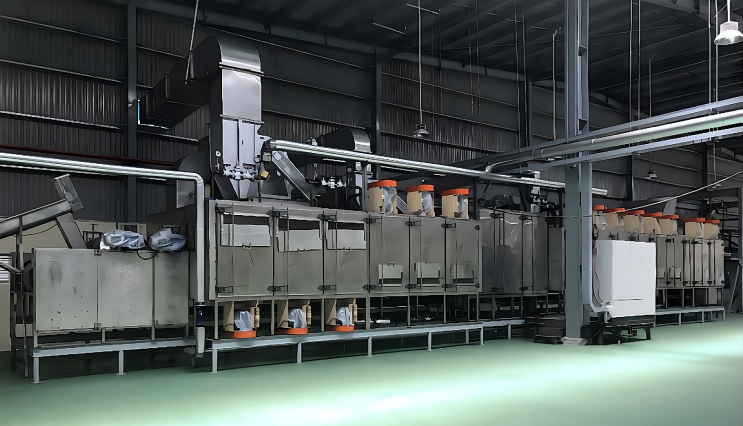


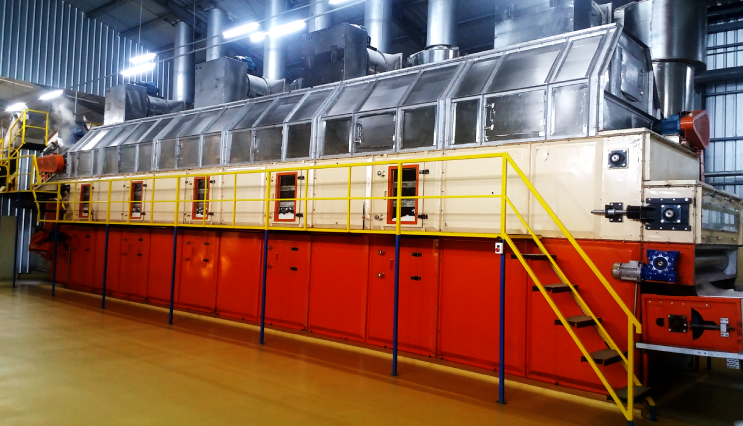
What makes vegetable & fruit dehydration hard to dry
- Removing so much water per kilogram of finished product makes heat recovery and air recirculation central to operating cost.
- Hot early zones case-harden slices, trapping moisture inside and slowing rehydration in the customer's soup or ready meal.
- Sugars and enzymes drive browning in onion, fruit, mushroom and beetroot, so pre-treatment and dry-end temperature are tightly linked.
- Leaves, slices and seaweed behave very differently on a belt, ranging from scattering in strong airflow to matting into dense, unevenly dried layers.
Why it pays back
Dehydrated vegetable and fruit buyers pay for colour, pungency and rehydration as much as for weight. A dryer that holds those specifications means fewer downgraded batches and better access to seasoning, instant food and export customers. Year-round dried stock also lets processors buy raw produce at harvest peaks and sell when prices are firmer, rather than racing spoilage.
Industrial Vegetable and Fruit Dehydrators: questions buyers ask
Single-tier band dryer or multi-pass conveyor dryer for vegetables?
Can one dehydration line process onion, garlic and other vegetables?
How do I decide the final moisture for dried vegetables?
Send us a sample. See it dried.
We trial your material in our pilot facility before any equipment decision, then size the dryer from real data.
- Tell us the material, moisture and throughput.
- An engineer confirms the trial plan and sample shipping.
- You get drying data and a sized recommendation with a budget quotation.
Material not listed? Talk to our technical expert.
Describe it in the form, or message an engineer directly.
