Coir pith and coco peat drying replaces open-yard sun drying so growing media exporters can produce compressed blocks all year. Washed and buffered pith is spongy and fine, holds many times its weight in water, and must reach a narrow moisture band to compress into stable blocks.
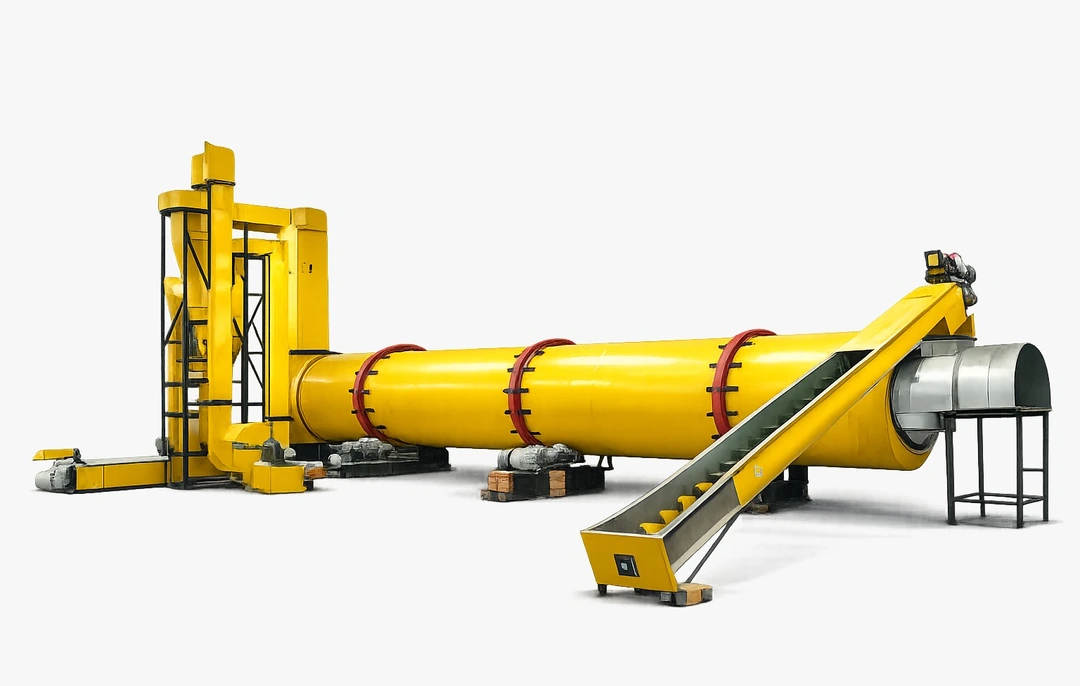
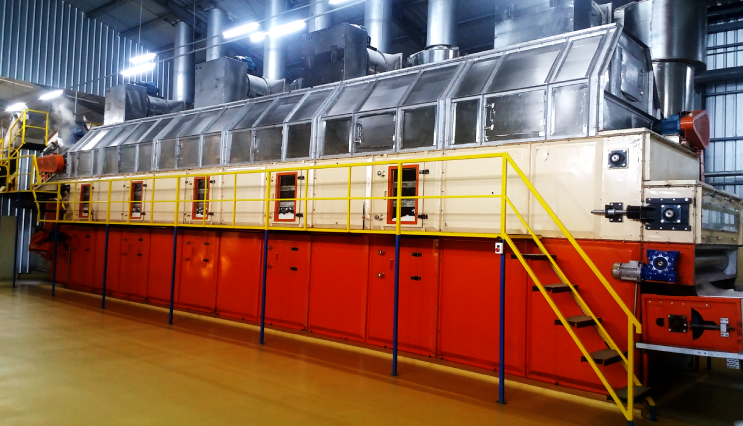
To dry coir pith & coco peat, GEM recommends the Rotary Dryer. Typical moisture is 60–75% in the feed and 15–20% after drying. Mesh Belt Dryer and Hybrid Belt + Fluid Bed Dryer are used when the feed or site calls for it. Every project starts with a pilot trial on your own sample.
A rotary dryer tumbles fine coco peat evenly and copes with seasonal swings in feed moisture. A fine-mesh belt is chosen when lower-temperature drying is wanted to protect pith structure, and Aerodryve suits high-capacity lines with wet feed.
| Typical feed moisture | 60–75% |
| Typical target moisture | 15–20% |
| Recommended dryer | Rotary Dryer |
| Alternatives | Mesh Belt Dryer, Hybrid Belt + Fluid Bed Dryer |
| Application area | Biomass & Solid Fuel |
| Industries | Biomass, Bioenergy & Recycling, Agriculture & Grain Processing, Food & Beverage |
Mechanical drying lets producers meet export contracts through the monsoon, cuts yard space and labour, and gives consistent block quality that reduces rejections and claims.
Plants searching for a coco peat dryer or comparing a coir pith drying machine usually need three answers: which dryer fits, what it costs to run, and how fast it pays back. For Coir Pith & Coco Peat, we start from your throughput, current moisture (typically 60–75%) and the target (15–20%), trial a sample on the Rotary Dryer, and return a sized recommendation with a budget quotation for your biomass and agriculture operation.
Compare all 10 materials in Agro & Plantation Residues or browse the wider Biomass & Solid Fuel family.
We trial your material in our pilot facility before any equipment decision, then size the dryer from real data.
Describe it in the form, or message an engineer directly.