Coconut shell and husk drying prepares the hard shell and fibrous husk left after coconut processing for charcoal kilns, activated carbon plants, coir mills and boilers. Shell pieces are dense and hard while husk is spongy and water-holding, so the two behave very differently in a dryer.
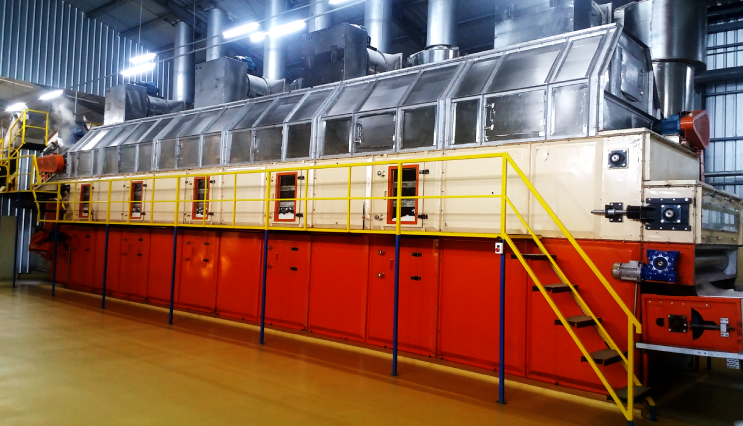
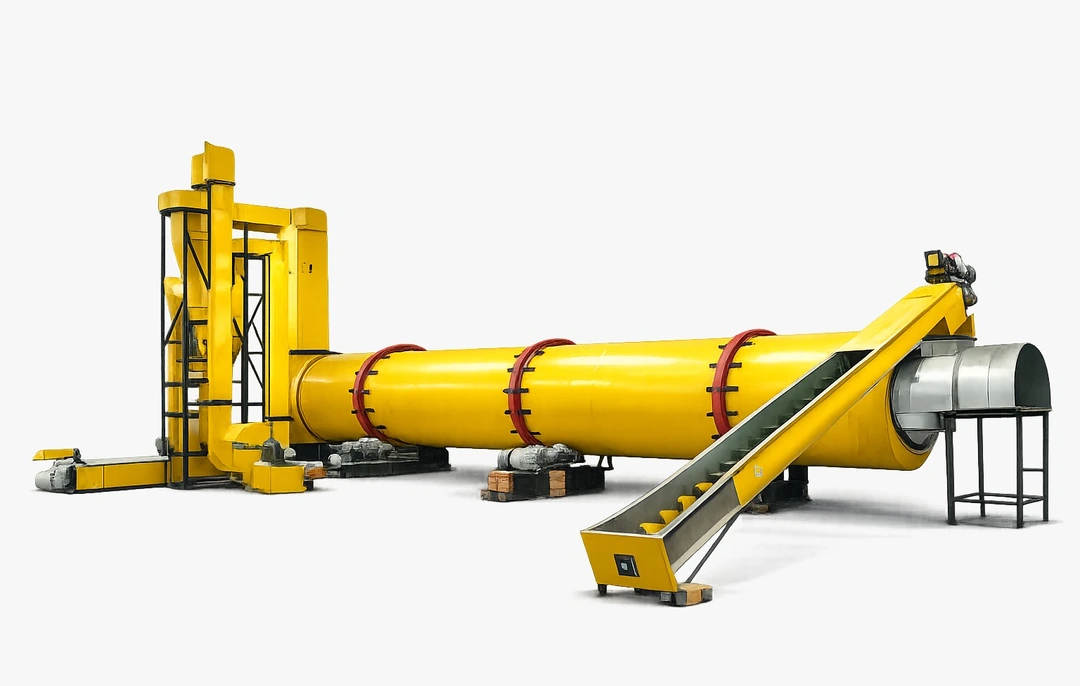
To dry coconut shell & husk, GEM recommends the Mesh Belt Dryer (Meshotherm). Typical moisture is 40–60% in the feed and 10–15% after drying. Rotary Dryer and Rotary Cascade Dryer are used when the feed or site calls for it. Every project starts with a pilot trial on your own sample.
Crushed shell and chopped husk form an open bed on a mesh belt, which dries them at controlled temperature without crushing. A rotary dryer handles high-tonnage shell for charcoal, and a cascade rotary suits coarse husk chips mixed with shell.
| Typical feed moisture | 40–60% |
| Typical target moisture | 10–15% |
| Recommended dryer | Mesh Belt Dryer (Meshotherm) |
| Alternatives | Rotary Dryer, Rotary Cascade Dryer |
| Application area | Biomass & Solid Fuel |
| Industries | Biomass, Bioenergy & Recycling, Food & Beverage |
Dry shell gives higher charcoal yield and less smoke in kilns, and dry husk chips can be sold for horticulture or fuel. Drying also makes storage and export shipping safer.
Plants searching for a coconut shell dryer or comparing a coconut husk dryer usually need three answers: which dryer fits, what it costs to run, and how fast it pays back. For Coconut Shell & Husk, we start from your throughput, current moisture (typically 40–60%) and the target (10–15%), trial a sample on the Mesh Belt Dryer, and return a sized recommendation with a budget quotation for your biomass and food operation.
Compare all 10 materials in Agro & Plantation Residues or browse the wider Biomass & Solid Fuel family.
We trial your material in our pilot facility before any equipment decision, then size the dryer from real data.
Describe it in the form, or message an engineer directly.