Superabsorbent Polymer (SAP) Gel Drying

55-75% → 3-6% moisture. About 62% of the feed weight leaves as water, giving a hard, millable polymer instead of a sticky gel.

  • Pilot trial on your own sample
  • 112+ installations in 7 countries
  • Engineer replies in 1 working day

Superabsorbent polymer drying turns the cross-linked polyacrylate hydrogel that leaves solution polymerisation into a hard solid that can be milled and sieved. The gel is chopped or extruded onto a perforated belt and dried through-circulation to 3-6% moisture, which is the step that fixes absorbency and drives off residual monomer.

Quick answer

To dry superabsorbent polymer gel, GEM recommends the Band Dryer (Beltotherm) and Mesh Belt Dryer (Meshotherm). Typical moisture is 55-75% in the feed and 3-6% after drying. Multi-Pass Conveyor Dryer and Industrial Cooler are used when the feed or site calls for it. Every project starts with a pilot trial on your own sample.

1998established112+installations7countriesDried & Testedin-house pilot trialsCertifications · Case studies
The challenge

What makes Superabsorbent Polymer (SAP) Gel hard to dry

  • The gel is sticky and self-adhering, so it bridges over the belt and blocks the air path unless it is laid as a controlled, open bed.
  • Air has to pass through the bed rather than over it, so belt perforation, bed depth and fan static decide the drying time.
  • Over-drying degrades cross-links and generates fines, which costs absorbency and yield at the mill.
  • Residual acrylic acid monomer has to leave with the water, so exhaust handling is part of the drying duty rather than an add-on.
How GEM dries it

The right dryer for Superabsorbent Polymer (SAP) Gel

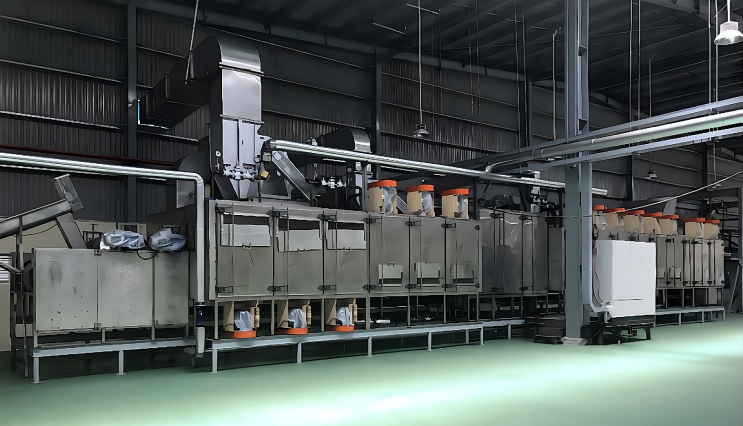
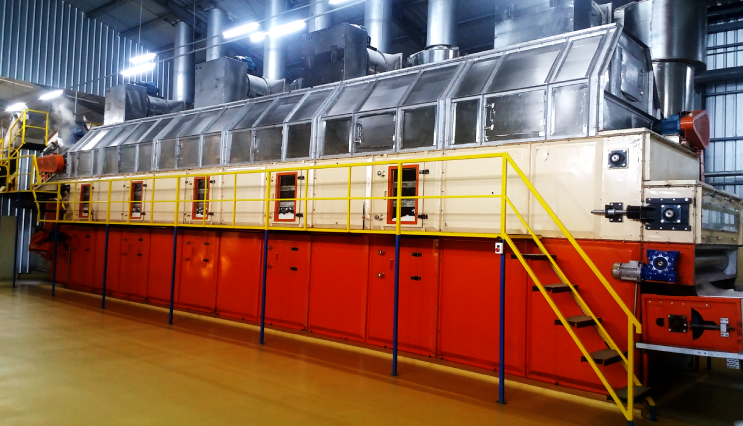
A through-circulation band dryer is the standard SAP machine: chopped gel is spread as an even bed on a perforated belt and hot air is driven through it in staged zones, so the whole bed depth dries at a similar rate. A mesh belt dryer suits coarser extruded gel strands. Zones are set so the wet end runs hot enough to move a large water load and the dry end runs cooler to protect the cross-linked network.

Typical feed moisture55-75%
Typical target moisture3-6%
Recommended dryerBand Dryer (Beltotherm)
AlternativesMulti-Pass Conveyor Dryer, Industrial Cooler
Application areaPolymers, Plastics & Resins
IndustriesPolymers, Rubber & Resins
The value

What drying Superabsorbent Polymer (SAP) Gel unlocks

Gel dried to 3-6% is hard and friable, so it mills to the target particle distribution with few fines and carries its designed centrifuge retention capacity into the surface cross-linking step. Controlled drying is also where residual monomer is brought within specification for hygiene use.

Dried Superabsorbent Polymer (SAP) Gel becomes

  • SAP powder for hygiene products
  • Agricultural water-retention granules
  • Cable-blocking and industrial absorbents
For buyers

Buying a Superabsorbent Polymer (SAP) Gel dryer?

Plants searching for a SAP dryer or comparing a superabsorbent polymer belt dryer usually need three answers: which dryer fits the gel, what it costs to run, and how it protects absorbency. For SAP gel we start from your throughput, gel form, current moisture (typically 55-75%) and the target (3-6%), trial your own gel on the Band Dryer, and return a sized recommendation with a budget quotation for your polymer plant.

FAQ

Superabsorbent Polymer (SAP) Gel: questions buyers ask

Why through-circulation rather than air over the bed?
Because a SAP gel bed is deep and sticky. Driving air through a perforated belt dries the bottom of the bed at a similar rate to the top; air passing over the surface only dries a crust.
What happens if the gel is over-dried?
Cross-links degrade and the polymer becomes brittle, which shows up as fines at the mill and as lost absorbency in the finished powder. The dry-end zone is set to reach target without going past it.
How is residual monomer handled?
It leaves with the exhaust, so the air circuit, exhaust temperature and any abatement are designed with the dryer rather than bolted on afterwards.
Can the same dryer handle chopped and extruded gel?
Yes, as different recipes. Extruded strands lay a more open bed and dry faster; chopped gel needs more attention to spreading. Sizing should follow the harder of the two duties.

Send us a sample. See it dried.

We trial your material in our pilot facility before any equipment decision, then size the dryer from real data.

  1. Tell us the material, moisture and throughput.
  2. An engineer confirms the trial plan and sample shipping.
  3. You get drying data and a sized recommendation with a budget quotation.

Material not listed? Talk to our technical expert.

Describe it in the form, or directly →

Request a trial or quotation

    An engineer replies within one working day. We never share your details.

    Chat with GEM Drytech on WhatsApp