Ceramic Honeycomb & Catalyst Carriers

Ceramic Honeycomb and Catalyst Carrier Drying

Ceramic honeycomb and catalyst carrier drying is about shape. Extruded supports, spheres and monoliths must lose water without cracking, warping or uneven shrinkage, because their geometry determines surface area and flow in a reactor or exhaust system. Controlled humidity and gentle airflow matter more than fast evaporation.

Quick answer

To dry ceramic honeycomb & catalyst carriers, GEM recommends the Band Dryer (Beltotherm). Multi-Pass Conveyor Dryer is used when the feed or site calls for it. Every project starts with a pilot trial on your own sample.

1998established112+installations7countriesDried & Testedin-house pilot trialsCertifications · Case studies
The challenge

What makes Ceramic Honeycomb & Catalyst Carriers hard to dry

  • Rapid surface drying causes uneven shrinkage, which cracks or warps extruded honeycomb and carriers.
  • Thin honeycomb walls and channels must dry evenly from inside to outside to avoid internal stresses.
  • Extruded pellets can stick together or deform if loaded too deeply on a belt before they firm up.
  • Organic binders and pore formers must not burn or migrate during drying.
How GEM dries it

The right dryer for Ceramic Honeycomb & Catalyst Carriers

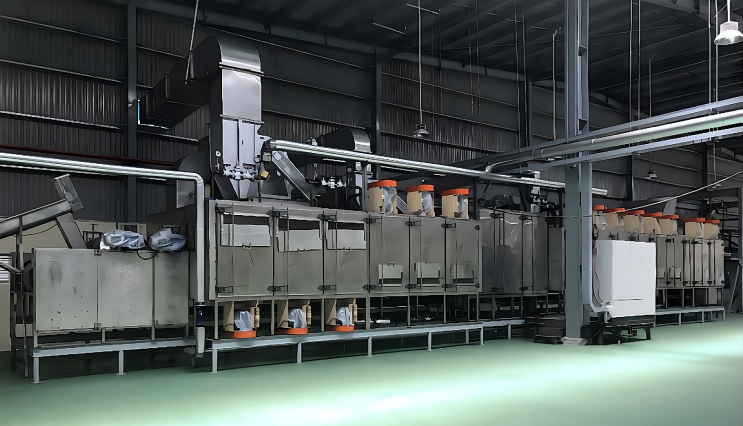
A band dryer gives multi-zone control of temperature, humidity and airflow, so extruded carriers dry gently on a static bed without tumbling. A multi-pass conveyor dryer suits robust pellets needing longer residence in a compact space.

Recommended dryerBand Dryer (Beltotherm)
AlternativesMulti-Pass Conveyor Dryer
Application areaMinerals, Ores & Ceramics
IndustriesMinerals, Mining & Ceramics, Chemicals & Specialty Chemicals
The value

What drying Ceramic Honeycomb & Catalyst Carriers unlocks

Lower cracking and deformation rates mean higher yield of finished carriers, which carry a high value per piece. Consistent drying also improves calcination results and catalyst performance.

Dried Ceramic Honeycomb & Catalyst Carriers becomes

  • Catalyst support for chemical reactors
  • Automotive exhaust substrates
  • Adsorbent and molecular sieve beads
  • Calcination feed for carriers
For buyers

Buying a Ceramic Honeycomb & Catalyst Carriers dryer?

Plants searching for a catalyst carrier dryer or comparing a ceramic honeycomb drying usually need three answers: which dryer fits, what it costs to run, and how fast it pays back. For Ceramic Honeycomb & Catalyst Carriers, we start from your throughput, current moisture and the target, trial a sample on the Band Dryer, and return a sized recommendation with a budget quotation for your minerals and chemicals operation.

FAQ

Ceramic Honeycomb & Catalyst Carriers: questions buyers ask

Why use a band dryer for catalyst extrudates?
Extrudates rest on the belt without tumbling, so they keep their shape. Separate zones allow gentle initial drying followed by higher temperatures once the surface has firmed.
Can large honeycomb monoliths be dried on a belt?
Smaller pieces and segments can. Large monoliths often need special drying with controlled humidity or other methods, so suitability is confirmed in a pilot trial.

Send us a sample. See it dried.

We trial your material in our pilot facility before any equipment decision, then size the dryer from real data.

  1. Tell us the material, moisture and throughput.
  2. An engineer confirms the trial plan and sample shipping.
  3. You get drying data and a sized recommendation with a budget quotation.

Material not listed? Talk to our technical expert.

Describe it in the form, or message an engineer directly.

Request a trial or quotation

    An engineer replies within one working day. We never share your details.

    whatsapp