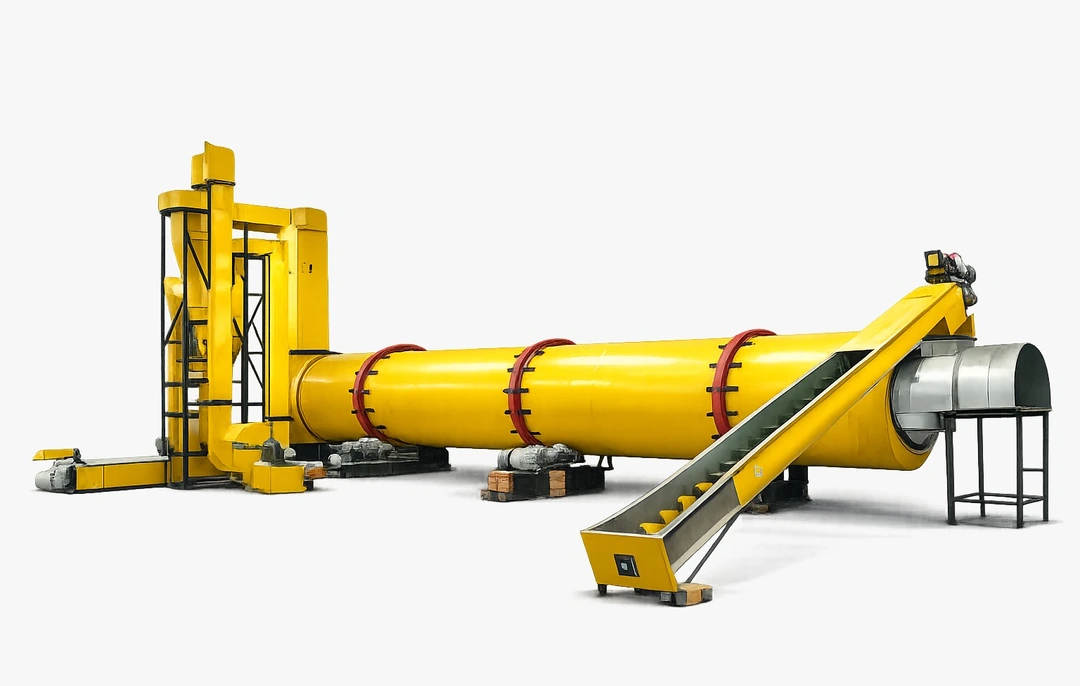
Ceramic powder and slip drying prepares bodies for pressing, extrusion or calcination. Slip is usually filter-pressed into cake before thermal drying, and technical ceramic powders such as alumina and zirconia need clean, uniform drying that keeps particle size and composition intact for consistent firing.
To dry ceramic powders & slip, GEM recommends the Flash Dryer. Typical moisture is 20–30% in the feed and 1–7% after drying. Rotary Dryer, Paddle Dryer and Vibratory Fluid Bed Dryer are used when the feed or site calls for it. Every project starts with a pilot trial on your own sample.
A flash dryer breaks filter cake into fine powder and dries it in seconds, limiting agglomeration. Rotary dryers suit coarse body materials, a paddle dryer handles pasty cake indirectly, and a fluid bed is used for granulated powders needing gentle finishing.
| Typical feed moisture | 20–30% |
| Typical target moisture | 1–7% |
| Recommended dryer | Flash Dryer |
| Alternatives | Rotary Dryer, Paddle Dryer, Vibratory Fluid Bed Dryer |
| Application area | Minerals, Ores & Ceramics |
| Industries | Minerals, Mining & Ceramics |
Dried powder with stable moisture improves pressing yield and reduces rejected parts. Drying also allows filter cake to be stored and shipped between plants instead of being used immediately.
Plants searching for a ceramic powder dryer or comparing a ceramic filter cake drying usually need three answers: which dryer fits, what it costs to run, and how fast it pays back. For Ceramic Powders & Slip, we start from your throughput, current moisture (typically 20–30%) and the target (1–7%), trial a sample on the Flash Dryer, and return a sized recommendation with a budget quotation for your minerals operation.
We trial your material in our pilot facility before any equipment decision, then size the dryer from real data.
Describe it in the form, or message an engineer directly.