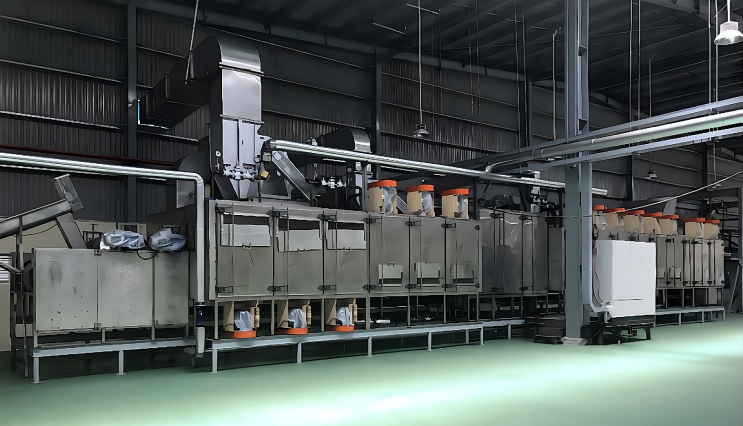
Zeolites and catalysts drying comes in two forms: fine synthetic zeolite powder filtered from crystallisation, and shaped catalyst extrudates or spheres formed before calcination. Both are sensitive to how fast water leaves, because overly rapid drying cracks extrudates and alters pore structure that sets catalytic and adsorption performance.
To dry zeolites & catalysts, GEM recommends the Flash Dryer and Band Dryer (Beltotherm). Combination Fluid Bed Dryer and Direct / Indirect Rotary Dryer are used when the feed or site calls for it. Every project starts with a pilot trial on your own sample.
A flash dryer with cake disintegration dries zeolite powder quickly and evenly. A band dryer suits catalyst extrudates and spheres, giving gentle, zoned drying in a fixed bed that limits cracking; fluid bed and indirect rotary dryers suit granular or dusty grades.
| Typical feed moisture | 40–55% |
| Recommended dryer | Flash Dryer, Band Dryer (Beltotherm) |
| Alternatives | Combination Fluid Bed Dryer, Direct / Indirect Rotary Dryer |
| Application area | Chemicals & Salts |
| Industries | Chemicals & Specialty Chemicals, Minerals, Mining & Ceramics |
Well-controlled drying keeps crush strength and surface area on specification, reducing rejected batches of high-value catalyst and lowering the energy load placed on downstream calciners.
Plants searching for a zeolite dryer or comparing a catalyst extrudate dryer usually need three answers: which dryer fits, what it costs to run, and how fast it pays back. For Zeolites & Catalysts, we start from your throughput, current moisture (typically 40–55%) and the target, trial a sample on the Flash Dryer, and return a sized recommendation with a budget quotation for your chemicals and minerals operation.
We trial your material in our pilot facility before any equipment decision, then size the dryer from real data.
Describe it in the form, or message an engineer directly.