Caustic soda flaking takes molten sodium hydroxide of about 98% strength from the final concentrator and solidifies it on a cooled drum into flakes. Chlor-alkali plants flake caustic to reach distant customers economically, but the melt is extremely corrosive, the flakes are hygroscopic and the dust causes severe burns.
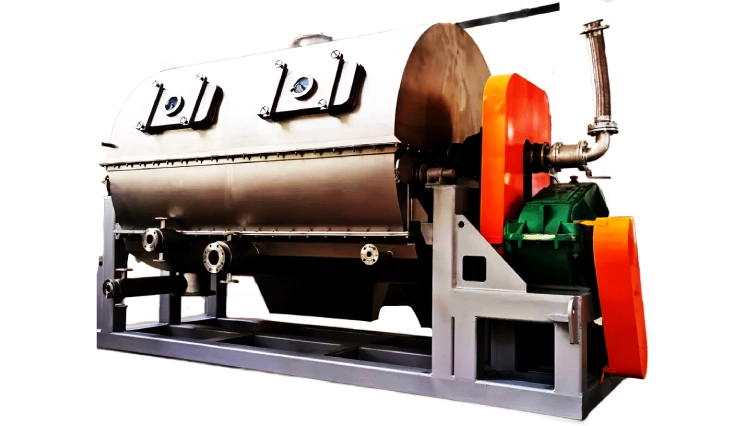
To dry caustic soda flakes, GEM recommends the Drum Flaker. Every project starts with a pilot trial on your own sample.
A cooled drum flaker is the standard route for solid caustic: it solidifies the melt in a thin, controlled film with no hot-air contact. The enclosure, knife setting and coolant flow are designed for corrosion resistance and operator safety.
| Recommended dryer | Drum Flaker |
| Application area | Chemicals & Salts |
| Industries | Chemicals & Specialty Chemicals, Textile & Dye Houses |
Flakes cost far less to ship than 48–50% lye per tonne of NaOH, opening export and inland markets that are uneconomic for liquid caustic, while uniform flakes reduce customer complaints about dust and caking.
Plants searching for a caustic soda flaker or comparing a caustic soda flakes plant usually need three answers: which dryer fits, what it costs to run, and how fast it pays back. For Caustic Soda Flakes, we start from your throughput, current moisture and the target, trial a sample on the Drum Flaker, and return a sized recommendation with a budget quotation for your chemicals and textile operation.
We trial your material in our pilot facility before any equipment decision, then size the dryer from real data.
Describe it in the form, or message an engineer directly.