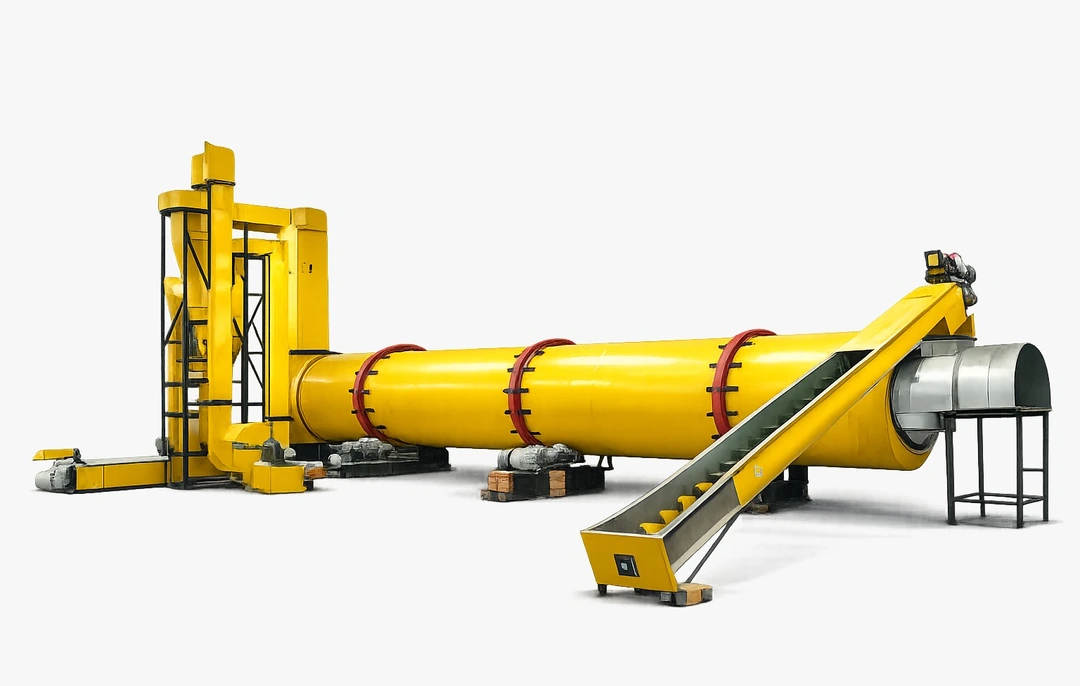
Talc drying is needed when ore is upgraded by flotation or washing and leaves the plant as a wet filter cake. Buyers in polymers, paper and cosmetics value talc for its platy particles, softness and whiteness, so drying and de-agglomeration must not crush platelets or contaminate the product.
To dry talc, GEM recommends the Flash Dryer. Typical moisture is 20–30% in the feed and below 0.5% after drying. Rotary Dryer and Direct / Indirect Rotary Dryer are used when the feed or site calls for it. Every project starts with a pilot trial on your own sample.
A flash dryer breaks up talc cake and dries it in seconds, giving a fine powder ready for classification. Rotary dryers are used for coarse or lump talc, and an indirect rotary keeps combustion gases away from cosmetic and pharmaceutical grades.
| Typical feed moisture | 20–30% |
| Typical target moisture | below 0.5% |
| Recommended dryer | Flash Dryer |
| Alternatives | Rotary Dryer, Direct / Indirect Rotary Dryer |
| Application area | Minerals, Ores & Ceramics |
| Industries | Minerals, Mining & Ceramics, Polymers, Rubber & Resins |
Dry, well dispersed talc enters polymer and cosmetic markets where prices are much higher than for crude talc. Drying beneficiated concentrate also allows micronising and surface treatment on site.
Plants searching for a talc dryer or comparing a talc drying plant usually need three answers: which dryer fits, what it costs to run, and how fast it pays back. For Talc, we start from your throughput, current moisture (typically 20–30%) and the target (below 0.5%), trial a sample on the Flash Dryer, and return a sized recommendation with a budget quotation for your minerals and polymers operation.
We trial your material in our pilot facility before any equipment decision, then size the dryer from real data.
Describe it in the form, or message an engineer directly.