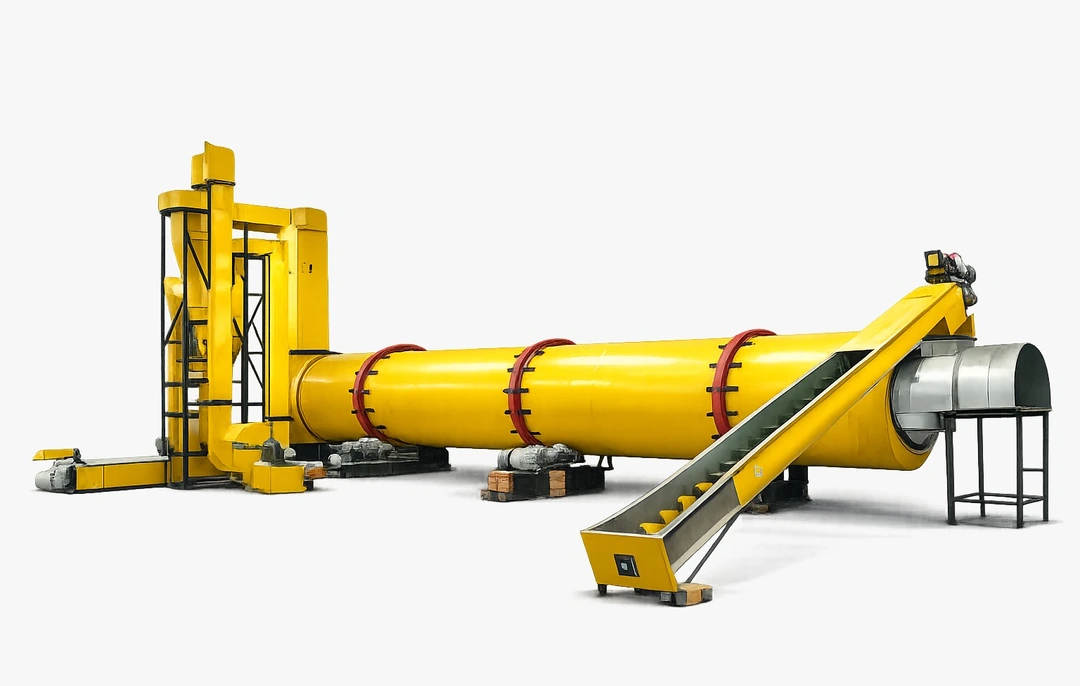
Iron Ore Fines

Iron Ore Fines Drying

Iron ore fines drying matters for pellet plants that grind ore dry and for exporters shipping fines that can liquefy at sea when moisture is too high. The material is heavy, abrasive and often blended with clay or goethite, so dryers are built for high tonnage and robust feed handling.

Quick answer

To dry iron ore fines, GEM recommends the Rotary Dryer. Typical moisture is 8–14% in the feed and 1–6% after drying. Rotary Cascade Dryer and Flash Dryer are used when the feed or site calls for it. Every project starts with a pilot trial on your own sample.

1998established112+installations7countriesDried & Testedin-house pilot trialsCertifications · Case studies
The challenge

What makes Iron Ore Fines hard to dry

  • Fines above their transportable moisture limit can liquefy in a ship's hold, so export cargoes must be dried and tested.
  • Goethite and clay-rich fines become sticky and cake on flights and chutes within the dryer's feed section.
  • High throughput with heavy, abrasive ore drives drum structure, drive sizing and wear part consumption.
  • Dry fines create dust at transfer points, so dust extraction is needed beyond the dryer itself.
How GEM dries it

The right dryer for Iron Ore Fines

A direct rotary dryer handles large tonnages of heavy, variable iron ore fines and tolerates clay content. A cascade dryer offers a smaller footprint for granular feed at high temperature, while a flash dryer combined with a mill suits dry grinding of concentrate for pellet feed.

Typical feed moisture8–14%
Typical target moisture1–6%
Recommended dryerRotary Dryer
AlternativesRotary Cascade Dryer, Flash Dryer
Application areaMinerals, Ores & Ceramics
IndustriesMinerals, Mining & Ceramics
The value

What drying Iron Ore Fines unlocks

Drying below the transportable moisture limit keeps cargoes shippable and avoids rejected loads. For pellet plants, dry ore lowers grinding energy and stabilises green ball quality.

Dried Iron Ore Fines becomes

  • Pellet plant feed
  • Sinter blend
  • Export cargo within moisture limits
  • Dry-ground concentrate
For buyers

Buying a Iron Ore Fines dryer?

Plants searching for a iron ore fines dryer or comparing a iron ore drying plant usually need three answers: which dryer fits, what it costs to run, and how fast it pays back. For Iron Ore Fines, we start from your throughput, current moisture (typically 8–14%) and the target (1–6%), trial a sample on the Rotary Dryer, and return a sized recommendation with a budget quotation for your minerals operation.

FAQ

Iron Ore Fines: questions buyers ask

How dry must iron ore fines be for shipping?
Cargo moisture must be below the transportable moisture limit determined by testing under maritime bulk cargo rules. The required figure depends on your ore, so drying targets are set from the laboratory TML value.
Is drying needed before iron ore pelletising?
It depends on the grinding route. Dry grinding plants need low-moisture feed, while wet grinding routes use filters instead. A dryer is also used to correct over-wet filter cake before balling.
Related

Related materials

Compare all 23 materials in Minerals, Ores & Ceramics.

Send us a sample. See it dried.

We trial your material in our pilot facility before any equipment decision, then size the dryer from real data.

  1. Tell us the material, moisture and throughput.
  2. An engineer confirms the trial plan and sample shipping.
  3. You get drying data and a sized recommendation with a budget quotation.

Material not listed? Talk to our technical expert.

Describe it in the form, or message an engineer directly.

Request a trial or quotation

    An engineer replies within one working day. We never share your details.

    whatsapp