Fibre drying handles loose staple fibre after washing, spin finish application or dyeing, as in viscose, polyester, acrylic and cotton processing. Fibre forms an open, permeable mat, which suits through-air drying, but uneven layer thickness and fibre entanglement can easily create wet patches and inconsistent quality.
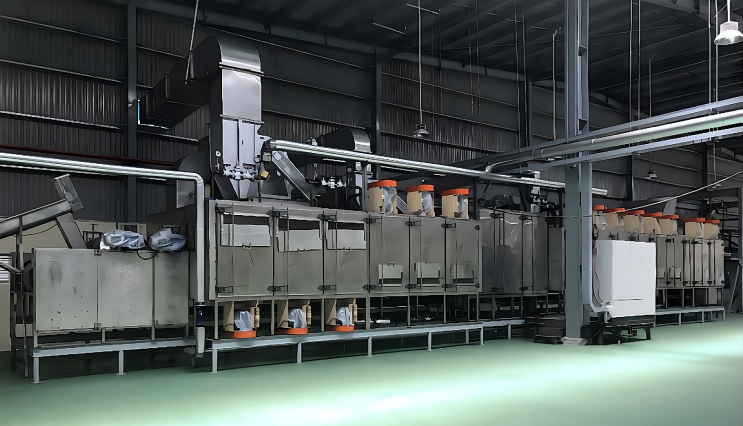
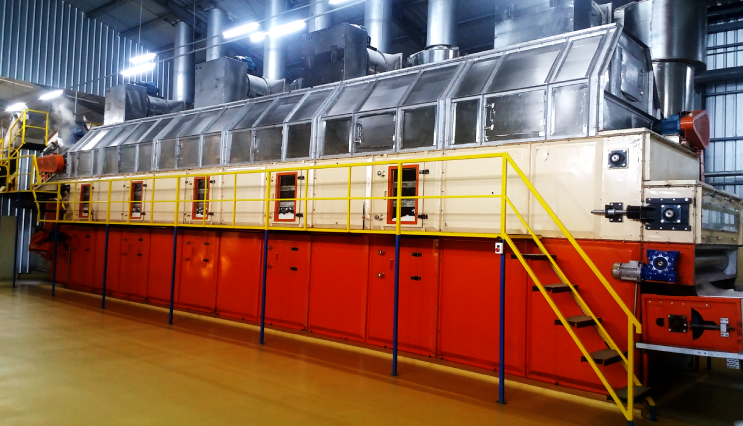
To dry fibres, GEM recommends the Band Dryer (Beltotherm) and Multi-Pass Conveyor Dryer. Mesh Belt Dryer is used when the feed or site calls for it. Every project starts with a pilot trial on your own sample.
A band dryer carries an even fibre mat through zoned through-air drying, controlling moisture and colour. A multi-pass dryer suits long residence in limited space, and a mesh belt dryer is used for economical drying of less sensitive fibres.
| Recommended dryer | Band Dryer (Beltotherm), Multi-Pass Conveyor Dryer |
| Alternatives | Mesh Belt Dryer |
| Application area | Polymers, Plastics & Resins |
| Industries | Polymers, Rubber & Resins, Textile & Dye Houses |
Even fibre moisture improves carding and spinning performance and reduces shade variation. Controlled drying also avoids over-drying, which wastes energy and can damage fibre properties.
Plants searching for a fibre dryer or comparing a staple fibre drying machine usually need three answers: which dryer fits, what it costs to run, and how fast it pays back. For Fibres, we start from your throughput, current moisture and the target, trial a sample on the Band Dryer, and return a sized recommendation with a budget quotation for your polymers and textile operation.
We trial your material in our pilot facility before any equipment decision, then size the dryer from real data.
Describe it in the form, or Message an Engineer directly →