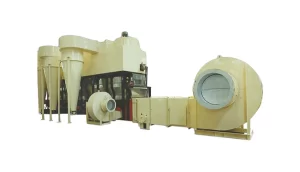
This application covers particulate food feeds being assessed for the catalogue’s vibratory fluid-bed dryer. Specify the actual ingredient, granule or particle rather than using “foodstuff” as the material specification. The purpose is to define feed behaviour and product acceptance for this equipment route.
Provide the particle-size distribution, fines content and loose bulk density. Describe whether the prepared feed flows freely or contains wet lumps, sticky particles or mixed sizes. Include upstream screening or preparation and observations about breakage during feeding, conveying or discharge. Explain batch variation and any blending before drying.
Review the vibratory fluid bed dryer against the proposed feed and its response to handling. A material name or moisture value alone does not confirm suitability. For the separate rotary-route checklist, see food-product rotary assessment; for a defined starch feed, see starch drying.
Share the particle and quality data through the technical enquiry form. Discuss a representative pilot trial where particle behaviour or finished-product quality needs confirmation.