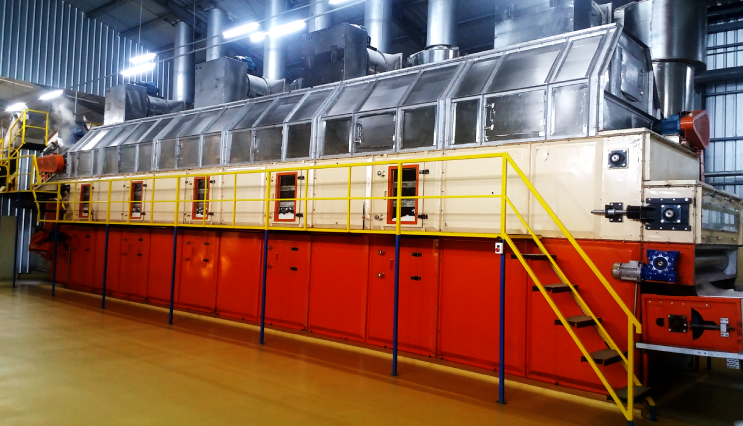
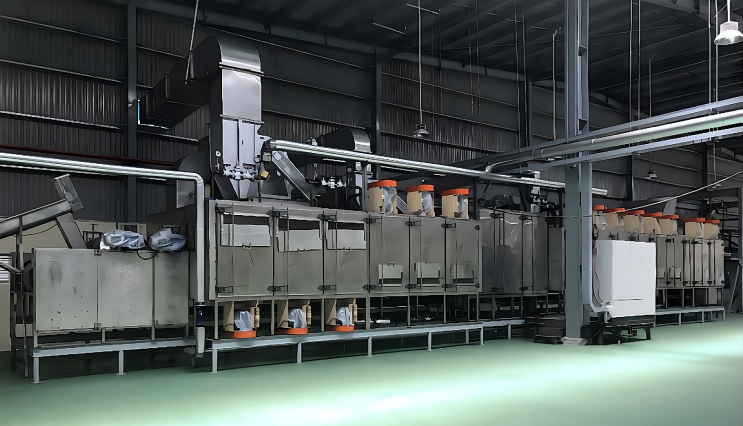
Biosolids drying applies to sewage sludge that has already been stabilised, usually by anaerobic digestion, and is destined for beneficial reuse. Because digestion has reduced volatile solids, the cake behaves differently from raw sludge. Drying it to 90% solids or more produces a pathogen-reduced granule that can be bagged, spread or sold.
To dry biosolids, GEM recommends the Mesh Belt Dryer (Meshotherm). Typical moisture is 75–82% in the feed and 5–10% after drying. Band Dryer, Paddle Dryer and Direct / Indirect Rotary Dryer are used when the feed or site calls for it. Every project starts with a pilot trial on your own sample.
A Meshotherm belt gives the long, even residence time biosolids need to reach a uniformly dry, low-dust product at modest air temperatures. Band dryers suit sites wanting tighter control of granule finish, while paddle units fit compact, enclosed installations.
| Typical feed moisture | 75–82% |
| Typical target moisture | 5–10% |
| Recommended dryer | Mesh Belt Dryer (Meshotherm) |
| Alternatives | Band Dryer, Paddle Dryer, Direct / Indirect Rotary Dryer |
| Application area | Sludge & Biosolids |
| Industries | Wastewater & Environmental |
Dried biosolids can move from a disposal cost to a saleable product carrying nitrogen, phosphorus and organic matter. Mass reduction lowers trucking costs, and a stable granule lets the utility store product through seasons when land application is closed.
Plants searching for a biosolids dryer or comparing a biosolids drying system usually need three answers: which dryer fits, what it costs to run, and how fast it pays back. For Biosolids, we start from your throughput, current moisture (typically 75–82%) and the target (5–10%), trial a sample on the Mesh Belt Dryer, and return a sized recommendation with a budget quotation for your wastewater operation.
Compare all 4 materials in Municipal Sludge & Biosolids or browse the wider Sludge & Biosolids family.
We trial your material in our pilot facility before any equipment decision, then size the dryer from real data.
Describe it in the form, or message an engineer directly.