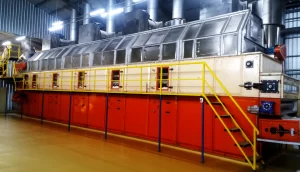
Biomass drying prepares a variable natural feed for a defined downstream process. Sawdust, chopped residues and other biomass materials differ in particle size, bulk density and moisture distribution. Equipment selection should use representative feed data and the moisture range that the next process can accept.
Screening, size reduction and consistent distribution can be as important as the dryer itself. Belt drying is one option for a suitable feed layer; the final choice depends on throughput, particle behaviour, available space and the heat source. Air handling, fines collection and fire and dust risks must be assessed for the actual material and operating conditions.
Provide the biomass type, particle-size range, wet feed rate, bulk density, inlet and target moisture on a stated basis, and expected seasonal variation. Include utility temperatures, operating hours, storage arrangements and the intended use of the dried product. These details allow a meaningful comparison of drying concepts and a decision on whether trials are needed.
Explore biomass and agricultural-residue belt drying and our 3,000 kg/hour sawdust drying case study. Discuss your biomass project.