Wood chip drying raises the net calorific value of forestry and plantation chips before they go to boilers, gasifiers or board mills. Chips are coarse and free-draining, so they form an open bed that hot air passes through easily, but size range and bark content vary widely between suppliers.
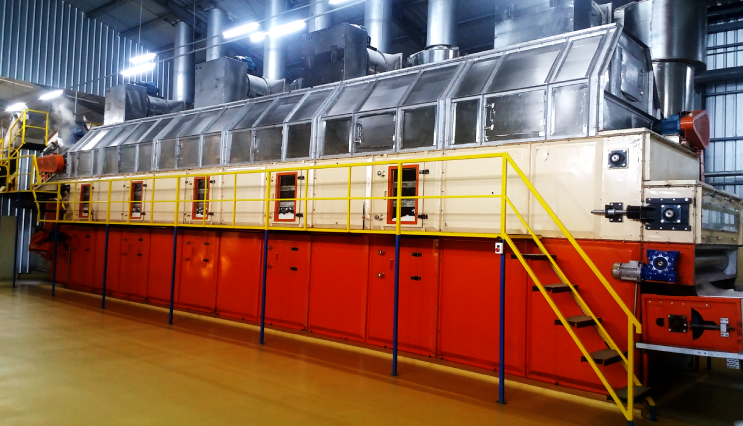
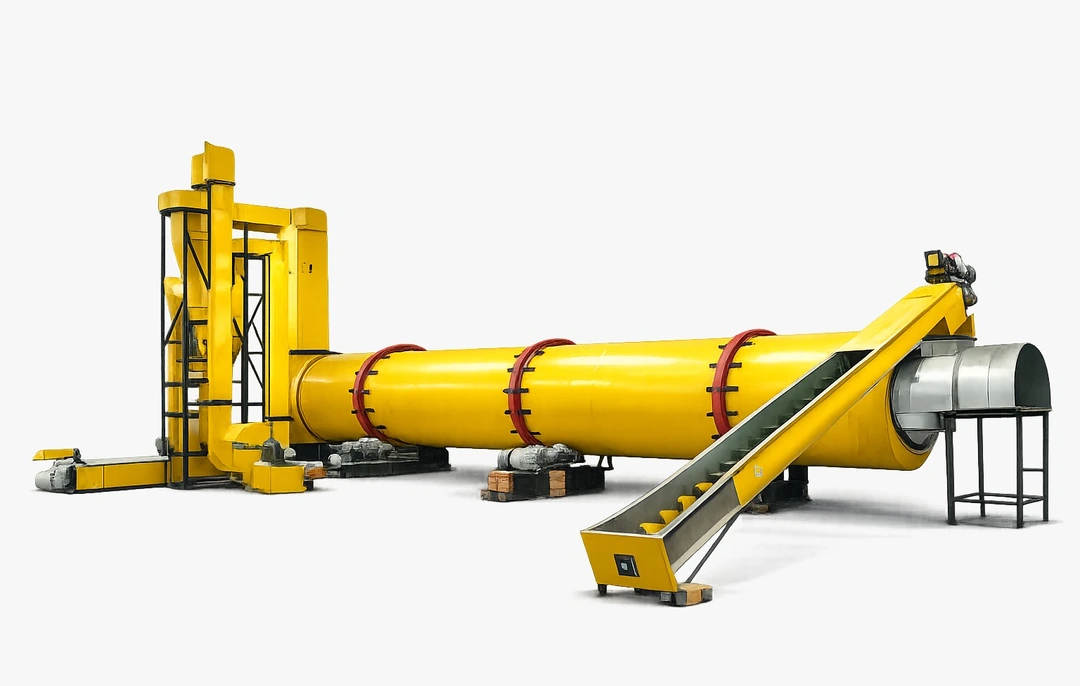
To dry wood chips, GEM recommends the Mesh Belt Dryer (Meshotherm). Typical moisture is 45–55% in the feed and 10–20% after drying. Rotary Dryer and Hybrid Belt + Fluid Bed Dryer are used when the feed or site calls for it. Every project starts with a pilot trial on your own sample.
Chips pack into a deep, permeable layer on a mesh belt, so large volumes dry at low temperature using waste heat. A rotary dryer is preferred for high throughput with hot flue gas, while Aerodryve handles very wet chip and bark blends.
| Typical feed moisture | 45–55% |
| Typical target moisture | 10–20% |
| Recommended dryer | Mesh Belt Dryer (Meshotherm) |
| Alternatives | Rotary Dryer, Hybrid Belt + Fluid Bed Dryer |
| Application area | Biomass & Solid Fuel |
| Industries | Biomass, Bioenergy & Recycling, Paper & Pulp |
Drying chips from 50% to below 20% moisture lifts usable heat per tonne sharply, stabilises boiler combustion, and reduces trucking cost per gigajoule. It also allows chips to be stored without decay.
Plants searching for a wood chip dryer or comparing a wood chips drying system usually need three answers: which dryer fits, what it costs to run, and how fast it pays back. For Wood Chips, we start from your throughput, current moisture (typically 45–55%) and the target (10–20%), trial a sample on the Mesh Belt Dryer, and return a sized recommendation with a budget quotation for your biomass and paper operation.
Compare all 6 materials in Wood, Sawdust & Pellet Lines or browse the wider Biomass & Solid Fuel family.
We trial your material in our pilot facility before any equipment decision, then size the dryer from real data.
Describe it in the form, or message an engineer directly.