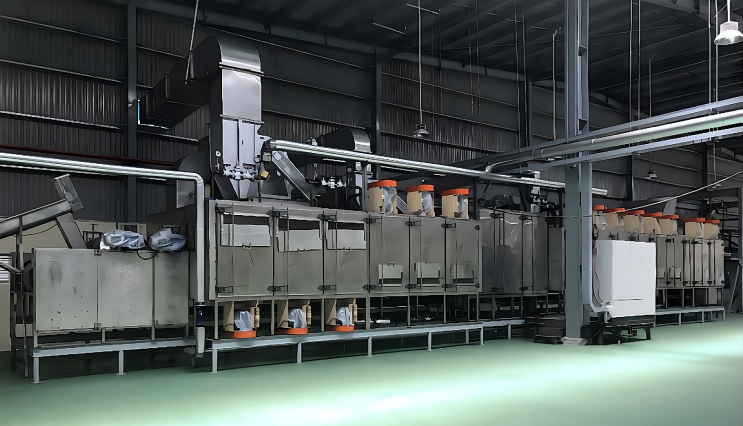
Spirulina drying converts filtered algae paste of about 75–85% moisture into powder, flakes or noodles for supplements and feed. Phycocyanin, the blue pigment, is highly heat-sensitive and sets much of the product's value. Many producers extrude the paste into thin strands and dry them on a belt at low temperature.
To dry spirulina, GEM recommends the Band Dryer (Beltotherm). Typical moisture is 75–85% in the feed and 4–7% after drying. Freeze Dryer / Lyophilizer and Single / Double Drum Dryer are used when the feed or site calls for it. Every project starts with a pilot trial on your own sample.
A Beltotherm band dryer suits spirulina once extruded into noodles, which form a porous bed for low-temperature air. Freeze drying gives the highest phycocyanin retention at higher cost; drum drying suits feed grades where some colour loss is acceptable.
| Typical feed moisture | 75–85% |
| Typical target moisture | 4–7% |
| Recommended dryer | Band Dryer (Beltotherm) |
| Alternatives | Freeze Dryer / Lyophilizer, Single / Double Drum Dryer |
| Application area | Herbal, Botanical & Nutraceutical |
| Industries | Nutraceuticals & Herbal, Animal Feed, Breweries & Distilleries |
Phycocyanin content sets spirulina's grade and price. Low-temperature drying protects it, while fast processing of freshly harvested paste reduces spoilage, odour complaints and microbial rejection by supplement buyers.
Plants searching for a spirulina dryer or comparing a spirulina drying machine usually need three answers: which dryer fits, what it costs to run, and how fast it pays back. For Spirulina, we start from your throughput, current moisture (typically 75–85%) and the target (4–7%), trial a sample on the Band Dryer, and return a sized recommendation with a budget quotation for your nutraceuticals and animal feed operation.
We trial your material in our pilot facility before any equipment decision, then size the dryer from real data.
Describe it in the form, or message an engineer directly.