Rice husk drying is needed when husk from parboiling mills or rain-exposed heaps is too wet for briquetting, gasification or steady boiler firing. Husk is light, high in silica and highly abrasive, so dryer parts and fans wear quickly unless the design accounts for it.
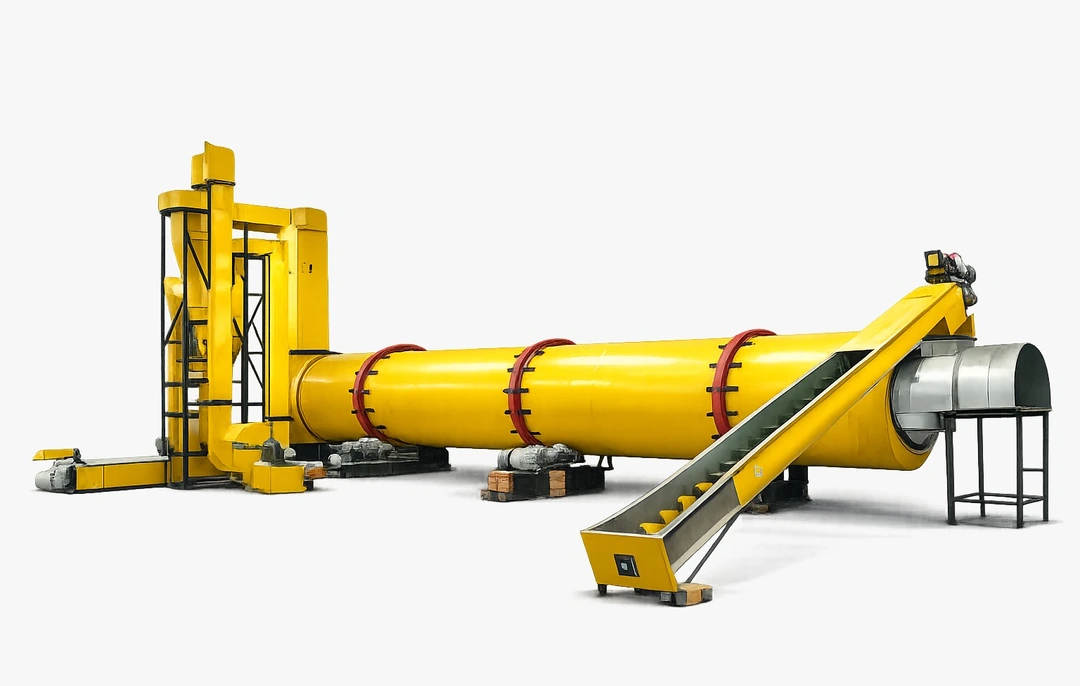
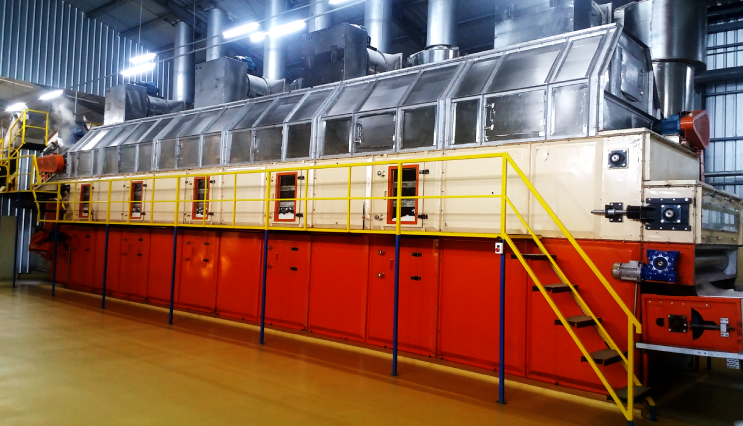
To dry rice husk, GEM recommends the Rotary Dryer. Typical moisture is 15–25% in the feed and 8–12% after drying. Mesh Belt Dryer and Flash Dryer are used when the feed or site calls for it. Every project starts with a pilot trial on your own sample.
A rotary dryer with wear-resistant lining tolerates abrasive husk and handles variable moisture from storage. A mesh belt is chosen when low-grade heat is available and dust must be kept low; flash drying suits ground husk.
| Typical feed moisture | 15–25% |
| Typical target moisture | 8–12% |
| Recommended dryer | Rotary Dryer |
| Alternatives | Mesh Belt Dryer, Flash Dryer |
| Application area | Biomass & Solid Fuel |
| Industries | Biomass, Bioenergy & Recycling, Agriculture & Grain Processing |
Dry husk briquettes and fuel sell at better prices and burn more evenly than wet loose husk. Drying also cuts mould risk in bags and stabilises gasifier operation.
Plants searching for a rice husk dryer or comparing a paddy husk drying machine usually need three answers: which dryer fits, what it costs to run, and how fast it pays back. For Rice Husk, we start from your throughput, current moisture (typically 15–25%) and the target (8–12%), trial a sample on the Rotary Dryer, and return a sized recommendation with a budget quotation for your biomass and agriculture operation.
Compare all 10 materials in Agro & Plantation Residues or browse the wider Biomass & Solid Fuel family.
We trial your material in our pilot facility before any equipment decision, then size the dryer from real data.
Describe it in the form, or message an engineer directly.