Pasta and macaroni drying takes freshly extruded durum semolina shapes at around 30% moisture down to a shelf-stable level without cracking the product. Short-cut shapes such as elbows and penne must lose water slowly enough for moisture inside the wall to keep pace with the surface. Producers dry pasta to meet storage limits, protect cooking quality and keep the colour bright.
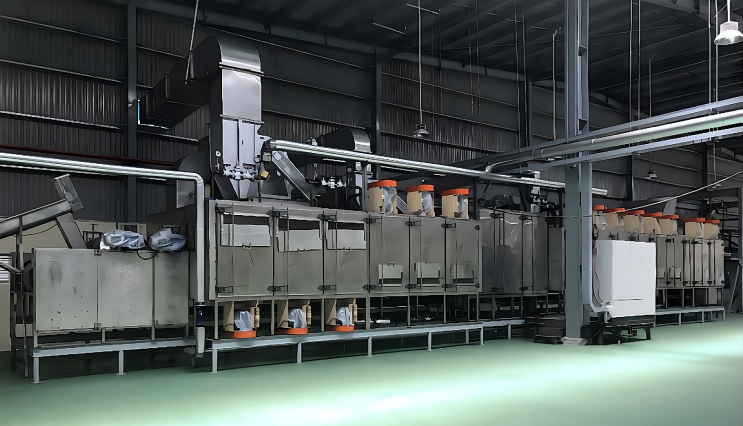
To dry pasta & macaroni, GEM recommends the Multi-Pass Conveyor Dryer. Typical moisture is 28–32% in the feed and 11–12.5% after drying. Band Dryer and Industrial Cooler are used when the feed or site calls for it. Every project starts with a pilot trial on your own sample.
A multi-pass conveyor dryer gives the long, staged residence pasta needs, with pre-drying, sweating and final drying zones stacked in a compact footprint. A single-tier band dryer suits lower tonnage or delicate specialty shapes; a cooler stabilises product before packing.
| Typical feed moisture | 28–32% |
| Typical target moisture | 11–12.5% |
| Recommended dryer | Multi-Pass Conveyor Dryer |
| Alternatives | Band Dryer, Industrial Cooler |
| Application area | Food Products & Snacks |
| Industries | Food & Beverage |
Correctly dried pasta stores for a year or more at ambient temperature, so plants can run steady extrusion and pack to order. Lower breakage and checking reduce rework, and consistent final moisture keeps net pack weights within legal tolerance.
Plants searching for a pasta dryer or comparing a macaroni drying machine usually need three answers: which dryer fits, what it costs to run, and how fast it pays back. For Pasta & Macaroni, we start from your throughput, current moisture (typically 28–32%) and the target (11–12.5%), trial a sample on the Multi-Pass Conveyor Dryer, and return a sized recommendation with a budget quotation for your food operation.
We trial your material in our pilot facility before any equipment decision, then size the dryer from real data.
Describe it in the form, or message an engineer directly.