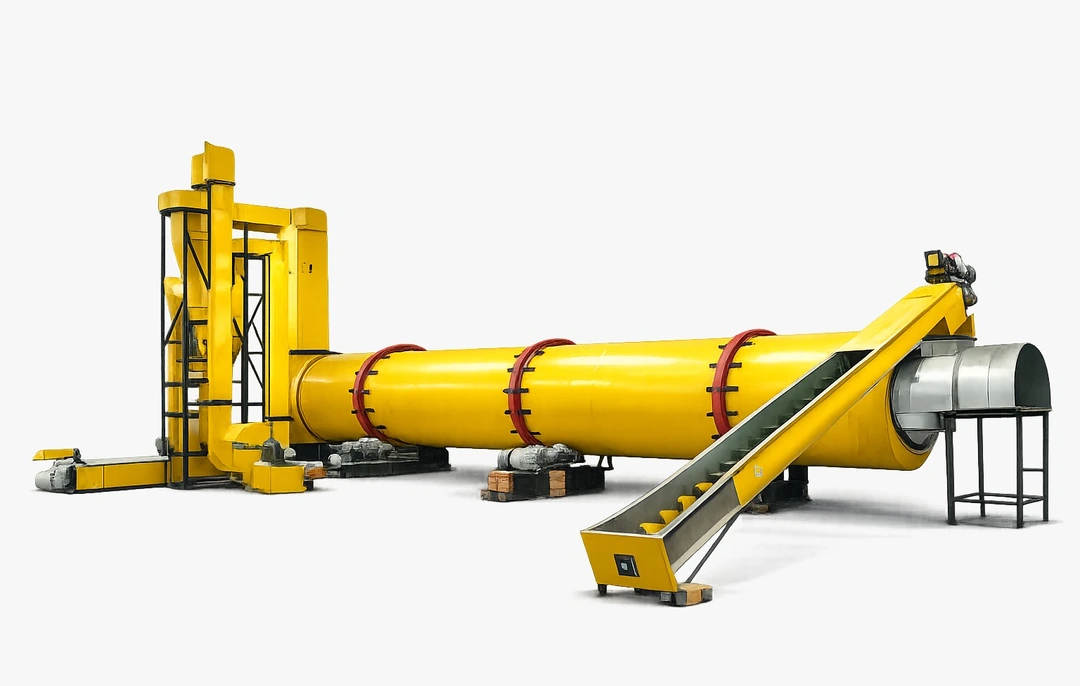
Gypsum drying is precise work because the target is free water only: gypsum dihydrate holds chemically bound water that starts to leave at modest temperatures. FGD gypsum from power plants, natural rock and recycled board gypsum are dried so cement plants, plasterboard lines and agricultural buyers receive a flowable, consistent material.
To dry gypsum, GEM recommends the Rotary Dryer and Flash Dryer. Typical moisture is 8–15% in the feed and below 1% after drying. Rotary Louvre Dryer and Vibratory Fluid Bed Dryer are used when the feed or site calls for it. Every project starts with a pilot trial on your own sample.
A co-current rotary dryer keeps product temperature low while removing free water from lumpy or variable gypsum. A flash dryer suits fine FGD gypsum because seconds of contact limit dehydration. Louvre and fluid bed dryers are used where gentler, more uniform contact is needed.
| Typical feed moisture | 8–15% |
| Typical target moisture | below 1% |
| Recommended dryer | Rotary Dryer, Flash Dryer |
| Alternatives | Rotary Louvre Dryer, Vibratory Fluid Bed Dryer |
| Application area | Minerals, Ores & Ceramics |
| Industries | Minerals, Mining & Ceramics |
Dry gypsum flows and doses accurately, which cement plants need for consistent set control. Drying FGD gypsum also turns a power-plant by-product into a saleable raw material instead of a stockpile.
Plants searching for a gypsum dryer or comparing a FGD gypsum drying usually need three answers: which dryer fits, what it costs to run, and how fast it pays back. For Gypsum, we start from your throughput, current moisture (typically 8–15%) and the target (below 1%), trial a sample on the Rotary Dryer, and return a sized recommendation with a budget quotation for your minerals operation.
We trial your material in our pilot facility before any equipment decision, then size the dryer from real data.
Describe it in the form, or message an engineer directly.