Fruit and vegetable waste drying handles trimmings, peels, cores and rejected produce from wholesale markets, cut-vegetable lines and fruit processors. The material is very wet, low in fat and bulky, so it needs high evaporation but can form a permeable bed once shredded. Operators dry it to avoid rapid rotting and to create feed or fibre products.
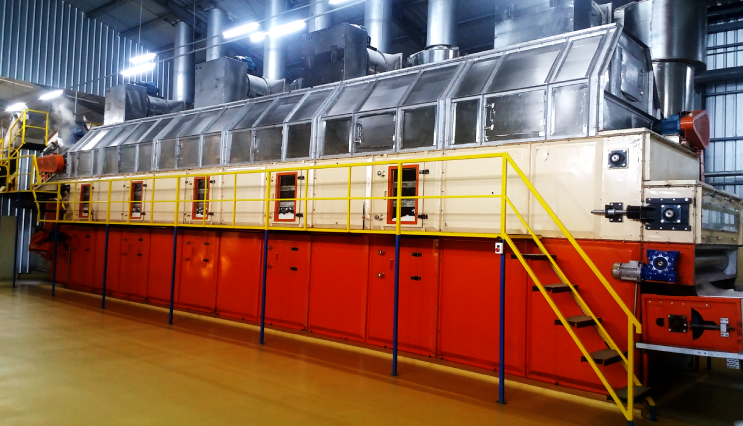
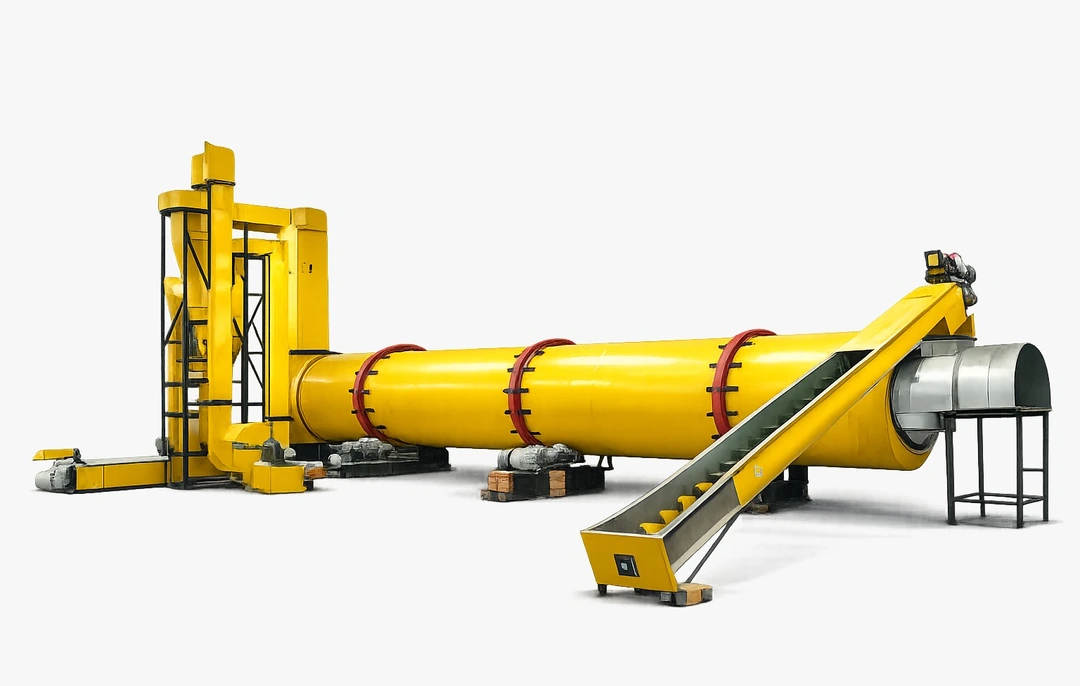
To dry fruit & vegetable waste, GEM recommends the Mesh Belt Dryer (Meshotherm) and Hybrid Belt + Fluid Bed Dryer (Aerodryve). Typical moisture is 85–92% in the feed and 10–12% after drying. Rotary Dryer and Paddle Dryer are used when the feed or site calls for it. Every project starts with a pilot trial on your own sample.
Shredded produce waste forms an open bed that a Meshotherm belt dries economically, while Aerodryve adds fluidisation for very wet, bulky loads. Rotary dryers suit pressed, mixed waste for fuel, and paddle dryers handle pulpy waste that cannot form a bed.
| Typical feed moisture | 85–92% |
| Typical target moisture | 10–12% |
| Recommended dryer | Mesh Belt Dryer (Meshotherm), Hybrid Belt + Fluid Bed Dryer (Aerodryve) |
| Alternatives | Rotary Dryer, Paddle Dryer |
| Application area | Pomace, Pulp & By-products |
| Industries | Food & Beverage, Biomass, Bioenergy & Recycling |
Markets and processors pay heavily to remove wet produce waste. Drying shrinks its weight several-fold and creates a stable material for feed, compost or fibre buyers.
Plants searching for a fruit and vegetable waste dryer or comparing a vegetable waste drying machine usually need three answers: which dryer fits, what it costs to run, and how fast it pays back. For Fruit & Vegetable Waste, we start from your throughput, current moisture (typically 85–92%) and the target (10–12%), trial a sample on the Mesh Belt Dryer, and return a sized recommendation with a budget quotation for your food and biomass operation.
Compare all 11 materials in Fruit & Vegetable Pomace and Food Waste or browse the wider Pomace, Pulp & By-products family.
We trial your material in our pilot facility before any equipment decision, then size the dryer from real data.
Describe it in the form, or message an engineer directly.