Coconut flour drying starts with the wet, fibrous residue left after coconut milk or virgin coconut oil extraction. That residue spoils within hours, so drying it quickly turns a disposal problem into a gluten-free, high-fibre flour. The material is clumpy and still oily, which shapes how it must be spread and dried.
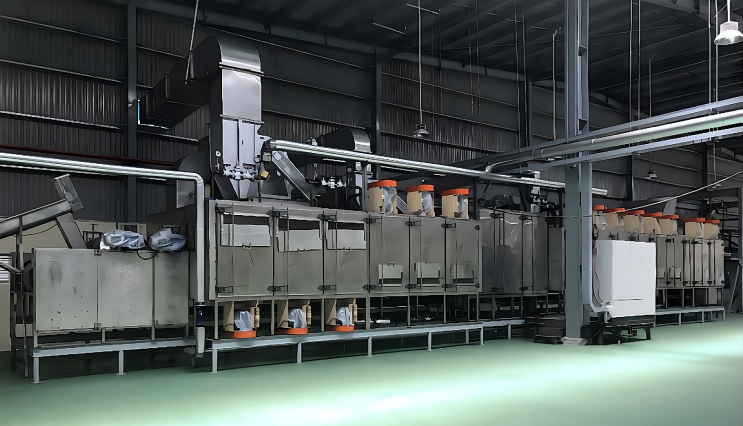
To dry coconut flour, GEM recommends the Band Dryer (Beltotherm). Typical moisture is 50–60% in the feed and 3–5% after drying. Multi-Pass Conveyor Dryer and Vibratory Fluid Bed Dryer are used when the feed or site calls for it. Every project starts with a pilot trial on your own sample.
A band dryer takes crumbled residue as a loose, airflow-permeable bed and dries it evenly at moderate temperature, limiting oil damage. A multi-pass dryer suits smaller footprints; a vibratory fluid bed can finish free-flowing, pre-dried material quickly.
| Typical feed moisture | 50–60% |
| Typical target moisture | 3–5% |
| Recommended dryer | Band Dryer (Beltotherm) |
| Alternatives | Multi-Pass Conveyor Dryer, Vibratory Fluid Bed Dryer |
| Application area | Food Dehydration |
| Industries | Food & Beverage |
Residue from milk and VCO plants is often sold cheaply or dumped. Dried and milled, it becomes a premium flour for health-food markets, adding revenue per nut processed and removing a fast-spoiling waste stream.
Plants searching for a coconut flour dryer or comparing a coconut residue drying machine usually need three answers: which dryer fits, what it costs to run, and how fast it pays back. For Coconut Flour, we start from your throughput, current moisture (typically 50–60%) and the target (3–5%), trial a sample on the Band Dryer, and return a sized recommendation with a budget quotation for your food operation.
Compare all 4 materials in Coconut Processing or browse the wider Food Dehydration family.
We trial your material in our pilot facility before any equipment decision, then size the dryer from real data.
Describe it in the form, or message an engineer directly.