Bentonite drying has one rule that sets it apart from other clays: the swelling capacity customers pay for is easily destroyed by overheating. Mined and activated bentonite is dried to a moisture window rather than bone-dry, so drilling mud, foundry binder and cat litter grades keep their gel strength and water absorption.
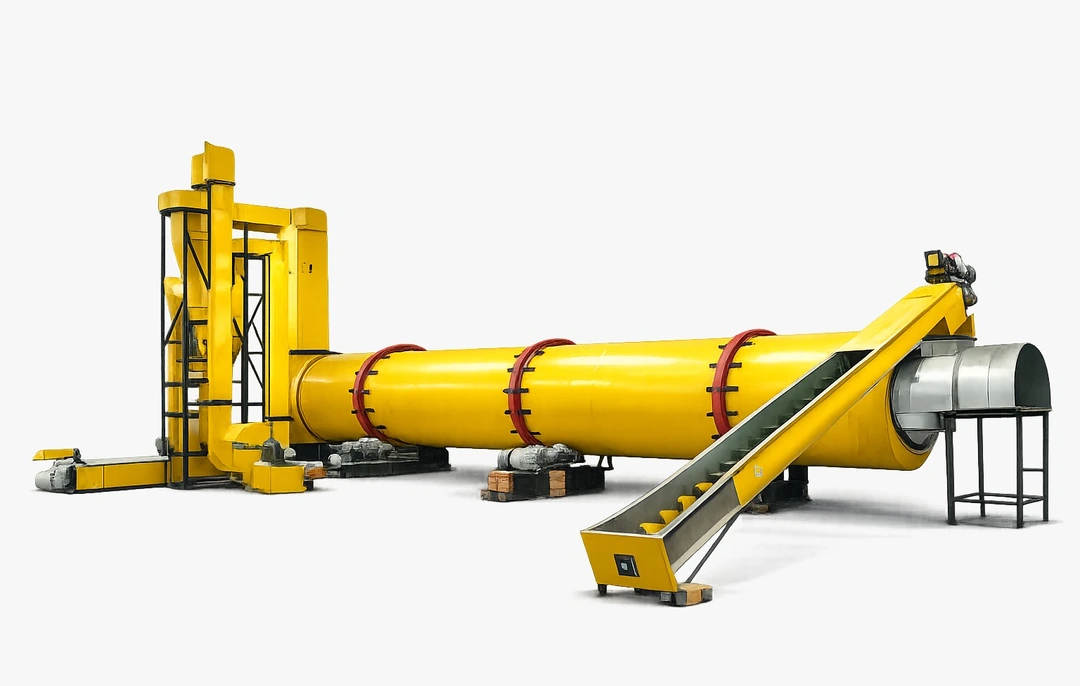
To dry bentonite, GEM recommends the Rotary Dryer. Typical moisture is 25–35% in the feed and 8–12% after drying. Rotary Louvre Dryer and Flash Dryer are used when the feed or site calls for it. Every project starts with a pilot trial on your own sample.
A co-current rotary dryer meets hot gas with the wettest feed, so evaporation keeps the clay cool while it dries to a set moisture. A louvre dryer gives gentler contact for granular litter grades; a flash dryer suits fine, pre-ground bentonite.
| Typical feed moisture | 25–35% |
| Typical target moisture | 8–12% |
| Recommended dryer | Rotary Dryer |
| Alternatives | Rotary Louvre Dryer, Flash Dryer |
| Application area | Minerals, Ores & Ceramics |
| Industries | Minerals, Mining & Ceramics |
Holding moisture in the 8–12% band protects the swelling and binding properties buyers test for, and avoids paying for fuel to over-dry. Dried bentonite also grinds and screens efficiently, opening higher-value packaged grades.
Plants searching for a bentonite dryer or comparing a bentonite drying plant usually need three answers: which dryer fits, what it costs to run, and how fast it pays back. For Bentonite, we start from your throughput, current moisture (typically 25–35%) and the target (8–12%), trial a sample on the Rotary Dryer, and return a sized recommendation with a budget quotation for your minerals operation.
We trial your material in our pilot facility before any equipment decision, then size the dryer from real data.
Describe it in the form, or message an engineer directly.