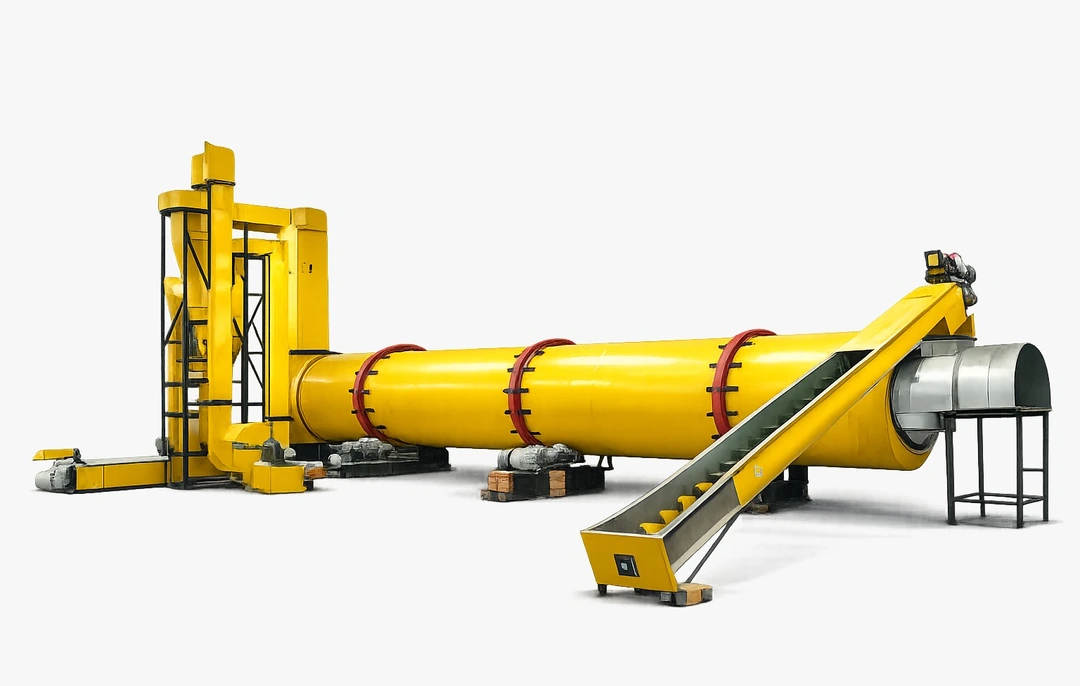
Foundry sand drying serves two streams: new washed sand bought for core and mould making, and used sand recovered through wet reclamation. Resin-bonded cores need sand that is dry and at a stable temperature, because both moisture and heat change binder cure times and casting quality.
To dry foundry sand, GEM recommends the Rotary Dryer. Typical moisture is 4–10% in the feed and below 0.5% after drying. Vibratory Fluid Bed Dryer, Rotary Cascade Dryer and Industrial Cooler are used when the feed or site calls for it. Every project starts with a pilot trial on your own sample.
A rotary dryer copes with variable reclaimed sand that may contain clay and fines. A vibratory fluid bed gives gentle, even drying with low attrition for clean new sand, a cascade dryer suits high tonnage, and a separate cooler brings sand to mixer temperature.
| Typical feed moisture | 4–10% |
| Typical target moisture | below 0.5% |
| Recommended dryer | Rotary Dryer |
| Alternatives | Vibratory Fluid Bed Dryer, Rotary Cascade Dryer, Industrial Cooler |
| Application area | Minerals, Ores & Ceramics |
| Industries | Minerals, Mining & Ceramics |
Reclaiming and drying sand cuts purchases of new sand and the cost of landfilling spent sand. Dry, cool sand also stabilises core quality and reduces casting defects linked to moisture.
Plants searching for a foundry sand dryer or comparing a reclaimed sand drying usually need three answers: which dryer fits, what it costs to run, and how fast it pays back. For Foundry Sand, we start from your throughput, current moisture (typically 4–10%) and the target (below 0.5%), trial a sample on the Rotary Dryer, and return a sized recommendation with a budget quotation for your minerals operation.
We trial your material in our pilot facility before any equipment decision, then size the dryer from real data.
Describe it in the form, or message an engineer directly.