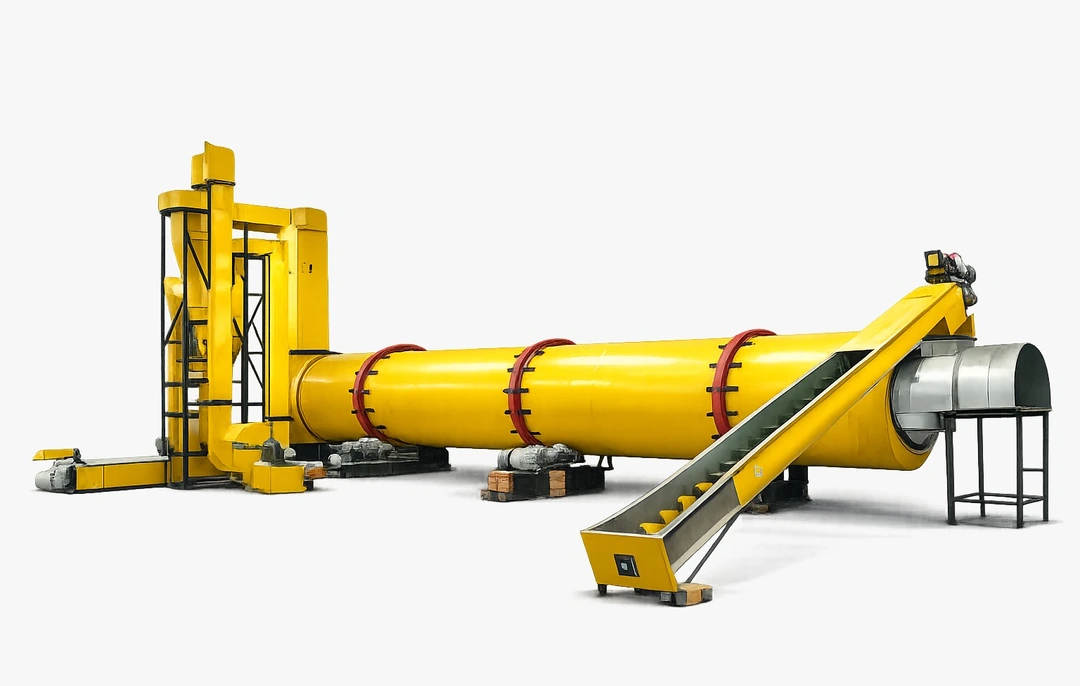
Silica sand drying turns washed, drained sand into a free-flowing product ready for screening, bagging or silo storage. Glass, foundry, filtration and frac markets all buy on grading and very low moisture, and the hard quartz grains tolerate high temperatures, so drying is fast but wear and respirable silica dust need careful engineering.
To dry silica sand, GEM recommends the Rotary Cascade Dryer. Typical moisture is 5–10% in the feed and 0.1–0.5% after drying. Rotary Dryer and Vibratory Fluid Bed Dryer are used when the feed or site calls for it. Every project starts with a pilot trial on your own sample.
A rotary cascade dryer is suited to sand because high inlet temperatures dry dense quartz quickly in a compact drum. A conventional rotary handles clay-contaminated sand, while a fluid bed dryer suits tightly graded fine sand where gentle, uniform drying and integral cooling are needed.
| Typical feed moisture | 5–10% |
| Typical target moisture | 0.1–0.5% |
| Recommended dryer | Rotary Cascade Dryer |
| Alternatives | Rotary Dryer, Vibratory Fluid Bed Dryer |
| Application area | Minerals, Ores & Ceramics |
| Industries | Minerals, Mining & Ceramics |
Dry graded sand commands a higher price than wet washed sand and can be shipped in bulk bags or pneumatic tankers. Consistent low moisture is also a specification requirement for glass and frac customers.
Plants searching for a silica sand dryer or comparing a sand drying plant usually need three answers: which dryer fits, what it costs to run, and how fast it pays back. For Silica Sand, we start from your throughput, current moisture (typically 5–10%) and the target (0.1–0.5%), trial a sample on the Rotary Cascade Dryer, and return a sized recommendation with a budget quotation for your minerals operation.
We trial your material in our pilot facility before any equipment decision, then size the dryer from real data.
Describe it in the form, or message an engineer directly.