Rusk and toast production is a two-stage process: a loaf or slab is first baked like bread, then sliced and baked again to drive out moisture and develop a crisp, golden texture. The second bake behaves largely like drying, and evenness across thick slices is the main difficulty.
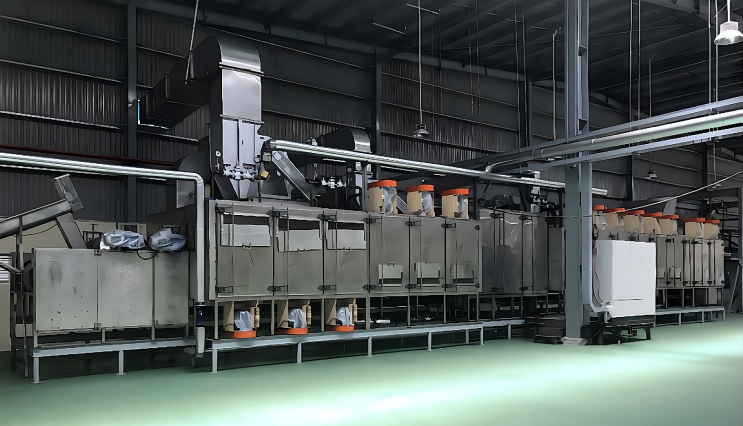
To dry rusk & toast, GEM recommends the Tunnel & Belt Oven. The usual target is 3–5% moisture. Band Dryer and Multi-Pass Conveyor Dryer are used when the feed or site calls for it. Every project starts with a pilot trial on your own sample.
A tunnel oven gives controlled second-bake heat for drying and colour across sliced rusk. Band or multi-pass dryers are chosen where producers want longer, lower-temperature drying before final colouring in the oven.
| Typical target moisture | 3–5% |
| Recommended dryer | Tunnel & Belt Oven |
| Alternatives | Band Dryer, Multi-Pass Conveyor Dryer |
| Application area | Bakery, Biscuits & Rice Crackers |
| Industries | Food & Beverage |
Even second baking reduces soft centres and colour variation, improving shelf life and appearance on retail shelves. Continuous lines also reduce labour and handling compared with batch rack ovens loaded by hand.
Plants searching for a rusk baking oven or comparing a toast drying oven usually need three answers: which dryer fits, what it costs to run, and how fast it pays back. For Rusk & Toast, we start from your throughput, current moisture and the target (3–5%), trial a sample on the Tunnel & Belt Oven, and return a sized recommendation with a budget quotation for your food operation.
We trial your material in our pilot facility before any equipment decision, then size the dryer from real data.
Describe it in the form, or message an engineer directly.