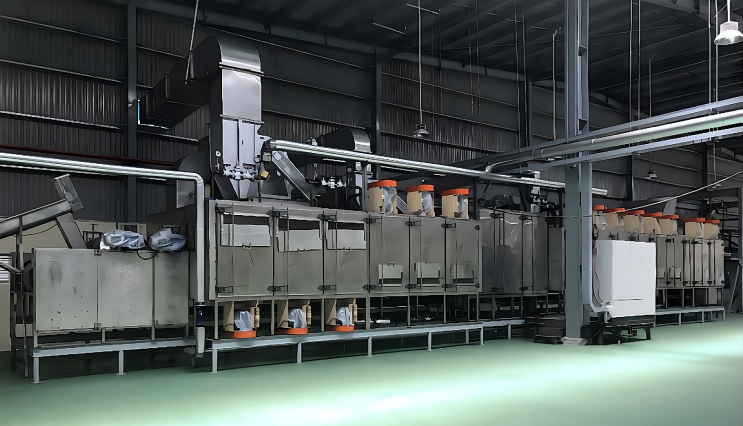
Oilseed drying covers crops as different as groundnut pods, mustard, sesame and sunflower, each with its own size, oil content and storage target. Oilseeds must be dried lower than cereals, often to 7–9%, because their oil-rich kernels mould and develop aflatoxin or rancidity at moisture levels that cereals tolerate.
To dry oilseeds, GEM recommends the Grain Dryer. Typical moisture is 15–35% in the feed and 7–12% after drying. Vibratory Fluid Bed Dryer and Band Dryer are used when the feed or site calls for it. Every project starts with a pilot trial on your own sample.
A grain dryer with fine-perforated sections and per-crop temperature recipes handles most pulses and oilseeds. A band dryer suits groundnut pods dried in a static bed, and a vibratory fluid bed suits small seeds such as mustard and sesame.
| Typical feed moisture | 15–35% |
| Typical target moisture | 7–12% |
| Recommended dryer | Grain Dryer |
| Alternatives | Vibratory Fluid Bed Dryer, Band Dryer |
| Application area | Grains, Pulses & Seeds |
| Industries | Agriculture & Grain Processing |
Fast, even drying reduces aflatoxin rejection in groundnut exports and protects oil yield and quality for crushers. Drying capacity also lets traders buy wet crop at a discount.
Plants searching for a oilseed dryer or comparing a groundnut drying machine usually need three answers: which dryer fits, what it costs to run, and how fast it pays back. For Oilseeds, we start from your throughput, current moisture (typically 15–35%) and the target (7–12%), trial a sample on the Grain Dryer, and return a sized recommendation with a budget quotation for your agriculture operation.
We trial your material in our pilot facility before any equipment decision, then size the dryer from real data.
Describe it in the form, or message an engineer directly.