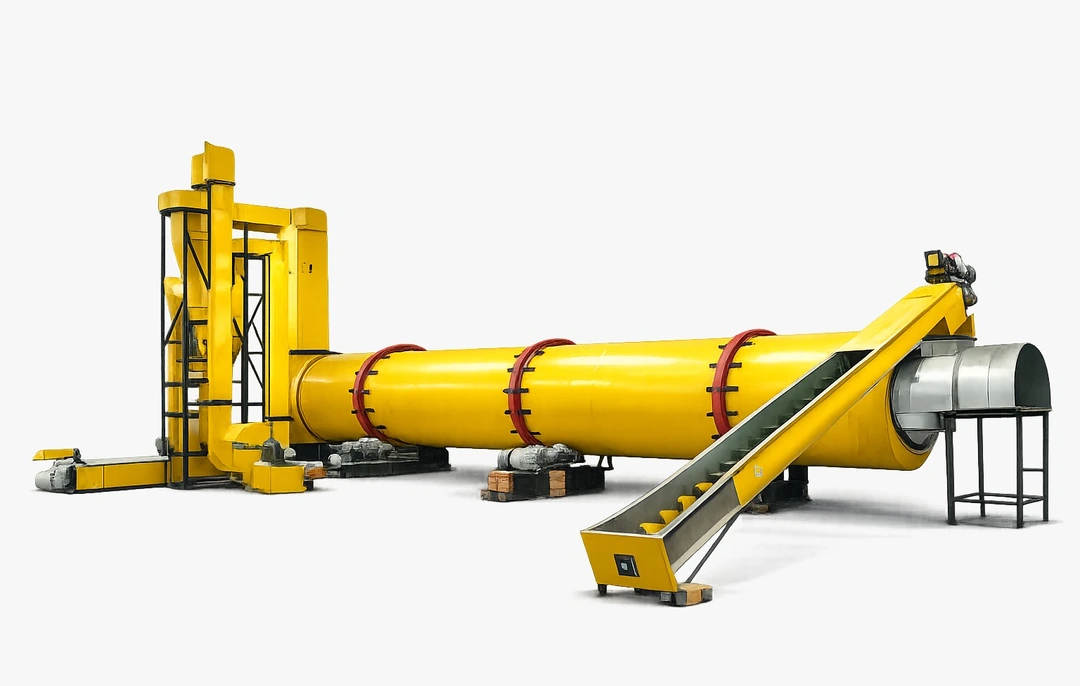
Lime sludge drying applies to the calcium carbonate mud produced when pulp mills recausticise green liquor, and to similar lime residues from chemical plants. In mills without a lime kiln, especially agro-residue mills with high silica, the sludge is often stockpiled. Drying it to a fine powder lets it be reburned, sold to cement plants or used for soil correction.
To dry lime sludge, GEM recommends the Flash Dryer and Rotary Dryer. Typical moisture is 25–40% in the feed and 1–5% after drying. Rotary Cascade Dryer is used when the feed or site calls for it. Every project starts with a pilot trial on your own sample.
Filtered lime mud breaks into fine, non-sticky particles, which flash dryers dry within seconds using hot flue gas, often ahead of a kiln. A rotary dryer suits wetter or lumpier stockpiled sludge, while a cascade rotary handles high-temperature duty.
| Typical feed moisture | 25–40% |
| Typical target moisture | 1–5% |
| Recommended dryer | Flash Dryer, Rotary Dryer |
| Alternatives | Rotary Cascade Dryer |
| Application area | Sludge & Biosolids |
| Industries | Paper & Pulp, Chemicals & Specialty Chemicals |
Reburning dried lime mud reduces purchased lime, and selling surplus to cement plants avoids stockpile management and runoff problems. Lower moisture also improves lime kiln fuel efficiency because less water is evaporated inside the kiln.
Plants searching for a lime sludge dryer or comparing a lime mud dryer usually need three answers: which dryer fits, what it costs to run, and how fast it pays back. For Lime Sludge, we start from your throughput, current moisture (typically 25–40%) and the target (1–5%), trial a sample on the Flash Dryer, and return a sized recommendation with a budget quotation for your paper and chemicals operation.
We trial your material in our pilot facility before any equipment decision, then size the dryer from real data.
Describe it in the form, or message an engineer directly.