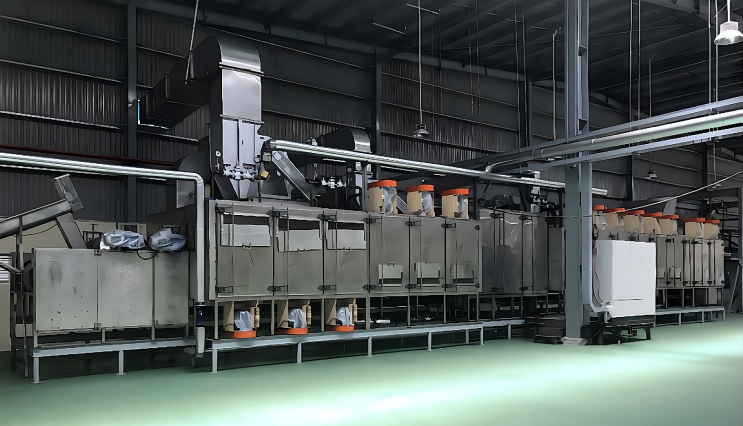
Herbal flower drying covers chamomile, hibiscus calyces, rose petals, calendula and butterfly pea for teas, cosmetics and supplements. Flowers are sold on colour, aroma and whole-flower appearance. They are delicate, lose petals easily and contain volatile oils, so gentle airflow and low temperatures matter more than speed.
To dry herbal flowers, GEM recommends the Single-Pass Conveyor Dryer. Typical moisture is 75–85% in the feed and 8–10% after drying. Band Dryer and Freeze Dryer / Lyophilizer are used when the feed or site calls for it. Every project starts with a pilot trial on your own sample.
A single-pass conveyor dryer keeps flowers on one belt throughout, avoiding the drops that shed petals, with low-temperature zones to protect aroma and colour. A band dryer suits high-volume hibiscus; freeze drying suits premium whole flowers.
| Typical feed moisture | 75–85% |
| Typical target moisture | 8–10% |
| Recommended dryer | Single-Pass Conveyor Dryer |
| Alternatives | Band Dryer, Freeze Dryer / Lyophilizer |
| Application area | Herbal, Botanical & Nutraceutical |
| Industries | Nutraceuticals & Herbal, Food & Beverage |
Whole, bright, aromatic flowers command much higher prices than broken or faded material. Controlled drying protects visual and aromatic quality that tea and cosmetic buyers assess.
Plants searching for a flower dryer or comparing a chamomile drying machine usually need three answers: which dryer fits, what it costs to run, and how fast it pays back. For Herbal Flowers, we start from your throughput, current moisture (typically 75–85%) and the target (8–10%), trial a sample on the Single-Pass Conveyor Dryer, and return a sized recommendation with a budget quotation for your nutraceuticals and food operation.
We trial your material in our pilot facility before any equipment decision, then size the dryer from real data.
Describe it in the form, or message an engineer directly.