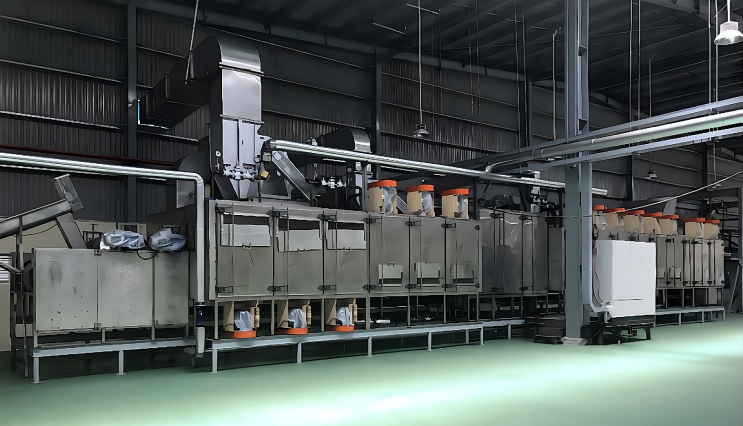
Aromatic plants and mint drying preserves the essential oils that give peppermint, spearmint, basil, oregano and lemongrass their value. These oils are volatile and lost easily when warm air passes through the leaves. Culinary buyers want green, fragrant leaf, while extraction buyers measure oil content, so drying is set to retain aroma first.
To dry aromatic plants & mint, GEM recommends the Single-Pass Conveyor Dryer and Band Dryer (Beltotherm). Typical moisture is 75–85% in the feed and 8–10% after drying. Multi-Pass Conveyor Dryer is used when the feed or site calls for it. Every project starts with a pilot trial on your own sample.
Single-pass conveyor and Beltotherm band dryers give low-temperature, even airflow with no drops, limiting oil loss and leaf breakage. Multi-pass dryers are chosen for chopped lemongrass or herbs going to tea-cut grades, where compact layout matters.
| Typical feed moisture | 75–85% |
| Typical target moisture | 8–10% |
| Recommended dryer | Single-Pass Conveyor Dryer, Band Dryer (Beltotherm) |
| Alternatives | Multi-Pass Conveyor Dryer |
| Application area | Herbal, Botanical & Nutraceutical |
| Industries | Nutraceuticals & Herbal, Food & Beverage |
Retaining essential oil and colour raises the grade and price of dried herbs and oil yield for distillers, while controlled drying replaces weather-dependent shade drying with consistent daily output.
Plants searching for a mint dryer or comparing a mint leaf drying machine usually need three answers: which dryer fits, what it costs to run, and how fast it pays back. For Aromatic Plants & Mint, we start from your throughput, current moisture (typically 75–85%) and the target (8–10%), trial a sample on the Single-Pass Conveyor Dryer, and return a sized recommendation with a budget quotation for your nutraceuticals and food operation.
We trial your material in our pilot facility before any equipment decision, then size the dryer from real data.
Describe it in the form, or message an engineer directly.